
×
GreekEnglish

×
  • Politics
  • Diaspora
  • World
  • Lifestyle
  • Travel
  • Culture
  • Sports
  • Cooking
Sunday
18
Jan 2026
weather symbol
Athens 7°C
  • Home
  • Politics
  • Economy
  • World
  • Diaspora
  • Lifestyle
  • Travel
  • Culture
  • Sports
  • Mediterranean Cooking
  • Weather
Contact follow Protothema:
Powered by Cloudevo
> World

France urged to come clean on Exocet “kill switches” that could have saved British sailors’ lives

Arms manufacturers sometimes secretly build a key switch into weapons so they can be disabled if they fall into the hands of a hostile state

Newsroom May 4 02:59

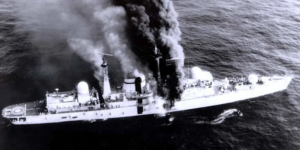
Senior MPs have called for an inquiry into claims that France deliberately withheld secrets about missiles that killed 46 British sailors in the 1982 Falklands War.

The Telegraph has been told that French-made Exocet guided missiles contained a “kill switch” that could have disarmed them, but that France denied such a device existed.

Ahead of Wednesday’s 40th anniversary of an Exocet attack on HMS Sheffield – which caused the first British fatalities of the conflict – France has been urged to come clean about what it did and did not share with Margaret Thatcher’s government.

Tobias Ellwood, the chairman of Parliament’s defence select committee, said the matter “warrants further investigation”, while Liam Fox, a former defence secretary, said France – a vital defence partner of the UK – should be “open and honest” about what happened.

Three Royal Navy ships were hit by Exocets during the Falklands conflict, two of which – HMS Sheffield and the merchant vessel Atlantic Conveyor – sank. Sailors died on all three ships.

The missiles were made by the French firm Aerospatiale and, as the Royal Navy task force sailed south to retake the islands from their Argentinian occupiers, Britain appealed to its ally for information about how they worked and whether they could be disabled.

British experts believed the Exocets contained a kill switch, which arms manufacturers sometimes secretly build into weapons so they can be disabled if they fall into the hands of a hostile state.

See Also:

Greece: Rage over record-high number of Turkish violations in Aegean, PM Mitsotakis to raise issue with Biden

According to a highly-placed source, France denied that the kill switches existed, but British officials became convinced it was not telling the truth, partly as a result of investigations carried out on an earlier variant of the missile that had been bought by the UK.

On Tuesday night, Admiral Lord West, the former First Sea Lord who commanded the frigate HMS Ardent during the Falklands war, told The Telegraph he had heard of the alleged kill switch in Exocet missiles and had been told Britain was denied the technology.

He said: “I was told that the French were very helpful in terms of letting us see the flying of Mirages and the Super Etendard [French-built fighter aircraft, used by Argentina] so we could get their flight profiles.

>Related articles

Trump threatens tariffs against those who oppose U.S. plans for Greenland

CIA chief in Venezuela meets with Rodriguez

Mitsotakis attends the inauguration of the renovated Emergency Department at Red Cross Hospital

“They did give us a certain amount of material about Exocet, but I was also told there was a mechanism within it so that foreign people couldn’t fire an Exocet at a French ship without them being able to do something to mean it wouldn’t be able to hit them.

“They were making a lot of sales of Exocet, and if the people they were selling them to found out that there was a way of defeating it, they would not have been happy.”

Read more: The Telegraph

Ask me anything

Explore related questions
#Aerospatiale#AM-39 Exocet#diplomacy#exocet#Falklands War#France#frigate#history#hms sheffield#kill switch#military#Mirage#politics#Royal Navy#Super Etendard#UK#V-Chip#war#world
> More World

Follow en.protothema.gr on Google News and be the first to know all the news

See all the latest News from Greece and the World, the moment they happen, at en.protothema.gr

> Latest Stories

Piers Morgan recovering in hospital after serious fall in London

January 18, 2026

Prime Minister Mitsotakis’ agenda: From talks with farmers’ representatives to Davos for investment outreach

January 18, 2026

Iraq veterans report long-term health concerns after a lack of medical screening for toxic exposure

January 18, 2026

Skirtsos: ‘After years of efforts, the first results on maritime safety are starting to become visible’

January 18, 2026

Politico: Europe for the first time considers tough response to Trump on Greenland tariffs, what is the Anti-Brexit Act

January 18, 2026

The backstory behind Trump’s decision not to attack Iran: The camps in the White House, the SMS from Tehran, and the calls from Arab allies

January 18, 2026

Mitsotakis: Greece will not be challenged by anyone with the Belharra frigates – Our goal is to support farmers with transparent subsidies

January 18, 2026

Akylas receives rave reviews for his Eurovision 2026 Greek final entry: “We might actually win with this little gem,” Fans write

January 18, 2026
All News

> Culture

The historic cafes of Athens: 12 legendary hangouts lost to time

The café-patisseries that set the rhythm of cosmopolitan Athens – “Flokas,” “Papaspirou,” “Sonia,” “Alaska,” “Lentzos,” “Floral,” “Blue Bell,” “Prapas,” “Pachos,” “Galaxy,” “Caprice,” “Centaur” were the most popular meeting points where modern Greek history was written, became songs and books, and left their mark with their famous culinary creations

January 16, 2026

Actress Melpo Zarokosta dies at 93

January 16, 2026

Cycladic Identity Initiative launches fourth funding phase to preserve the Cultural and Natural Heritage of the Cyclades

January 16, 2026

Grief in Crete for the loss of Yannis Xylouris

January 15, 2026

“A Picasso for 100 euros” — Christie’s for a million-euro painting

January 15, 2026
Homepage
PERSONAL DATA PROTECTION POLICY COOKIES POLICY TERM OF USE
Powered by Cloudevo
Copyright © 2026 Πρώτο Θέμα