

×
GreekEnglish

×
  • Politics
  • Diaspora
  • World
  • Lifestyle
  • Travel
  • Culture
  • Sports
  • Cooking
Sunday
18
Jan 2026
weather symbol
Athens 7°C
  • Home
  • Politics
  • Economy
  • World
  • Diaspora
  • Lifestyle
  • Travel
  • Culture
  • Sports
  • Mediterranean Cooking
  • Weather
Contact follow Protothema:
Powered by Cloudevo
> Culture

Soldiers of Bronze: The Greek Hoplite, the Phalanx & the battle that defined them

A quick guide

Newsroom July 4 03:23

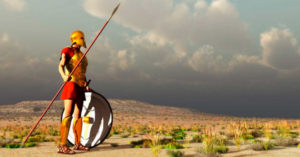
Hoplite comes from the Greek word “ ta hopla ,” which means “tool” or “equipment,” and was the name given to legions of citizen soldiers who were tasked with protecting their territories from outside challengers. With the exception of Sparta, which had a permanent professional army, ancient Greek civilizations only called up soldiers when absolutely necessary. Greek hoplites, armed with a variety of weapons and bronze armor, were an incredibly strong military force and innovators of a battlefield formation known as the phalanx. The phalanx remains one of the most effective tactics ever conceived and was responsible for one of the least likely victories ever accomplished at the Battle of Marathon in 490 BC.

See Also:

Erdogan’s aide Erhan says Aegean islands belong to Turkey (video)

>Related articles

President of Air Traffic Controllers: Another communications blackout possible in the near future

Trump threatens tariffs against those who oppose U.S. plans for Greenland

X is down, thousands report problems

The Hoplite Armory

Hoplites or Greek citizen soldiers, were usually armed with three different types of weapons, and each would serve different functions. The first, which enabled hoplites to thrust from a distance, was a long wooden spear, called a doru, which had an average length of 2.5 meters (8.2 feet) and was tipped with a bronze or iron blade and surrounded by a four-pronged spike on its sides called a sauroter. For more close combat use, they were also equipped with a short-sword called a machaira or kopis which was conventionally just under 60 centimeters (2 feet) long. An additional dagger, called an encheiredon, would ensure that the hoplite could still protect himself if he found himself in a tricky situation on the battlefield and was unable to use his two main weapons.

Read more: Ancient Origins

Ask me anything

Explore related questions

#ancient greece#archaeology#battle#culture#greece#history#Hoplite#phalanx#soldiers#war#warriors#world
> More Culture

Follow en.protothema.gr on Google News and be the first to know all the news

See all the latest News from Greece and the World, the moment they happen, at en.protothema.gr

> Latest Stories

Mitsotakis: Greece will not be challenged by anyone with the Belharra frigates – Our goal is to support farmers with transparent subsidies

January 18, 2026

Akylas receives rave reviews for his Eurovision 2026 Greek final entry: “We might actually win with this little gem,” Fans write

January 18, 2026

What Trump is seeking with the extra tariffs on eight European countries for Greenland, the trade deal with the EU is in the air

January 18, 2026

The global era of Messinia: How the film Odyssey and the lists of major media praise it for 2026

January 18, 2026

Greek exports broke records with a record 37 billion euros

January 18, 2026

Sakkari delivers the ‘point of the year’ as she advances at the Australian Open

January 18, 2026

New legal migration rules for 90,000 pending residence permits

January 18, 2026

Weather: Why the new cold wave brings little snow until Tuesday – Stronger weather deterioration expected from Wednesday

January 18, 2026
All News

> World

What Trump is seeking with the extra tariffs on eight European countries for Greenland, the trade deal with the EU is in the air

The BBC calls it an unprecedented move, the Guardian calls it a devastating blow to the 2025 summer agreement

January 18, 2026

War, diplomacy, or insurrection: What’s next in Iran

January 17, 2026

New tensions in the Middle East as Trump invites regional leaders to the Gaza Peace Council

January 17, 2026

The horror of the “Tariff of the Dead”: how the Iranian regime prices the bodies of protesters

January 17, 2026

Greenland as the first line of defense for the U.S. and NATO: See the maps that explain Trump’s keen acquisition

January 17, 2026
Homepage
PERSONAL DATA PROTECTION POLICY COOKIES POLICY TERM OF USE
Powered by Cloudevo
Copyright © 2026 Πρώτο Θέμα