

×
GreekEnglish

×
  • Politics
  • Diaspora
  • World
  • Lifestyle
  • Travel
  • Culture
  • Sports
  • Cooking
Friday
16
Jan 2026
weather symbol
Athens 15°C
  • Home
  • Politics
  • Economy
  • World
  • Diaspora
  • Lifestyle
  • Travel
  • Culture
  • Sports
  • Mediterranean Cooking
  • Weather
Contact follow Protothema:
Powered by Cloudevo
> World

Bizarre near-Earth asteroid is spinning faster every year & scientists aren’t sure why

Astronomers have discovered that a potentially hazardous near-Earth asteroid has an unusual accelerating spin that could eventually change its trajectory

Newsroom October 20 10:13

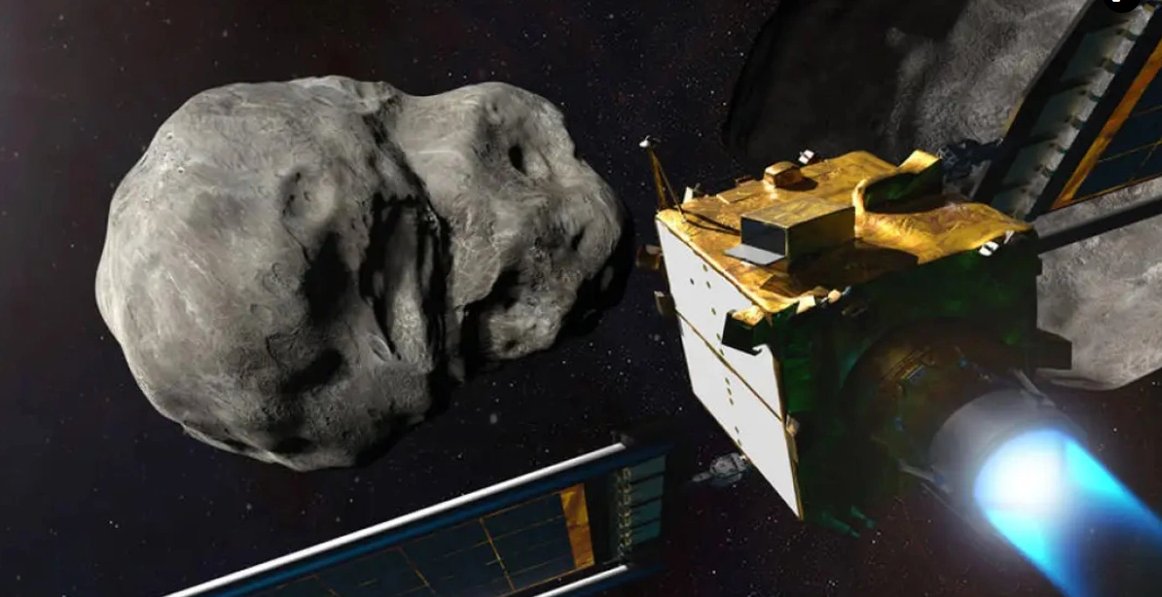
A potentially hazardous near-Earth asteroid is spinning faster and faster every year, and researchers aren’t sure why.

The space rock, known as 3200 Phaethon, is around 3.4 miles (5.4 kilometers) wide, and its orbit through the solar system takes it closer to the sun than any other named asteroid, reaching a minimum distance of around 13 million miles (20.9 million km) from the sun — less than half the distance from Mercury to the sun. During Phaethon’s orbit around the sun, which lasts for around 524 days, the space rock travels close enough to Earth to be considered “potentially hazardous.” But the closest Phaethon has ever come to our planet was in 2017 when it passed by around 6.4 million miles (10.3 million km) from Earth, or around 27 times farther away than the moon. The asteroid’s dusty trail is responsible for the Geminids meteor shower, which peaks in early December every year and is visible across the globe.

See Also:

>Related articles

Ballistic missile strike hits pier in Ukraine

The ordeal of a 28-year-old Greek man in Australia: He went on holiday to visit relatives, was injured at a beach, and is at risk of quadriplegia

FBI searches the home of a Washington Post journalist who covered the Trump administration’s firing of federal employees

Lost star catalogue of Hipparchus found in the Monastery of Saint Catherine of Sinai

On Oct. 7, a group of researchers presenting at this year’s American Astronomical Society’s Division for Planetary Sciences conference (opens in new tab) revealed that Phaethon has an accelerating spin. The space rock takes around 3.6 hours for one full rotation. But every year, that spin gets around 4 milliseconds shorter, researchers said. This may not sound like much, but over thousands or millions of years the change could alter the asteroid’s orbit, the team added.

Read more: Livescience

Ask me anything

Explore related questions

#asteroid#earth#Phaethon#science#space#technology#world
> More World

Follow en.protothema.gr on Google News and be the first to know all the news

See all the latest News from Greece and the World, the moment they happen, at en.protothema.gr

> Latest Stories

Mitsotakis attends the inauguration of the renovated Emergency Department at Red Cross Hospital

January 16, 2026

Where insects go in winter

January 16, 2026

Zelensky: If an agreement is reached, we are ready to sign even next week

January 16, 2026

Actress Melpo Zarokosta dies at 93

January 16, 2026

11 Iconic meze dishes from Volos

January 16, 2026

Sports broadcasts: Where to watch the Conference League play-off draw, the derby in volleyball, and the EuroLeague

January 16, 2026

Study in Greece: International students apply for a place in Greek universities through a single platform

January 16, 2026

Users on X respond to Rama’s comments on whether modern Greeks are descendants of the ancient Greeks

January 16, 2026
All News

> World

Zelensky: If an agreement is reached, we are ready to sign even next week

Zelensky says agreements could be finalized soon, stressing the need for long-term security guarantees beyond political cycles

January 16, 2026

The billionaire behind Trump’s Greenland decisions convinced him that the U.S. should acquire it

January 16, 2026

Why Trump hasn’t “pressed the button” to attack Iran: White House and allies doubt it will weaken the Iranian regime

January 16, 2026

“Denmark escalates military tensions in the Arctic”, Russia says of troop deployment in Greenland

January 16, 2026

Archaeologists opened a cave in Gibraltar that had been sealed for 40,000 years and made a major discovery

January 16, 2026
Homepage
PERSONAL DATA PROTECTION POLICY COOKIES POLICY TERM OF USE
Powered by Cloudevo
Copyright © 2026 Πρώτο Θέμα