
×
GreekEnglish

×
  • Politics
  • Diaspora
  • World
  • Lifestyle
  • Travel
  • Culture
  • Sports
  • Cooking
Sunday
18
Jan 2026
weather symbol
Athens 6°C
  • Home
  • Politics
  • Economy
  • World
  • Diaspora
  • Lifestyle
  • Travel
  • Culture
  • Sports
  • Mediterranean Cooking
  • Weather
Contact follow Protothema:
Powered by Cloudevo
> Culture

AI is deciphering a 2,000-year-old ‘lost book’ describing life after Alexander the Great

Researchers are using machine learning, a branch of artificial intelligence, to discern the faint ink on the rolled-up papyrus scroll

Newsroom February 8 06:18

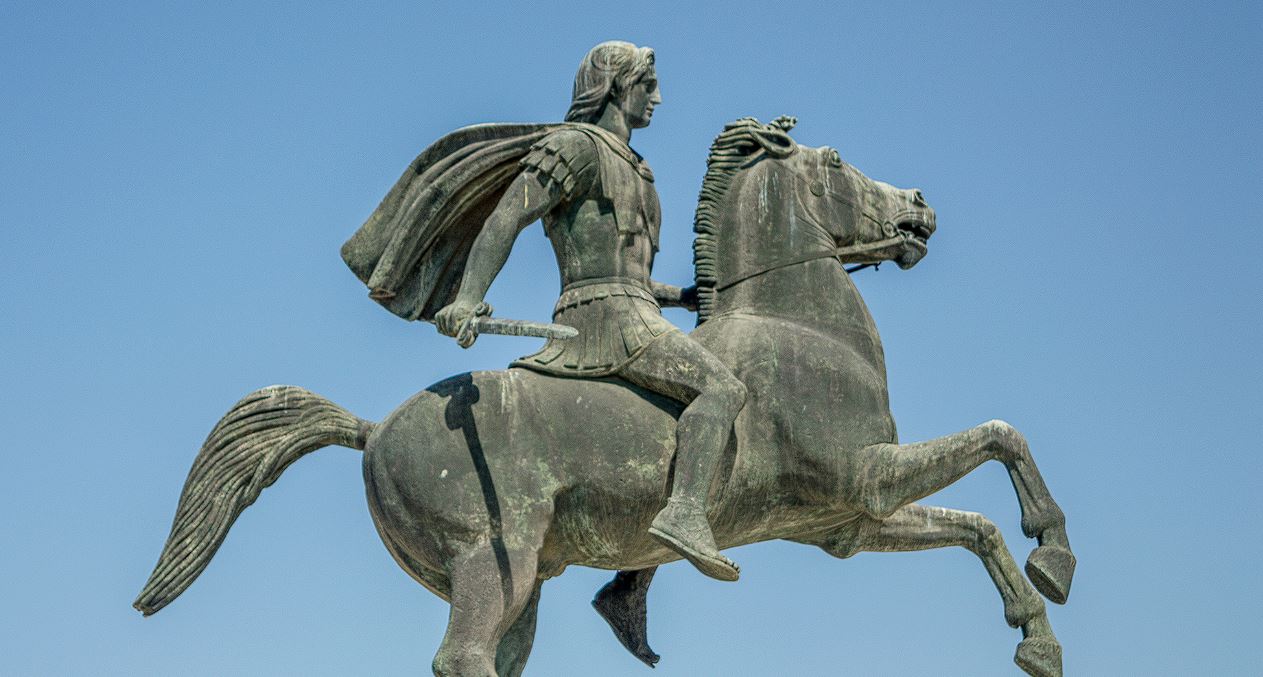
A 2,000-year-old “lost book” discussing the dynasties that succeeded Alexander the Great may finally be deciphered nearly two millennia after the text was partially destroyed in the eruption of Mount Vesuvius in A.D. 79 and, centuries later, handed off to Napoleon Bonaparte.

The reason for the breakthrough? Researchers are using machine learning, a branch of artificial intelligence, to discern the faint ink on the rolled-up papyrus scroll.

“It’s probably a lost work,” Richard Janko(opens in new tab), the Gerald F. Else distinguished university professor of classical studies at the University of Michigan, said during a presentation at the joint annual meeting of the Archaeological Institute of America and the Society for Classical Studies, held in New Orleans last month. The research is not yet published in a peer-reviewed journal.

>Related articles

Spain aims to control deepfakes created with AI

AI brings together “Home Alone,” “Harry Potter,” “John Wick,” “Deadpool,” “Fast & Furious,” and “Game of Thrones” in one film – Watch the video

AI Cameras begin recording traffic violations: where they are in Attica

Only small parts of the heavily damaged text can be read right now. “It contains the names of a number of Macedonian dynasts and generals of Alexander,” Janko said, noting that it also includes “several mentions of Alexander himself.” After Alexander the Great died in 323 B.C., his empire fell apart. The text mentions the Macedonian generals Seleucus, who came to rule a large amount of territory in the Middle East, and Cassander, who ruled Greece after Alexander’s death.

The lost book is from the Villa of the Papyri at Herculaneum, a city that was destroyed alongside Pompeii when Mount Vesuvius erupted after the turn of the first millennium. The villa, named for its vast scrolls of papyri, contains numerous writings from the philosopher Philodemus (lived circa 110 B.C. to 30 B.C.). These papyri were carbonized when the volcano erupted. At some point, the text was found, and it was given to Napoleon Bonaparte in 1804. He gave it to the Institut de France in Paris, where it now resides. In 1986, an attempt to unroll the papyrus resulted in further damage, Janko said.

source livescience.com

Ask me anything

Explore related questions

#AI#Alexander the Great#scroll
> More Culture

Follow en.protothema.gr on Google News and be the first to know all the news

See all the latest News from Greece and the World, the moment they happen, at en.protothema.gr

> Latest Stories

What Trump is seeking with the extra tariffs on eight European countries for Greenland, the trade deal with the EU is in the air

January 18, 2026

The global era of Messinia: How the film Odyssey and the lists of major media praise it for 2026

January 18, 2026

Greek exports broke records with a record 37 billion euros

January 18, 2026

Sakkari delivers the ‘point of the year’ as she advances at the Australian Open

January 18, 2026

New legal migration rules for 90,000 pending residence permits

January 18, 2026

Weather: Why the new cold wave brings little snow until Tuesday – Stronger weather deterioration expected from Wednesday

January 18, 2026

War, diplomacy, or insurrection: What’s next in Iran

January 17, 2026

New tensions in the Middle East as Trump invites regional leaders to the Gaza Peace Council

January 17, 2026
All News

> Greece

The global era of Messinia: How the film Odyssey and the lists of major media praise it for 2026

The Peloponnese, and Messinia in particular, ceases to be "the hidden secret of the initiated" and emerges as a global tourist and cultural landscape

January 18, 2026

Weather: Why the new cold wave brings little snow until Tuesday – Stronger weather deterioration expected from Wednesday

January 18, 2026

Weather: A return to winter in the coming days – Cold and strong northerly winds – Kolydas’ post

January 17, 2026

A view of Nikolaos Stasinopoulos of Viohalco – The “enduring imprint” of Greece’s greatest industrialist

January 17, 2026

Patras in carnival mode – This evening, the city’s official opening ceremony

January 17, 2026
Homepage
PERSONAL DATA PROTECTION POLICY COOKIES POLICY TERM OF USE
Powered by Cloudevo
Copyright © 2026 Πρώτο Θέμα