×
GreekEnglish

×
  • Politics
  • Diaspora
  • World
  • Lifestyle
  • Travel
  • Culture
  • Sports
  • Cooking
Thursday
15
Jan 2026
weather symbol
Athens 11°C
  • Home
  • Politics
  • Economy
  • World
  • Diaspora
  • Lifestyle
  • Travel
  • Culture
  • Sports
  • Mediterranean Cooking
  • Weather
Contact follow Protothema:
Powered by Cloudevo
> World

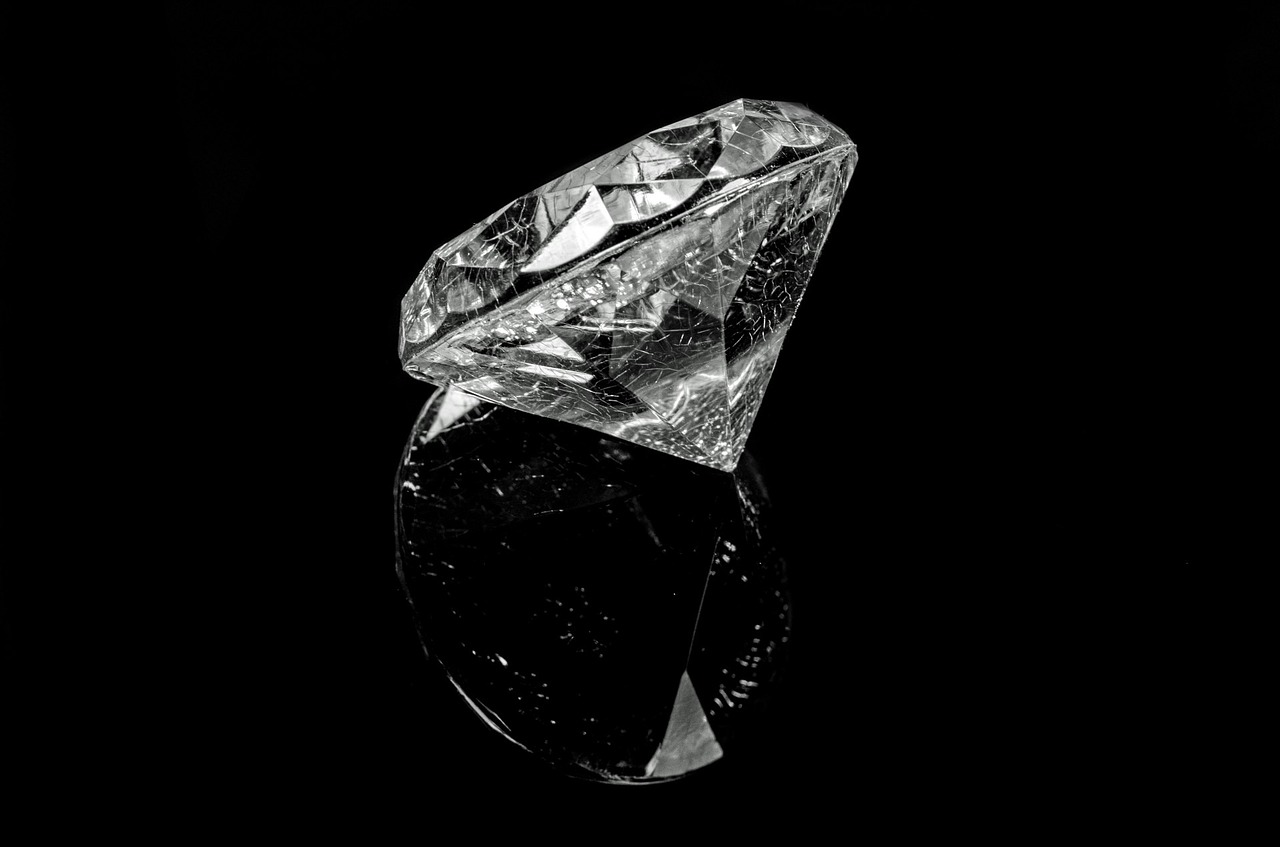
Fountains of diamonds erupt from Earth’s center as supercontinents break up

Researchers noticed that kimberlites occur most often during times when the tectonic plates are rearranging themselves in big ways

Newsroom August 22 10:09

The breakup of supercontinents may trigger explosive eruptions that send fountains of diamonds shooting up to the Earth’s surface.

Diamonds form deep in Earth’s crust, approximately 93 miles (150 kilometers) down. They are brought up to the surface very quickly in eruptions called kimberlites. These kimberlites travel at between 11 and 83 mph (18 to 133 km/h), and some eruptions may have created Mount Vesuvius-like explosions of gases and dust, said Thomas Gernon, a professor of Earth and climate science at the University of Southampton in England.

Researchers noticed that kimberlites occur most often during times when the tectonic plates are rearranging themselves in big ways, Gernon said, such as during the breakup of the supercontinent Pangaea. Oddly, though, kimberlites often erupt in the middle of continents, not at the edges of breakups — and this interior crust is thick, tough, and hard to disrupt.

>Related articles

Erich von Däniken, Swiss bestselling author who linked ancient civilizations to extraterrestrials, dies at 90

Who were the predators on Earth before the dinosaurs

Research: The BBC’s “first Black Briton” from the Roman era was ultimately…white and originated from southern England

“The diamonds have been sat at the base of the continents for hundreds of millions or even billions of years,” Gernon said. “There must be some stimulus that just drives them suddenly because these eruptions themselves are really powerful, really explosive.”

Gernon and his colleagues began by looking for correlations between the ages of kimberlites and the degree of plate fragmentation occurring at those times. They found that over the last 500 million years, there is a pattern where the plates start to pull apart, then 22 million to 30 million years later, kimberlite eruptions peak. (This pattern held over the last 1 billion years as well but with more uncertainty given the difficulties of tracing geologic cycles that far back.)

more at livescience.com

Ask me anything

Explore related questions
#diamonds#earth#fountains#Geology#science
> More World

Follow en.protothema.gr on Google News and be the first to know all the news

See all the latest News from Greece and the World, the moment they happen, at en.protothema.gr

> Latest Stories

Sophie Turner’s first photo as Lara Croft released for Tomb Raider series

January 15, 2026

Obst sealed the win at the end against Panathinaikos as Bayern defeated them 85–78 in Munich

January 15, 2026

“You think you are descendants of Plato and Aristotle, but you’re not” – Rama’s tirade against Greek journalist, watch video

January 15, 2026

“Aunt Pecu,” who lived outside all protocol: Who the unconventional and eccentric princess Irene was

January 15, 2026

High-tech fraud – SMS blaster attack: Bank data stolen using special equipment installed in a car’s trunk

January 15, 2026

Ballistic missile strike hits pier in Ukraine

January 15, 2026

Ursula von der Leyen from the Green Line: Pushing for a solution to the Cyprus issue is a priority

January 15, 2026

The ordeal of a 28-year-old Greek man in Australia: He went on holiday to visit relatives, was injured at a beach, and is at risk of quadriplegia

January 15, 2026
All News

> Politics

Hydrocarbon contracts in Parliament, Greece as an energy hub with Saudi Arabia and investments in the background

The consortium includes the American Chevron and the Greek HELLENiQ Energy, with the Minister of Environment and Energy, Stavros Papastavrou, stressing that, if the explorations pay off, the benefits for the country will be multiple

January 15, 2026

Pavlos Marinakis: In principle, agreement for Mitsotakis–Farmers meeting on Monday at noon

January 15, 2026

At 12%–14%: Tsipras and Karystianou reshape the opposition

January 15, 2026

Fidan: Dates being considered for Erdoğan–Mitsotakis meeting in February

January 15, 2026

The Hellenic Navy welcomes the frigate “Kimon” – Mitsotakis: “It is my duty to hand over a safer homeland than the one I inherited” (updated)

January 15, 2026
Homepage
PERSONAL DATA PROTECTION POLICY COOKIES POLICY TERM OF USE
Powered by Cloudevo
Copyright © 2026 Πρώτο Θέμα