Something extraordinary is happening to the European economy: Southern nations that nearly broke up the euro currency bloc during the financial crisis in 2012 are growing faster than Germany and other big countries that have long served as the region’s growth engines.
The dynamic is bolstering the economic health of the region and keeping the eurozone from slipping too far. In a reversal of fortunes, the laggards have become leaders. Greece, Spain and Portugal grew in 2023 more than twice as fast as the eurozone average. Italy was not far behind.
Just over a decade ago, Southern Europe was the center of a eurozone debt crisis that threatened to pull apart the bloc of countries that use the euro. It has taken years to recover from deep national recessions and multibillion-dollar international bailouts with tough austerity programs. Since then, the same countries have worked to mend their finances, attracting investors, reviving growth and exports, and reversing record-high unemployment.
Now Germany, Europe’s largest economy, is dragging down the region’s fortunes. It has been struggling to pull itself out of a slump set off by soaring energy prices after Russia’s invasion of Ukraine.
That was clear on Tuesday, when new data showed that economic output of the euro currency bloc grew 0.3 percent in the first quarter this year from the previous quarter, according to the European Union’s statistics agency, Eurostat. The eurozone economy shrank by 0.1 percent in both the third and fourth quarters of last year, a technical recession.
Germany, which accounts for one-quarter of the bloc’s economy, barely avoided a recession in the first quarter of 2024, growing 0.2 percent. Spain and Portugal expanded more than three times that pace, showing that Europe’s economy continues to grow at two speeds.
How have Greece, Spain and Portugal pulled ahead?
After years of international bailouts and harsh austerity programs, southern European countries made crucial changes that have attracted investors, revived growth and exports and reversed record-high unemployment.
Governments cut red tape and corporate taxes to stimulate business and pushed through changes to their once-rigid labor markets, including making it easier for employers to hire and fire workers and reducing the widespread use of temporary contracts. They moved to reduce sky-high debts and deficits, luring international pension and investment funds to start buying their sovereign debt again.
“These countries very much got their act together in the wake of the European crisis and are structurally more sound and more dynamic than they were before,” said Holger Schmieding, chief economist at Berenberg Bank in London.
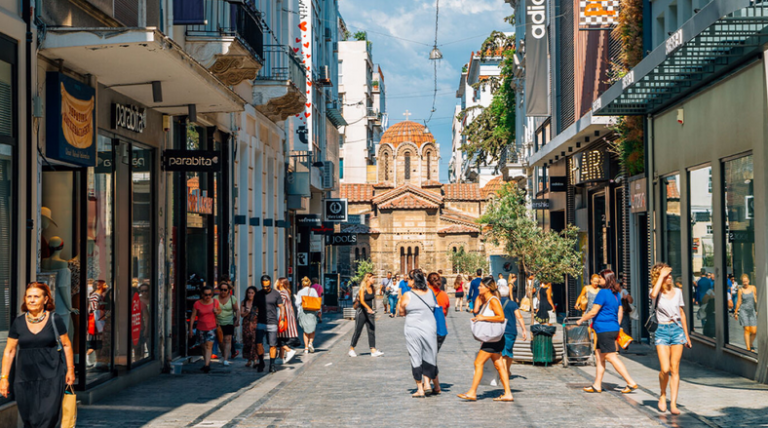
The southern countries also doubled down on their service economy — especially tourism, which has generated record revenues since the end of coronavirus restrictions. And they benefited from part of an 800 billion-euro stimulus package deployed by the European Union to help economies recover from the pandemic.
So what does the two-speed economy look like?
Greece’s economy grew about twice the eurozone average last year, buoyed by rising investment from multinational companies like Microsoft and Pfizer, record tourism and investments in renewable energy.
In Portugal, where growth has been driven by construction and hospitality, the economy expanded 1.4 percent in the first quarter when measured against the same quarter last year. The rate for Spain’s economy over the same period was even stronger, at 2.4 percent.
In Italy, the conservative government has been restraining spending, and the country is exporting more technology and auto products while drawing in new foreign investment in the industrial sector. The economy there has roughly matched the eurozone’s overall growth rate, a marked improvement for a country long viewed as an economic drag.
“They are correcting their excesses, and they tightened their belts,” Mr. Schmieding said of southern European economies. “They have shaped up after living beyond their means before the crisis, and as a result they are leaner, fitter and meaner.”
What has happened in Germany?
For decades, Germany grew steadily, but instead of investing in education, digitization and public infrastructure during those boom years, Germans grew complacent and dangerously dependent on Russian energy and exports to China.
The result has been two years of near-zero growth, landing the country in last place among its Group of 7 peers and the eurozone countries. When measured year-over-year, the country’s economy shrank 0.2 percent in the first quarter of 2024.
Germany accounts for a quarter of Europe’s overall economy, and the German government predicted last week that the economy would expand just 0.3 percent for the year.
Economists point to structural problems including an aging work force, high energy prices and taxes, and excessive amounts of red tape that need addressing before there can be significant change.
“Basically, Germany didn’t do its homework when it was doing well,” said Jasmin Gröschl, a senior economist with Allianz, which is based in Munich. “And now we’re feeling the pain.”
Also, Germany also built its economy on an export-oriented model that relied on international trade and global supply chains that have been disrupted by geopolitical conflicts and the growing tensions between China and the United States — its two top trading partners.
What about Europe’s other big economies?
In France, the eurozone’s second-biggest economy, the government recently lowered its forecasts. Its economy expanded in the first quarter 1.1 percent from the same period last year.
France’s finances are getting worse: The deficit is at a record high of 5.5 percent of gross domestic product, and debt has reached 110 percent of the economy. The government recently announced it would need to find around €20 billion in savings this year and next.
The Netherlands only recently exited a mild recession that hit last year, when the economy contracted 1.1 percent. The Dutch housing market was especially hard hit by tighter monetary policy in Europe.
Together, the German, French, and Dutch economies account for around 45 percent of the eurozone’s gross domestic product. As long as they are dragging, overall growth will be subdued.
Can southern Europe keep it up?
Yes — at least for now. High interest rates have started to cool their growth but the European Central Bank, which sets rates for all 20 countries that use the euro, has signaled it could cut rates at its next policy meeting in early June.
Inflation in the euro area was stable at 2.4 percent in the year through April, Eurostat reported on Tuesday, following an aggressive campaign by the bank to cool runaway prices in the last year.
That should help tourism, a major driver of growth in Spain, Greece and Portugal. Those countries will also benefit increasingly from efforts to diversify their economies into new destinations for international investment in manufacturing and technology.
Greece, Italy, Spain and Portugal — which together make up about a quarter of the eurozone economy — have also been strengthened by the E.U. recovery funds, with billions of euros in low-cost grants and loans invested in economic digitalization and renewable energy.
But to ensure those gains are not fleeting, economists say, the countries must build on the momentum and further lift competitiveness and productivity. Unemployment, though down sharply from the crisis, is still high, while wage gains for many jobs have failed to keep pace with inflation.
The southern countries also still carry hefty debt burdens that raise questions about the sustainability of their improved finances. Germany, by contrast, has a self-imposed limit on how much it can fund its economy through borrowing.
Those investments “will help make their economies more future proof,” said Bert Colijn chief eurozone economist at ING Bank. “Will they challenge Germany and France as the powerhouses of Europe? That is going a step too far.”
Source: New York Times
Ask me anything
Explore related questions