




A con man with his eyes open will find an opportunity to profit – a little or a lot – from any opportunity, even gambling on environmental policies.
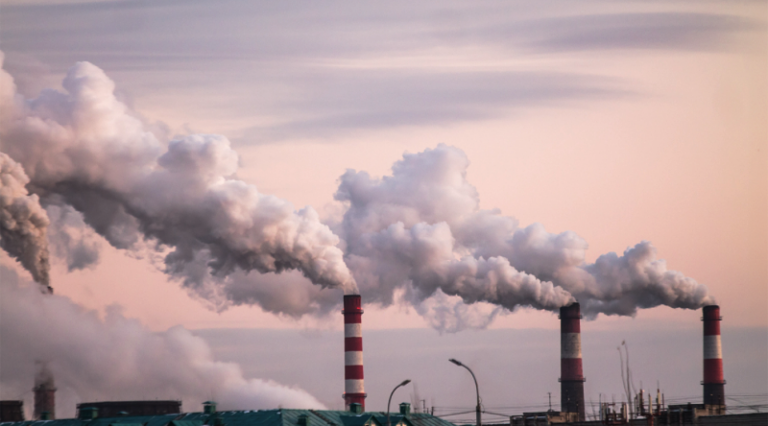
One golden opportunity was the market set up by the European Union for greenhouse gas emission rights. In practice a good idea that would help the environment, but in reality a huge opportunity for a few to skim off hundreds of millions of euros.
In a lengthy article the Guardian chronicles the trajectory of two lifeless collaborators, Gustave Dafni (a pseudonym, he had many pseudonyms of his own) and Gengory Zawi, nicknamed “the Brain”. From legitimate businesses and after a stint in jail they saw a golden opportunity to exploit the legal but crudely organised carbon emissions trade in the EU – and they took it without restraint.
The market for allowances
After much debate and disagreement, in the early 2000s Europe settled on a system of buying and trading emissions under the Kyoto climate protocol.
The EU would set an annual cap on its total emissions and then issue a certain number of allowances, the EUAs, to various emitters. Each EUA would entitle its holder to emit one tonne of carbon dioxide. If a company had EUAs left over at the end of the year, meaning it had not emitted all the carbon it was allowed, it could put them up for sale, and companies that had very few EUAs could buy them.
The plan envisaged that Europe would issue fewer and fewer EUAs each year, so that carbon emissions would gradually become more expensive.
The scammers saw a great opportunity to profit from VAT in this process. Zawi’s trick was to buy VAT-free EUAs from countries outside France, sell them into the trading system in France and have the VAT refunded to him by the state. As all this trade was done electronically, it was extremely easy to make money.
Two parallel paths
Dafni, a Frenchman of Algerian origin, had started in the 1990s in the insurance sector. When he was approached by some extremely wealthy clients, they put him in the rich life. Unbeknownst to him, he was facilitating cocaine smugglers and soon Daffney was in trouble with the law.
In prison, he spotted a great opportunity in the carbon trading business. Manipulating the trade brought him even more money, media exposure and contacts with good people. He was now the “King of Carbon”.
A parallel path was followed by Gregory Zawi who, while in prison, was persuaded to enter the promising market of environmental protection, from solar panels to geothermal energy. He marvelled at the folly of European bureaucrats to put VAT on something intangible, almost literally airborne.
Around 2008, Daffney and Zawi’s footsteps crossed. By then they had a casual acquaintance, but shared ‘action’ in the world of VAT fraud.
At the same time, the market for carbon credits in Europe exploded. In the midst of the economic crisis that had gripped the planet, EUAs seemed a stable option. However, politicians did not realise that the market was full of fraudsters making huge profits from VAT accounting games. Some even went so far as to finance terrorists with the profits.
Zawi had set up the business in a way that made it look reliable and legitimate. He had attracted brokers and staff from serious financial firms, but they had no idea that they were involved in a huge scam. Today, Zawi admits that he was making between 80,000 and 100,000 euros a day.
Somewhere in early 2009 the French authorities realised that something was wrong with VAT and broadcasting rights. Gradually they began to dismantle the network of shell companies set up by the fraudsters and to prepare case files.
The fraud bill in France reached EUR 1.6 billion. Other European countries were subsequently mobilised to try to put an end to the huge fraud.
Europol’s investigation brought the bill in the EU up to EUR 5 billion, quite possibly twice that amount. In some cases 90% of a country’s market was entirely the product of fraud.
Gov.gr wallet: Real estate, insurance data, and even pets on your mobile
Two years later, in 2012, Israel tracked down Daffney and brought him in for an unrelated matter in which he was involved. He decided it was better to serve a sentence in France than in Israel. Proceedings in the French justice system proceeded slowly and he found time to engineer his flight to Israel.
Today, Dafni lives in Tel Aviv. He is wanted by the French authorities and spoke to the Guardian only on condition that his name or aliases not be revealed.
Zawi’s life is not as good as he would like it to be. Away from the woman he loved and his children, he wrote a book about the scam he set up after he did time. At least he’s not in jail.
Ask me anything
Explore related questions