





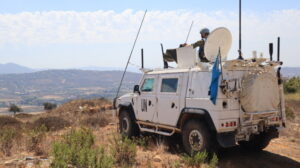
Israeli forces reportedly stormed a clearly marked UN base in Lebanon and used white phosphorus near UN peacekeepers, injuring 15, according to a classified report brought to light by the Financial Times.
The report, compiled by a UNIFIL-contributing nation, documents over 10 recent attacks by the Israeli Defense Forces (IDF) on international troops in Lebanon. It details strikes against UN peacekeepers deployed along the Lebanon-Israel border, causing damage to facilities and injuries to soldiers stationed in southern Lebanon.
UNIFIL condemned these incidents as “flagrant violations of international law.” Israel denies targeting UNIFIL intentionally, stating that since it began its ground invasion of southern Lebanon on October 1, its forces have been used as “human shields” by Hezbollah during clashes near UNIFIL positions. Israel has called for the withdrawal of peacekeepers for their safety, a request unanimously rejected by UNIFIL and the 50 contributing nations.
Despite international outrage, Israel has continued its operations. Last Sunday, UNIFIL reported that an IDF bulldozer deliberately destroyed an observation post and the perimeter fence of a UN site in Marwahin.
While most of the incidents mentioned in the classified report have been publicized by UNIFIL, the document contains additional details and photos showing damage to shelters, perimeter walls, and observation posts at various bases.
The report notes that while initial incidents occurred “near” UN positions, Israeli forces began directly firing at UNIFIL bases after October 8.
In one incident on October 10, two peacekeepers were injured when an IDF Merkava tank hit an observation post at UNIFIL headquarters in Naqoura, causing the post to collapse. A photo in the report shows a large circular hole in the tower, which Human Rights Watch investigator Richard Weir described as “consistent with a direct attack.”
In another incident on October 10, the IDF attacked a UN shelter housing Italian peacekeepers in Labouneh. The report states the shelter’s entrance was bombarded following an Israeli drone operation that destroyed the site’s cameras the previous day. Photos show a large pile of rubble at the corner of a building.
In the early hours of October 13, UNIFIL reported that two IDF Merkava tanks breached a base, destroying the main gate. After protests from UNIFIL, the tanks left 45 minutes later. However, within an hour, multiple bursts of fire were heard approximately 100 meters north of the base, followed by “smoke, likely caused by white phosphorus.” The smoke reached the base, causing health issues for 15 peacekeepers.
Photos in the report show tanks breaching the base’s gate, damage to perimeter walls, and remnants of white smoke in the area.
The IDF admitted that one of its tanks retreated “a few meters” inside the UNIFIL position, claiming it was under fire while attempting to evacuate wounded soldiers. It added that a smoke screen was created to cover and remove the injured soldiers.
Even if there were clashes nearby, UNIFIL responded that the tanks “are more resilient to fire than our positions. So, if they were seeking shelter, it wasn’t for physical protection.”
Human rights groups have documented Israel’s use of white phosphorus in Lebanon over the past year. Its use is illegal in populated areas under international law, but it is often employed as a military tool for cover or to force the enemy out of position, Weir explained. Israel has previously defended its use of white phosphorus as consistent with international law.
Ask me anything
Explore related questions