





The timeless belief that Athens, and especially the area around the Acropolis, constitutes a vast, partially uncharted museum, hiding many testimonies to its rich past, is reinforced by the recent discovery of the impressive headless marble statue of Hermes, which emerged from the Attic soil in particularly good condition. This statue was found at the junction of Erechtheion and Kallisperis streets, very close to the Herodium, during work for the installation of a natural gas network. But what does this discovery signify, what is its archaeological value, and what does it reveal about the reconstruction and the life of the area’s inhabitants during the imperial period, that is, from the 1st to the 5th century AD?
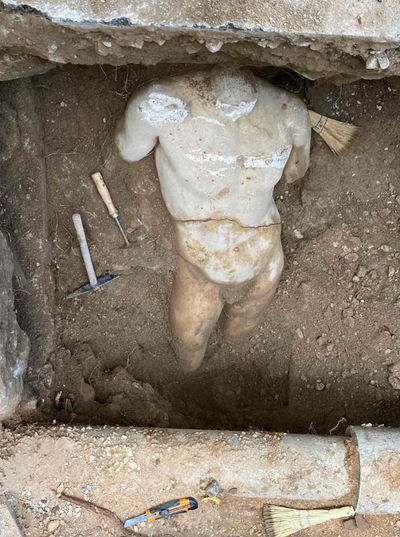
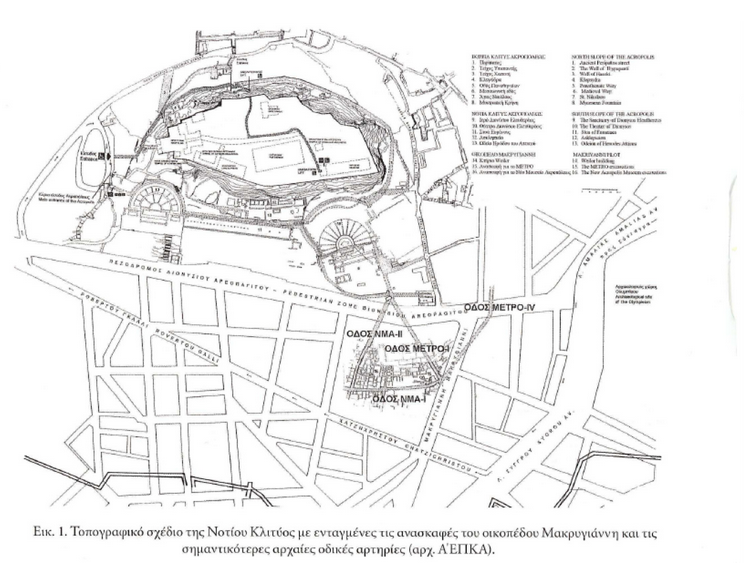
What makes this discovery particularly significant, and likely not the last in the area since excavations are ongoing and new finds continue to surface, is its connection to the famous house of the Neoplatonist philosopher Proclus, which is located beneath today’s Dionysiou Areopagitou Street. According to historical sources, the philosopher, born in Constantinople, moved to Athens and studied at Plato’s Academy, which he led for decades. He lived, until his death in 485, on the southern slope of the Acropolis, in the present-day Makrigianni area, in a large late antique building—a magnificent 5th-century mansion that housed his famous philosophical school, one of many in the broader area at that time.

Proclus’ house was initially discovered in 1955 by the team of archaeologists Iasonas Miliadis and Georgios Dontas during excavations for the completion of Dionysiou Areopagitou Street, with further excavations carried out in 2003 during pedestrianization works. It is worth noting that the original Dionysiou Areopagitou Street in Makrigianni was constructed in 1857, extending from the Temple of Olympian Zeus to Apostolou Pavlou Street. In 1955, the section of the street between the Theater of Dionysus and the Odeon of Herodes Atticus was rerouted and shifted further south.
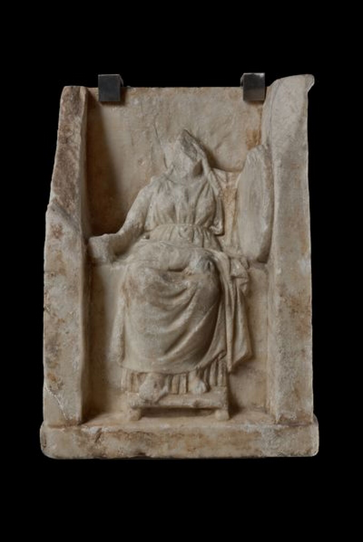
Proclus’ house, located at number 43 of Areopagitou Street, stood out as the most interesting excavation site in a broader complex. It was rectangular in shape and had a semi-circular vault on the northern side. It measured 32 meters in width and consisted of a main room with a floor paved with mosaics in geometric patterns, surrounded by several smaller rooms. In one of these, a household shrine with an embedded relief of Cybele and other movable finds were discovered, some of which are now housed in the Acropolis Museum.
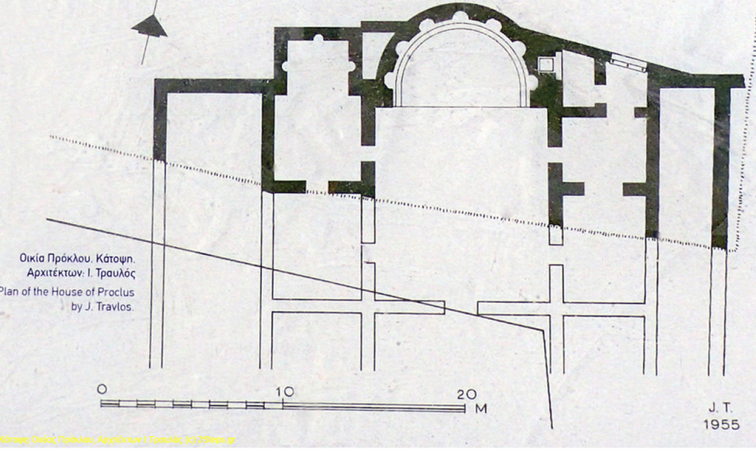
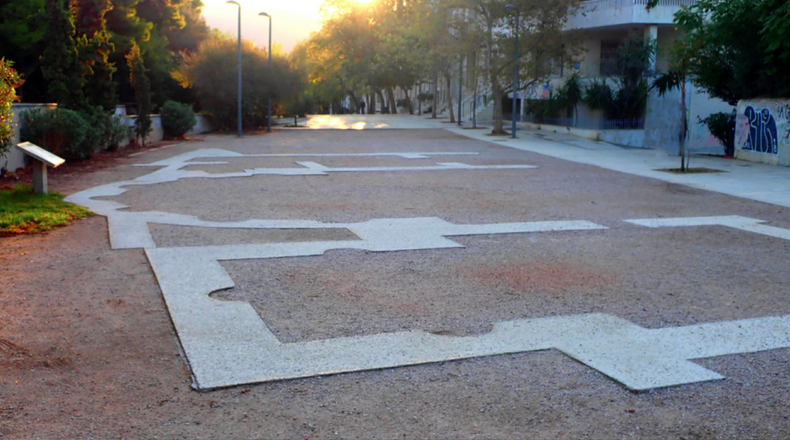
Unfortunately, the archaeological investigation was limited to the northern section of the mansion, as the other half is located beneath modern buildings. Today, the site is carefully covered, and only the relief of the house, along with an informational plaque, is visible.
A significant discovery
The connection between the statue of Hermes and the broader history of the area, particularly with Proclus’ house, is highlighted by the experienced archaeologist and former head of the Athens City Antiquities Department, Eleni Banu: “For the archaeological community, the discovery of such a statue is not surprising. The buildings south of the Herodium during the imperial era were not just homes but philosophical schools. It was customary for directors of these schools to place statues of gods. The major development of these philosophical schools took place from the 3rd to the 5th century AD, and they closed in the early 6th century with a decree by Justinian. Among these buildings, the house of the Neoplatonic philosopher Proclus stands out, and I consider it highly likely that the statue of Hermes found is connected to it,” she explains to protothema.gr, adding meaningfully: “The fact that the statue was found in good condition is very important because such finds are rare. Therefore, this is a discovery of great archaeological and social value, precisely because it is part of this broader context of the philosophical schools of the time.”
The respected archaeologist and head of the excavations at the Acropolis Museum, Stamatia Eleftheratou, agrees with the above view, and she pointed out to protothema.gr: “Although sculptures from the 2nd century AD have been found in the past, including in the excavations at the Acropolis Museum, large statues from this period, especially in good condition, are not frequently discovered. Therefore, this find is indeed a significant event.”
She also told us that “on the southern side of the Acropolis, from the 2nd century AD onwards, there were luxurious homes whose wealthy inhabitants were avid collectors. They had collections of sculptures from the period, which were made in the famous Neo-Attic workshops that operated in the area.”
What is particularly interesting, and relevant to the dating of the statue of Hermes, are the comments Stamatia Eleftheratou made during the International Symposium titled “Athens in the Roman Period: Recent Discoveries, New Research,” held in Athens in 2008. She noted at that time: “It has been pointed out that the southern area of Athens was the residence of the local aristocracy during the Roman period. Philostratus even mentions that the father of Herodes Atticus maintained houses near the Dionysian Theater.”
Ask me anything
Explore related questions