×
GreekEnglish

×
  • Politics
  • Diaspora
  • World
  • Lifestyle
  • Travel
  • Culture
  • Sports
  • Cooking
Monday
19
Jan 2026
weather symbol
Athens 5°C
  • Home
  • Politics
  • Economy
  • World
  • Diaspora
  • Lifestyle
  • Travel
  • Culture
  • Sports
  • Mediterranean Cooking
  • Weather
Contact follow Protothema:
Powered by Cloudevo
> World

Toxic fungus linked to the “curse of the pharaohs” is turned into an anti-leukaemia drug

Researchers have turned the deadly fungus Aspergillus flavus into a powerful cancer-fighting compound and pave the way for the discovery of more fungal drugs

Newsroom June 24 06:21


Researchers led by the University of Pennsylvania have turned the deadly fungus Aspergillus flavus, linked to the curse of the pharaohs, into a powerful cancer-fighting compound that opens new avenues in the discovery of more fungal drugs.

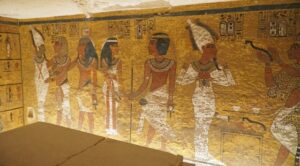
After archaeologists opened the tomb of King Tutankhamun in the 1920s, a series of untimely deaths among the excavation team fueled rumors of a pharaoh’s curse. Decades later, doctors theorized that fungal spores, dormant for millennia, could have played a role.

In the 1970s, a dozen scientists entered the tomb of Kazimir IV in Poland. Within weeks, ten of them died. Subsequent investigations revealed that the tomb contained Aspergillus flavus, whose toxins can lead to lung infections, especially in people with weakened immune systems.

Now, this same fungus is the source of a promising new cancer treatment.

“The fungi gave us penicillin. These results show that many more drugs derived from natural products remain to be found,” says Sherry Gao, associate professor of chemical and biomolecular engineering and industrial engineering and senior author of the paper in Nature Chemical Biology.

The therapy in question is a class of ribosomally synthesized and post-translationally modified peptides (RiPPs). While thousands of RiPPs have been identified in bacteria, only a few have been found in fungi. To find more RiPPs from fungi, the researchers first studied twelve strains of Aspergillus, which previous research had suggested may contain more of these chemicals, and found that Aspergillus flavus was promising for further study.

After purifying four different RiPPs, the researchers found that the molecules shared a unique structure of interlocking rings. The researchers named these molecules, which had never been described before, after the fungus in which they were found: aspergimicins.

Even without modification, when mixed with human cancer cells, the aspergimicins had medical potential: two of the four variants had potent effects against leukemia cells. Another variant, to which the researchers added a lipid or fatty molecule, also found in the royal jelly that feeds growing bees, worked as well as cytarabine and daunorubicin, two FDA-approved drugs that have been used for decades to treat leukemia.

Through further experimentation, the researchers found that the aspergimicins probably disrupt the process of cell division.

>Related articles

People over 110 maintain health with an immune system that resists aging

Seven challenges that will dominate global health in 2026

How public health is changing in 2026: The five defining shifts and improvements

Notably, the compounds had little to no effect on breast, liver or lung cancer cells, suggesting that the effects of aspergimicins are specific to certain cell types, a critical feature for any future drug treatment.

The researchers identified similar groups of genes in other fungi, suggesting that more fungal RiPPS remain to be discovered.

The next step is to test the aspergimicins in animal models, with the hope of one day moving on to clinical trials in humans.

Ask me anything

Explore related questions
#cancer#fungus#health#medicine#pharaoh#science
> More World

Follow en.protothema.gr on Google News and be the first to know all the news

See all the latest News from Greece and the World, the moment they happen, at en.protothema.gr

> Latest Stories

Erfan Soltani confirmed alive by Iranian Human Rights Group after days of uncertainty

January 18, 2026

Rescue operation underway for eight hikers on Mount Taygetus; four injured

January 18, 2026

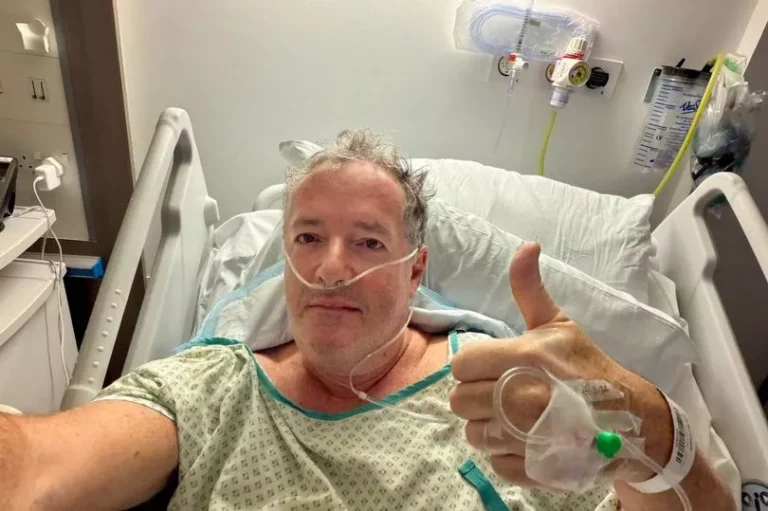
Piers Morgan recovering in hospital after serious fall in London

January 18, 2026

Prime Minister Mitsotakis’ agenda: From talks with farmers’ representatives to Davos for investment outreach

January 18, 2026

Iraq veterans report long-term health concerns after a lack of medical screening for toxic exposure

January 18, 2026

Skirtsos: ‘After years of efforts, the first results on maritime safety are starting to become visible’

January 18, 2026

Politico: Europe for the first time considers tough response to Trump on Greenland tariffs, what is the Anti-Brexit Act

January 18, 2026

The backstory behind Trump’s decision not to attack Iran: The camps in the White House, the SMS from Tehran, and the calls from Arab allies

January 18, 2026
All News

> World

Erfan Soltani confirmed alive by Iranian Human Rights Group after days of uncertainty

The statement follows days of uncertainty and conflicting reports about the fate of the detained protester

January 18, 2026

Piers Morgan recovering in hospital after serious fall in London

January 18, 2026

Iraq veterans report long-term health concerns after a lack of medical screening for toxic exposure

January 18, 2026

Politico: Europe for the first time considers tough response to Trump on Greenland tariffs, what is the Anti-Brexit Act

January 18, 2026

The backstory behind Trump’s decision not to attack Iran: The camps in the White House, the SMS from Tehran, and the calls from Arab allies

January 18, 2026
Homepage
PERSONAL DATA PROTECTION POLICY COOKIES POLICY TERM OF USE
Powered by Cloudevo
Copyright © 2026 Πρώτο Θέμα