






Prime Minister Kyriakos Mitsotakis chaired a meeting today with the leadership of the Ministry of Interior, during which the bill for the reform, simplification, acceleration, and tightening of disciplinary justice in the public sector was presented, as part of the broader effort to upgrade state services.
The bill, which was submitted to public consultation yesterday, provides for the replacement of the existing first-instance disciplinary councils and the second-instance council by a new body, the Disciplinary Council for Human Resources of the Public Sector.

The new Council will be staffed by 50 specialized officials from the Legal Council of the State, who will be exclusively and fully engaged with disciplinary law in the public sector. Currently, disciplinary bodies include judges and members of the LCS who have other main occupations, which is believed to contribute to delays.
With the new system, it is estimated that most cases will be judged within a few months, while currently delays in disciplinary justice can reach up to six years. Binding deadlines are set for each stage of the disciplinary process and accountability will be imposed in cases of unjustified delays.
Meeting under the Prime Minister for the bill on disciplinary justice in the public sector
Utilization of technology and redefinition of offenses and penalties
The work of the new Council will be supported by further digitization of the disciplinary process, as a special application will be made available to it, which will be connected with the civil servants’ registry of the Ministry of Interior and with the “e-Peitharxika” database of the National Transparency Authority, allowing the monitoring of each disciplinary case in real time. At the same time, meetings will be able to take place via teleconference, while all documents will be served electronically.
The bill also brings stricter and modernized legal frameworks, as in the past there have been cases of mild disciplinary penalties while criminal courts had reached much stricter decisions.
In this direction, the list of offenses is expanded, now including refusal of evaluation. As for penalties, new sanctions are introduced, such as deprivation of salary grade advancements and prohibition of assuming positions of responsibility. Additionally, criminal offenses are defined that will lead to the dismissal of convicted employees, such as computer fraud, forgery of certificates, breach of trust, and bribery.
To expedite the resolution of pending cases, the institution of disciplinary settlement is also established. This new institution will allow accused individuals to accept the charges against them in exchange for a lighter penalty. Disciplinary settlement cannot apply to cases where permanent dismissal of the employee is possible, nor to cases where the public sector has suffered financial damage.
The new Council will judge the most serious disciplinary cases in five-member panels. Less serious offenses will be evaluated by three-member committees.
The bill will be voted on at the end of July and will take effect immediately after.
During the meeting, it was noted that since 2019, 1,155 employees have been permanently dismissed from the public sector, as efforts to tackle disciplinary offenders have intensified. On the other hand, through the separate mechanism of evaluation and productivity bonuses, procedures and incentives have been institutionalized to reward the most productive and support the weaker ones.
Mitsotakis: One more step in the major reform of accountability in the public sector

During the meeting, the Prime Minister stated:
“The reform of disciplinary law has concerned me since the time I was Minister of Administrative Reform, when the first systematic efforts were made for faster delivery of disciplinary justice. And the time has come to take an important step forward, which I believe is achieved with the bill that we have put to public consultation and which will become law by the end of July.
The goal is to significantly accelerate all processes for the delivery of disciplinary justice, through the creation of a large central disciplinary council.
And of course, let us emphasize that, within the framework of this reform of disciplinary law, refusal of evaluation will now constitute a disciplinary offense and will be assessed accordingly by the competent disciplinary council.
It is one more effort we are making, in the context of the major reform regarding accountability in the broader public sector, to modernize procedures so that public sector employees subject to disciplinary action can resolve their cases within a few months, and not after many years, as unfortunately happens today, where we have seen absurdities: public servants who have been criminally convicted for very serious offenses, and the disciplinary councils essentially ruling that they should get away with a simple “slap on the wrist.” The time has come to leave those cases definitively and irrevocably behind us.”
Minister of Interior, Theodoros Livanios, stated:
“With the bill for the reform of disciplinary law, which was submitted to public consultation yesterday and will remain open until July 21, we are attempting a comprehensive reform of the procedures and method of delivering disciplinary justice, aiming for faster resolution, to benefit both the service where an employee works and the employee himself, who will no longer be before a disciplinary council for a long time.
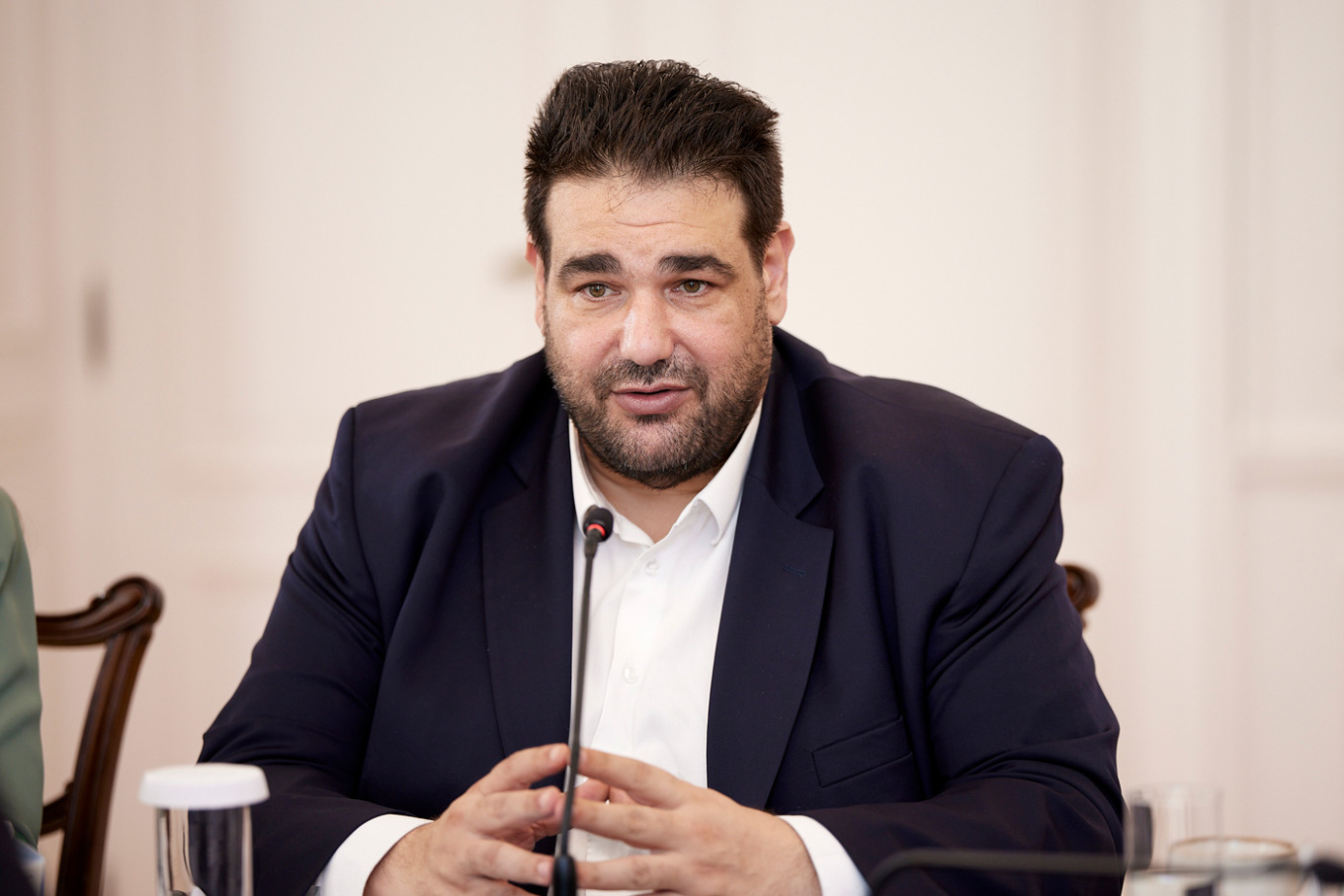
We are making a systematic effort to strengthen the public sector with specific actions. The disciplinary councils, as they operated until today, had long response times, in many cases reaching up to six years and possibly exceeding them, and we want to continue with the evaluation of the public sector and the improvement of services provided by public servants to citizens.
And let us point out that from 2019 until today, 1,155 public servants have been dismissed from the public sector, either due to forged documents for recruitment or due to specific disciplinary offenses. The time taken for these disciplinary procedures was long—they were completed—but we want them to be further accelerated, to give a sense of justice and to thus reward the capable and worthy public servants.”
The meeting was also attended by Minister of State Akis Skertsos, Deputy Ministers of Interior Vasilis Spanakis and Vivi Charalampogianni, and Secretary General to the Prime Minister Stelios Koutnatzis.
Ask me anything
Explore related questions