




The news that a Greek armed guard was found alive after spending more than 36 hours at sea following a deadly Houthi attack on the Eternity C cargo ship in the Red Sea sparked relief and deep concern. The incident raised urgent questions: how can such attacks take place in international waters, who are the people sent to protect these ships, and how much protection do they really have?
His words reveal the harsh, unseen reality of those working in one of the world’s most dangerous maritime zones.
“We’re Not Guarding Ships – We’re Trying to Stay Alive”
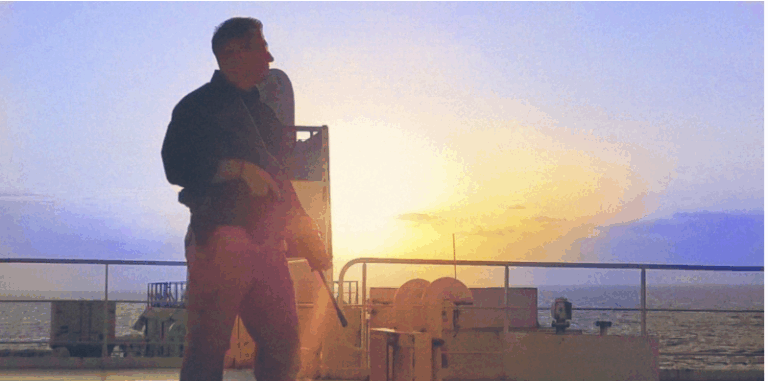
Sotiris is not fond of grand titles or romanticising his profession. He describes it plainly, with calmness, honesty, and a quiet tension just beneath his steady voice.
He first took on the role in 2017, at a time when piracy was still a serious threat across the waters stretching from the Persian Gulf to the Horn of Africa. Shipping companies had begun contracting private security firms to place armed teams on board. Since then, Sotiris has sailed thousands of nautical miles in conditions few outsiders could imagine.
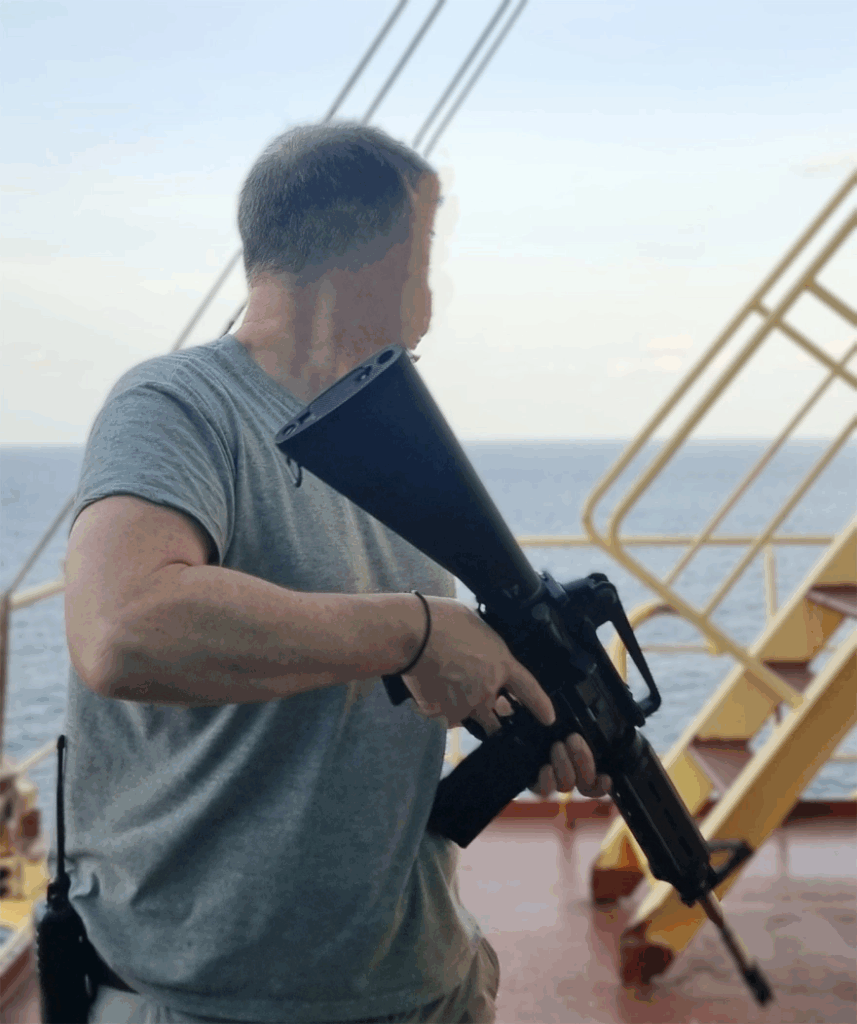
His assignments are structured around four-month contracts. During that time, he remains stationed on one of three floating security bases—stationary vessels located in international waters that serve as living quarters, weapons depots, and transfer points for embarking to and from the cargo ships they’re assigned to protect.
Each mission typically lasts five to six days. Guards board ships from the floating base, escort them through high-risk areas, and return. The cycle repeats continuously for months. Sometimes, though, the wait for a new assignment stretches for weeks. “You might spend 25 days waiting for a ship with a contract to come through,” Sotiris says. “That’s the sanitized version of what it means to be an armed guard in the Red Sea.”
A Threat Beyond Piracy
Since 2023, the situation has deteriorated. Yemen’s Houthi rebels, backed by Iran, have launched direct attacks on vessels they believe are tied to Israeli or American interests. The Bab el-Mandeb Strait—a key maritime chokepoint—has become a theatre of war.
“This is no longer about piracy,” Sotiris explains. “A pirate boards a ship to steal. The Houthis want to kill. They want to send a message. To terrorize.”
The threat level has changed drastically. “You’re not dealing with men in skiffs with Kalashnikovs anymore. Now it’s ballistic missiles, explosive-laden drones, small boats rigged with mines. You can’t do anything against that.”
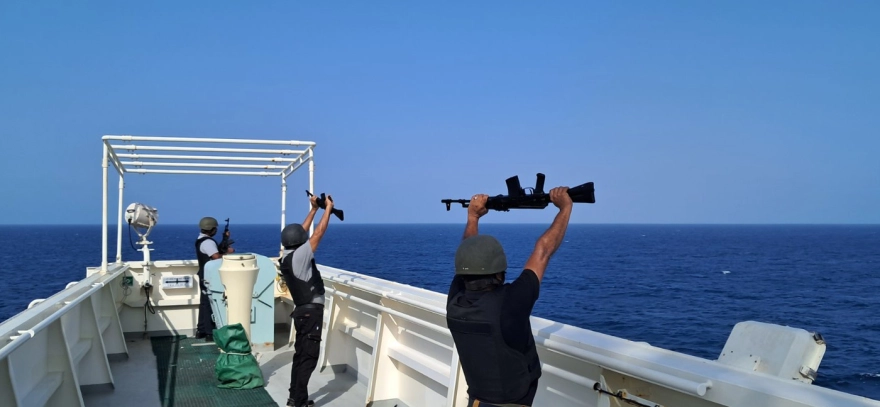
In his career, Sotiris has never fired a shot. He’s used flares and sound signals to deter suspicious vessels, but his team has mostly served as a deterrent force. Still, that no longer feels sufficient.
“It doesn’t matter if they see armed guards on deck,” he says. “If someone decides to hit a ship with a drone, they’ll do it. We’re not protecting ships. We’re in a war zone.”
Alone at Sea
Beyond the threat of attack, there is also the fear of abandonment.
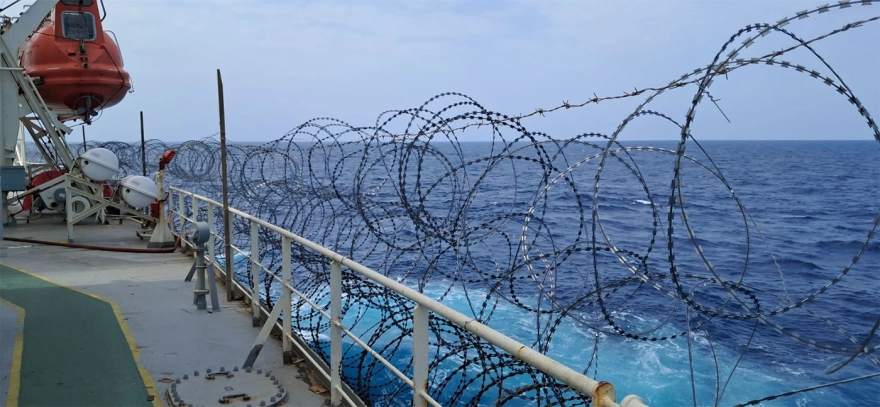
“There’s no protection,” he says bluntly. “Naval forces are absent. No Americans, no Europeans. The Greek frigate is too far away. There are two South Korean ships in Djibouti, but they don’t operate in the area. If something happens, you’re on your own.”
When asked about the widely held belief that armed maritime guards earn large sums, he laughs. “That’s a myth. Sure, you make some money. But given the conditions, the exhaustion, the constant fear—it’s not enough. It doesn’t reflect the danger.”
“I Hope He’s Just a Hostage. If He’s Alive, He’ll Make It Back.”
As the conversation turned to the colleague missing after the Houthi attack, Sotiris’s tone shifted. This was before news emerged that the guard had been found alive. “I know him. We were on the same base. Quiet guy. Serious. Experienced. I hope he’s a hostage, not worse. If he’s alive, he’ll come back. He’s strong enough. I believe it.”
A few hours later, his hope became reality. His colleague was rescued—alive.
It was a rare happy ending in a region where the line between survival and tragedy is razor-thin. A reminder that on these troubled seas, it’s not just cargo being moved. It’s human lives—under threat, often forgotten, but enduring nonetheless.
Ask me anything
Explore related questions