




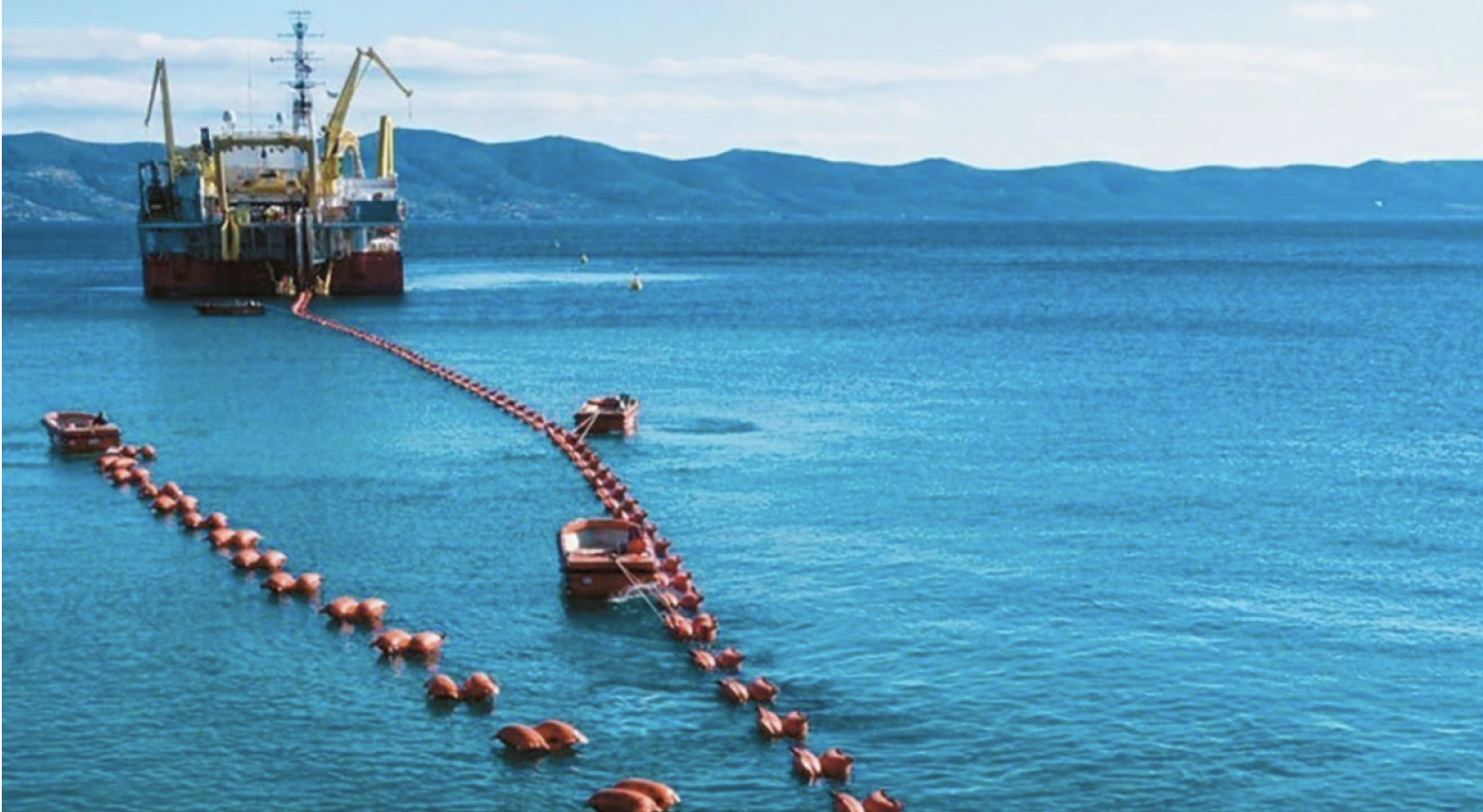
The Cyprus–Crete–(Israel) electricity interconnection is not just a technically complex project. It is Cyprus’ escape from energy isolation, the EU’s bet on interconnectivity among all member states, and a geopolitical message to Turkey.
Recently, confusion has arisen as Nicosia appears to speak with two voices. Finance Minister Makis Keravnos insists the project is not viable and objects to advance payments to the implementing body, ADMIE, while President Christodoulides stresses that it is a strategic choice — on the condition that ADMIE delivers on its commitments.
“Keravnos” in the Economy
Finance Minister Makis Keravnos has publicly stated that two “independent and serious organizations” concluded the project is not viable, even asking the European Commission why it has not been completed. He rejected the release of funds for the first installment, summarizing his stance as: a massive financial risk without guarantees.
President Nikos Christodoulides, on the other hand, emphasizes the project’s strategic and political importance. He told Protothema.gr that he agreed with Prime Minister Kyriakos Mitsotakis on the need for implementation, while pointing to ADMIE as the implementing body that has “taken on commitments” and is “expected to fulfill them” so Cyprus can do its part. In essence: yes to the project, but not a blank check.
Government sources in Nicosia told Protothema.gr this morning: “The project is of strategic importance for the Republic of Cyprus, but its viability depends on the conditions and commitments undertaken by ADMIE, and we expect their implementation.”
When asked about apparent differences between the finance minister’s remarks and those of the president, the same sources said: “There is no difference in positions. If the conditions and commitments are implemented by ADMIE, the project will be viable.”
Rumors are intensifying that President Christodoulides may soon reshuffle his cabinet and replace Keravnos.
What ADMIE is Asking
ADMIE has requested a total of €125 million from Cyprus between 2025–2029 — about €25 million annually before commercial operation — as regulated revenue to support investment and financing. Nicosia views this as a prepayment without a guaranteed timetable, full cost transparency, or clear allocation of consumer risk.
At the same time, ADMIE presented an updated cost–benefit analysis for the Cyprus–Israel leg, while payments to French company Nexans for cable construction and installation were temporarily suspended, fueling doubts about the project’s pace.
The Cyprus–Crete link alone is estimated at €1.9 billion, with the EU approving a €657 million CEF grant and total European support approaching €800 million. Politically, Greece and Cyprus signed a Memorandum of Understanding in 2024 to unblock the project.
Meanwhile, Greece is completing its internal interconnections, boosting its role as a hub in the Eastern Mediterranean. Athens has warned of “consequences” for any third party attempting obstruction — a message clearly aimed at Turkey.
The Bigger Picture: The GSI Project
The EU has labeled the cable a Project of Common Interest that reduces Cyprus’ energy isolation, facilitates renewable energy integration, and enhances grid resilience. The Commission has consistently supported it, even when political friction between Nicosia and Athens was visible.
The U.S. also favors electricity interconnection in the Eastern Mediterranean under its energy security and IMEC initiative. The 2025 Cyprus–Israel agreement was presented by Israel as part of this U.S.-backed corridor. Washington frames such projects as supporting diversification of energy sources and regional stability.
Israel’s Position
Israel has pledged to “do whatever it takes” to move the interconnection forward, seeking backup access to Europe’s grid and export opportunities. Cyprus and Israel are politically committed to signing a bilateral deal in 2025, a stance both governments reaffirm publicly.
Turkish Obstacles
Ankara has warned that the cable route “violates rights” in areas it claims. The EU expressed annoyance, with Estonian Commission President Kaja Kallas condemning threats of obstruction. Greece responds that international law and its EEZ delimitation with Egypt provide cover.
In practice, such interference may delay surveys or works but is unlikely to overturn a mature European project once technical, regulatory, and financing elements are secured.
The Real Risks
- Economic risk: Collecting regulated revenues (€25m annually) without a clear roadmap, full cost disclosure, or safeguards for consumers is indeed a risk. The Cypriot finance ministry’s resistance pressures ADMIE for more transparency, timetables, and commitments.
- Strategic benefit: The interconnection ends Cyprus’ energy isolation, ensures system security, enables renewable energy imports/exports, and elevates Nicosia’s role in the Greece–Cyprus–Israel triangle under an EU umbrella.
- Geopolitical balance: Turkey’s objections won’t disappear, but EU funding and Israel–Greece alignment give the project political weight that is hard to undo — if all parties keep their commitments.
This explains Christodoulides’ stance: ADMIE must make concrete moves before asking for advance revenues.
Bottom Line
Cyprus is walking a tightrope: it must avoid saddling taxpayers with vague risks, but also avoid sidelining itself from a project that could reshape its energy and geopolitical standing in the Eastern Mediterranean.
Politically, Christodoulides leaves the door open with conditions of credibility from ADMIE. Financially, the finance minister demands firm ground before any payment.
For the project to proceed, ADMIE must present a clear package of commitments, an updated timetable, and a regulatory decision ensuring the cable does not become a “cable tax” for Cypriot consumers.
Ask me anything
Explore related questions