





One can read the history of Venezuela over recent decades through figures, international reports, and television footage. But the real picture emerges through the testimonies of people who lived there—not as observers, but as citizens of a state that was collapsing day by day. Vasiliki Androutsopoulou belongs to this category. Born and raised in Venezuela, she lived her entire life there until 2022. She studied Medicine, specialized in Plastic Surgery, and completed postgraduate studies in aesthetic medicine, in an environment that, while she was advancing scientifically, was sinking socially, economically, and institutionally.
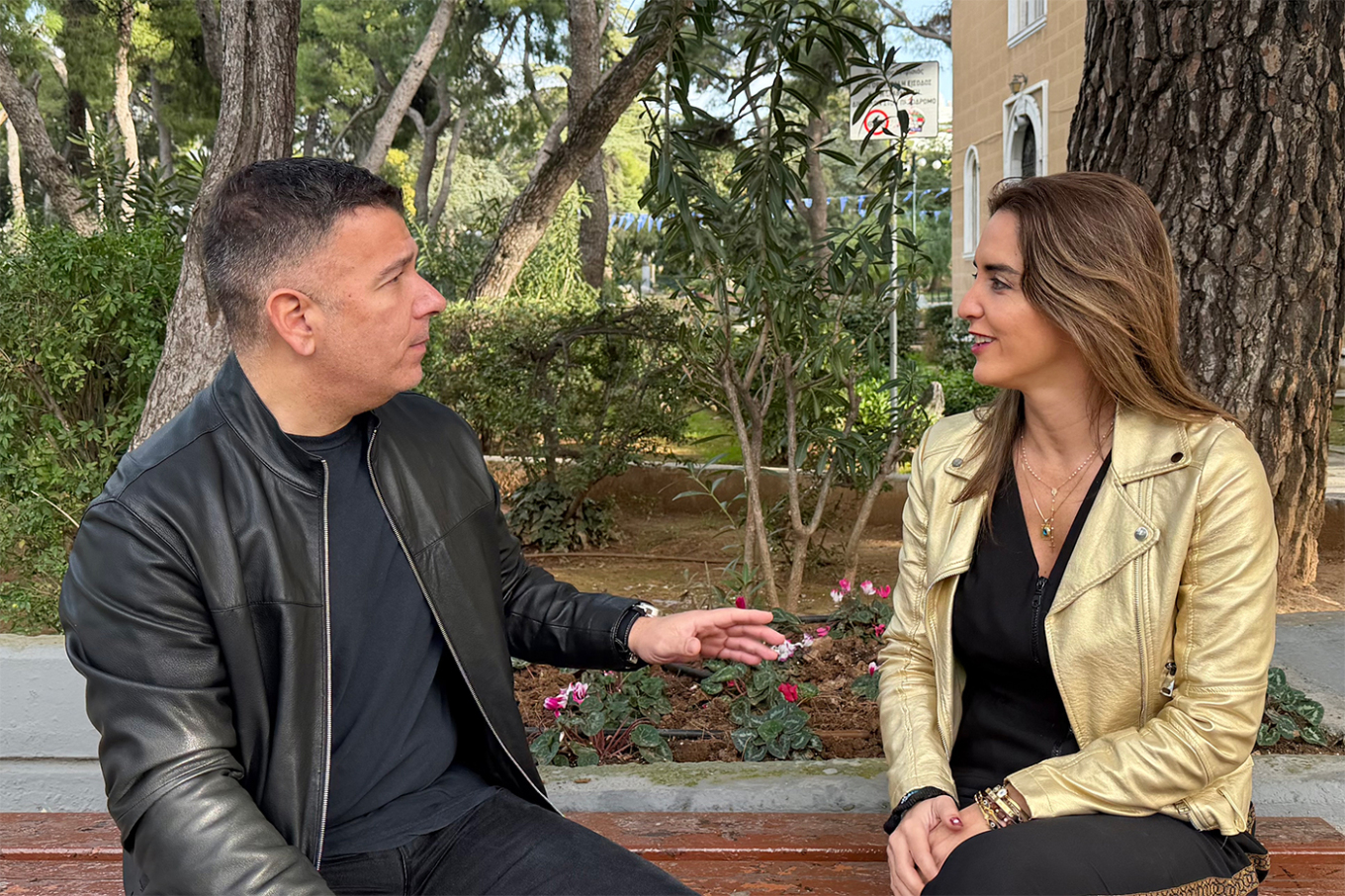
Today, we meet her in Kifisia, where she now lives permanently with her family. They are Greeks of the diaspora who made the difficult decision to leave the country where they had put down roots for decades and seek refuge in Greece. She recalls that the transition from the era of Hugo Chávez to the governance of Nicolás Maduro began in a climate of mourning but also hope. As she describes it, the people were devastated by Chávez’s death but supported his successor, believing he would continue the same political course.
How Maduro “entered” my home
According to her, this tolerance did not last long. Comparisons began almost immediately and were unforgiving, mainly because the new administration coincided with the drop in oil prices and the decline in production—the country’s main economic lifeline. In practice, she says, Venezuela found itself bankrupt. From 2012 onward, problems became part of everyday life. She describes a country where the state could not meet basic needs: frequent power outages, water shortages lasting even weeks across entire regions, and complete breakdown of infrastructure. She refers in particular to a nationwide blackout that lasted seven days, during which there was no electricity, no water, not even basic goods such as ice, forcing citizens to find ways to survive on their own.
Within this environment, social anger began to build. In 2014, she recalls, the first mass protest took place, involving thousands of citizens. “Despite its scale, these images never fully reached the international community,” she notes.
Monthly salary: 1 dollar
The response of those in power, according to her testimony, was violent and organized.
“Beyond the army, the regime had formed paramilitary groups, and the so-called ‘colectivos’ were armed in the shantytowns. The colectivos are armed, pro-government paramilitary groups in Venezuela that operate in poor areas; they began as community organizations but evolved into a mechanism of political control and repression.”
As Vasiliki adds, “These armed groups were deployed at key points, such as bridges and road axes, and attacked anyone trying to reach the protests.”
Her account makes it clear that repression spared no one: “There were deaths, even minors, mass arrests, transfers to prisons with extreme detention conditions, torture, and enforced disappearances.” All of this, she emphasizes, had been documented by the opposition. She mentions that she herself participated in protests with friends. The same happened again in 2017, during the second major wave of mobilizations, when thousands once more took to the streets despite the fear.
How Venezuela became a narco-state
However, as she points out, Venezuela’s crisis did not stop at poverty and repression. Gradually, the regime, as she describes it, turned the country into a narco-state. She confirms that the images seen today in international news—of U.S. operations against cartels and cocaine seizures—reflect reality. According to her, two dominant cartels emerged: “One linked to the circle of Maduro’s wife, and the second, known as the Cartel of the Suns, led by a figure allegedly controlling the army and considered the second most powerful person after the president himself.”
The transformation of Venezuela into a drug-trafficking hub, she explains, was directly linked to international developments. “After the death of Pablo Escobar and the arrest of El Chapo, the cartels sought new routes. The country’s geographic position made it ideal for transporting cocaine to the United States and Europe,” she says.
“Tun Tun”: when fear knocked on the door
If protests were the public face of the conflict, the nighttime “operations” were its dark continuation—when repression entered people’s homes.
Vasiliki Androutsopoulou describes how, after every major wave of mobilizations, the so-called Tun Tun operations followed—an organized campaign of intimidation and arrests. These involved masked groups, whose members no one could be sure belonged to the army or paramilitary forces. These operations, internationally known as Operation Tun Tun, took their name from the phrase “knock on the door” and were directly linked to orders publicly described by pro-government figure Diosdado Cabello during the 2017 protests.
“You never knew who was coming. They knocked on doors in the middle of the night and took people away,” she says.
In one of these operations, as she recounts, armed men also reached her home. They tried to break down the door with such force that it nearly collapsed. At the time, she was inside with a friend from the Dominican Republic, with whom she worked at Venezuela’s military hospital. Fearing that if they did not open, the armed men would start shooting to get in, she begged them to enter through the window—the only way, she says, to avoid escalation. Her friend explained that he was Dominican, stressing that his country had good relations with Venezuela, and that they both worked as doctors at the military hospital.
In the end, they were released. “We were lucky,” she says.
That luck, however, did not extend to her neighbor one floor below. As she explains, the armed men were likely looking for him.
“They beat him brutally, took whatever was in the house, and transferred him to prison. From that moment on, there was never any information about what happened to him. The only thing he was told, according to what I later learned, was that he was considered a ‘traitor.’”
The one-dollar salary
Violence, however, was not the only mechanism destroying society. In everyday life, she says, the economy now worked against the citizens themselves. When asked whether people were truly suffering that much, her answer is unequivocal. Inflation, as she describes it, wiped out whatever remained. The minimum wage fell to one dollar per month, making any notion of a dignified life impossible. She notes that during her last visit, in October, she realized Venezuela had paradoxically become one of the most expensive countries in the world. For just three absolutely basic supermarket items—dough, rice, and a few other foods—she had to pay one hundred dollars. “Unbelievable,” she says.
At the same time, the country was emptying out. According to her account, about 25% of the population left the country: Mexico, the United States, Argentina, Chile, Spain, Ireland, even Greece. These people now support the families they left behind by sending remittances. The money is exchanged in small amounts so it is not wiped out by inflation. Meanwhile, crime skyrocketed. As she says, anyone who owned a car or carried a mobile phone automatically became a target. Theft became routine, and the sense of insecurity universal.
The collapse also hit the Greek community. Many Greeks who ran clothing, shoe, and other retail shops were forced to close down—among them her father. The clothing store he owned shut its doors, as rents skyrocketed to levels impossible to cover. “We could no longer keep our shops open,” she concludes.
Ask me anything
Explore related questions