




Despite the mass protests shaking Iran, the thousands of deaths, and escalating international pressure, there are so far no signs of an internal rupture within the hard core of power that could lead to the overthrow of one of the world’s most resilient regimes.
This is the main conclusion of a Reuters analysis that seeks to explain why the Islamic Republic continues to stand, despite a deep political and social crisis. Pressure on Iran’s leadership has intensified due to repeated threats by U.S. President Donald Trump of military action, prompted by the violent crackdown on protests.
At the same time, as a White House official told Reuters, “all options are on the table.”
However, diplomats, government sources in the Middle East, and analysts believe that without defections at the top of the state apparatus—especially within the security forces—the regime is unlikely to collapse. “For that to happen, crowds would need to remain on the streets for a much longer period and the state would have to fracture, with parts of the security forces switching sides,” says Vali Nasr, an Iranian-American academic and expert on U.S. foreign policy.
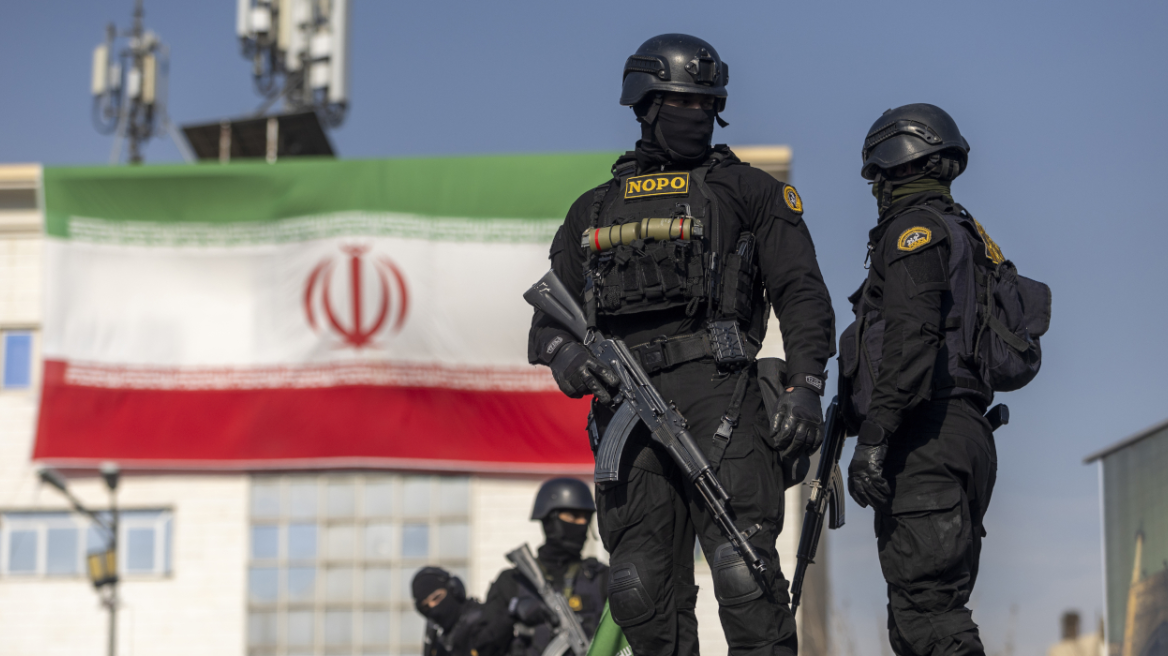
Iran’s security architecture is considered among the deepest and most effective in the world. The Revolutionary Guards and the Basij paramilitary forces together number nearly one million people, operating as a multi-layered network of control, deterrence, and repression. To date, all major uprisings have been crushed through mass arrests, killings, and intimidation—a strategy that analysts describe as “rule through fear.”
An Iranian official told Reuters that around 2,000 people have been killed in the protests, attributing the deaths to “terrorists.” Human rights organizations report at least 600 deaths, while the group HRANA has recorded 573 confirmed fatalities and more than 10,000 arrests. Iran has not released an official toll.
Supreme Leader Ayatollah Ali Khamenei, 86, has survived multiple waves of unrest. This is the fifth major uprising since 2009, a fact that—according to Paul Salem of the Middle East Institute—demonstrates resilience and cohesion, despite a deep and unresolved internal legitimacy crisis.
Analysts note, however, that survival does not equate to stability. The economy remains strangled by sanctions with no clear way out, while geopolitically Iran is in a weakened position: its nuclear program has suffered serious setbacks, and the “Axis of Resistance” has been weakened by heavy losses among allies in Lebanon, Syria, and Gaza.
Particular weight is given to Donald Trump’s public interventions. He has called on protesters to seize institutions, said that “help is on the way,” and threatened tariffs against countries that trade with Iran, with China being Tehran’s main trading partner. Meanwhile, according to an Israeli source, the possibility of U.S. intervention was discussed during a phone call between Netanyahu and Rubio.
In diplomatic circles, the so-called “Venezuela model” is resurfacing: removing the top leadership while simultaneously signaling to the state apparatus that it can remain in place if it cooperates. However, applying such a scenario to Iran is considered extremely dangerous, as it could lead to ethnic and sectarian fractures, particularly in Kurdish and Sunni regions with a history of resistance.
Military options do exist, ranging from pressure on maritime shipments of Iranian oil to targeted strikes or cyberattacks, but all carry high risk. Other forms of intervention—such as restoring internet access via Starlink to facilitate protesters’ communications—could precede the use of force.
As David Makovsky of the Washington Institute notes, if Trump decides to act, he would likely opt for a short, high-intensity move rather than a prolonged military engagement. “He is looking for a move that could change the game. The question is what that move will be,” he says.
Whether the threats are a means of pressure, deterrence, or a prelude to intervention remains unclear. For now, the regime in Tehran appears wounded—but not ready to collapse.
Ask me anything
Explore related questions