Fresh diplomatic tensions are emerging in the Middle East following U.S. President Donald Trump’s decision to invite key regional and international figures to join a newly formed Peace Council for Gaza, a move that has reportedly raised concerns in Israel.
According to official announcements, Trump has invited the leaders of Turkey, Egypt, and Argentina, along with senior Qatari diplomats, to become founding members of the council, which aims to oversee security arrangements and the reconstruction of Gaza following the war. The initiative places Trump himself at the head of the council as its founding president.
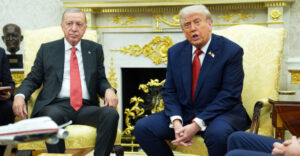
Turkey’s presidency confirmed that President Recep Tayyip Erdogan received a formal invitation on January 16 to join the body. In a statement, Ankara described the move as recognition of Turkey’s role in regional diplomacy. Argentine President Javier Milei also confirmed Argentina’s participation, calling it an honor and stressing his country’s commitment to combating terrorism while promoting peace, freedom, and stability.
Egyptian President Abdel Fattah el-Sisi publicly welcomed the invitation, praising Trump’s efforts to establish peace and stability at both regional and international levels. El-Sisi also highlighted U.S. acknowledgment of Egypt’s pivotal role in maintaining security in the region.
The participation of Turkey and Qatar, two countries that have openly criticized Israel’s military operations in Gaza, has reportedly caused unease in Jerusalem. As noted by Israeli media, their inclusion reflects Trump’s belief in their influence over Hamas, particularly following their role in brokering a ceasefire agreement in October.
According to the White House, the Peace Council’s composition includes U.S. Secretary of State Marco Rubio, special envoy Steve Witkoff, Trump’s son-in-law Jared Kushner, and former UK Prime Minister Tony Blair. Other members include businessman Marc Rowan, World Bank President Ajay Banga, and political adviser Robert Gabriel.
The Bulgarian diplomat Nikolay Mladenov has been appointed High Representative for Gaza, a role expected to be central to the second phase of the U.S.-backed plan to end the conflict. Command of the International Stabilization Force for Gaza will be assumed by Major General Jasper Jeffers.
At the same time, a newly formed Palestinian technocratic committee tasked with the temporary administration of Gaza has begun its work in Cairo, in the presence of Jared Kushner and Nikolay Mladenov, according to sources cited by AFP.
Reconstruction efforts in Gaza will be based primarily on an Egyptian-Arab-Islamic plan, adopted in March 2025 with the backing of several European countries. The plan envisions rebuilding Gaza without relocating its approximately two million residents, marking a departure from earlier U.S. proposals that had suggested population transfers.
As diplomatic maneuvering intensifies, the initiative underscores shifting alliances and renewed friction in the region, with Israel closely monitoring developments surrounding the newly established Peace Council.
Ask me anything
Explore related questions