




Messinia is an experience with a beginning, middle and end. It is not just another “destination of the year”. That phrase has been overused to mean something. Here, if you pause a little longer, you realize that we are talking about something slower and more meaningful. It is no coincidence that the major international media agree. The New York Times, Condé Nast Traveller, Forbes Travel Guide, and Expedia all place the region on their top lists for 2026. This coincidence is not a journalistic fad. It’s an indication of a deeper shift.
The Year of the Peloponnese
Messinia is at a rare crossroads. On the one hand, the global return to the grand narrative, to the traveller’s need to understand a place, not just consume it. On the other hand, the cinematic explosion of set-jetting, on the occasion of Christopher Nolan’s much-discussed film adaptation of The Odyssey. And somewhere in between, fifteen years of mature, methodical development, spearheaded by Costa Navarino, which gave the region the infrastructure, confidence, and language to speak to the world.
The Year of the Peloponnese
Messinia finds itself at a rare crossroads. On one hand, there is a global return to the “grand narrative” of travel: a growing desire among travelers to truly understand a place, not merely consume it. On the other hand, there is the cinematic surge of set-jetting, fueled by the much-discussed film adaptation of The Odyssey by Christopher Nolan. And somewhere in between lies fifteen years of mature, methodical development, led by Costa Navarino, which has given the region infrastructure, confidence, and a language with which to speak to the world.
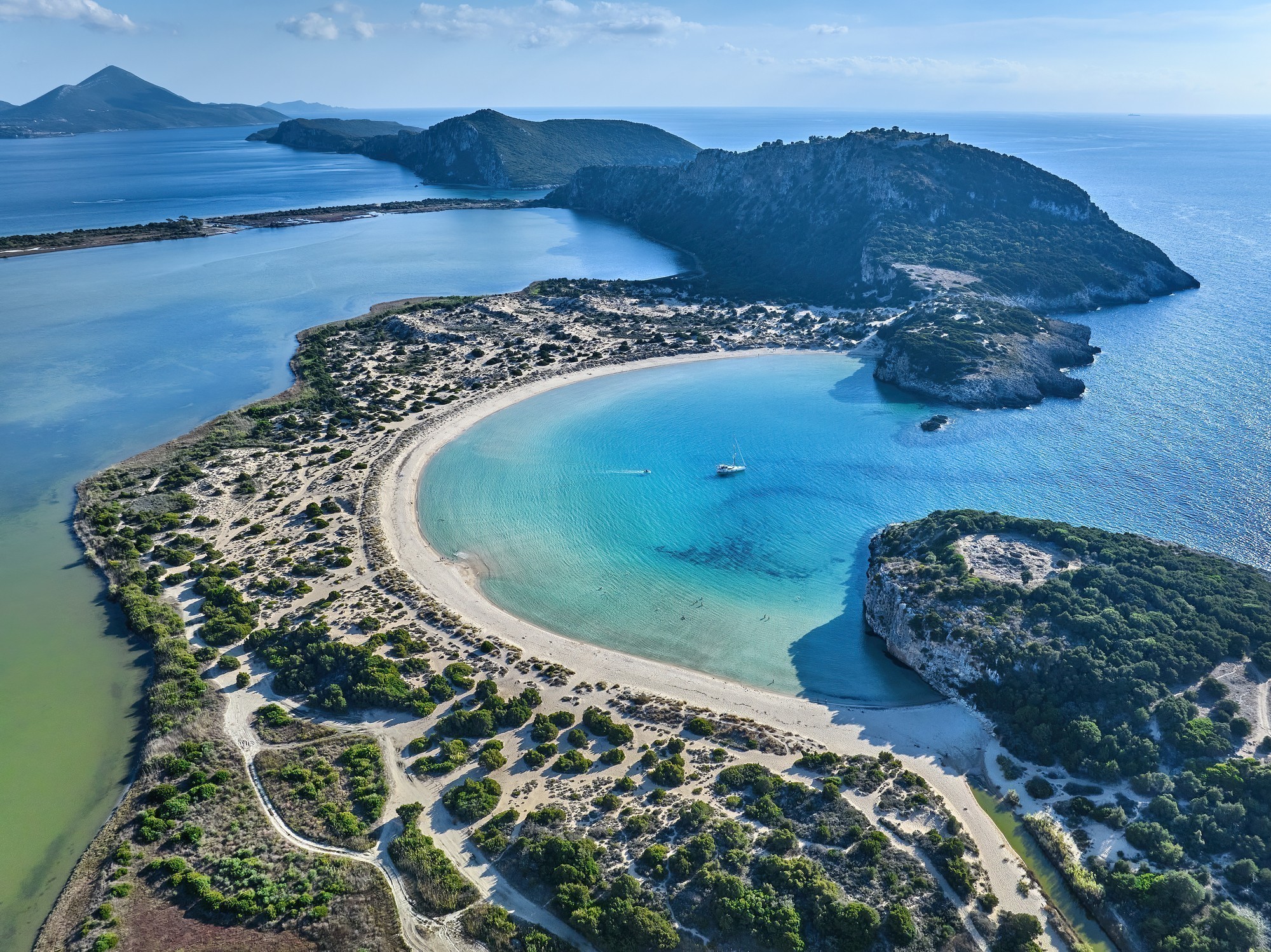
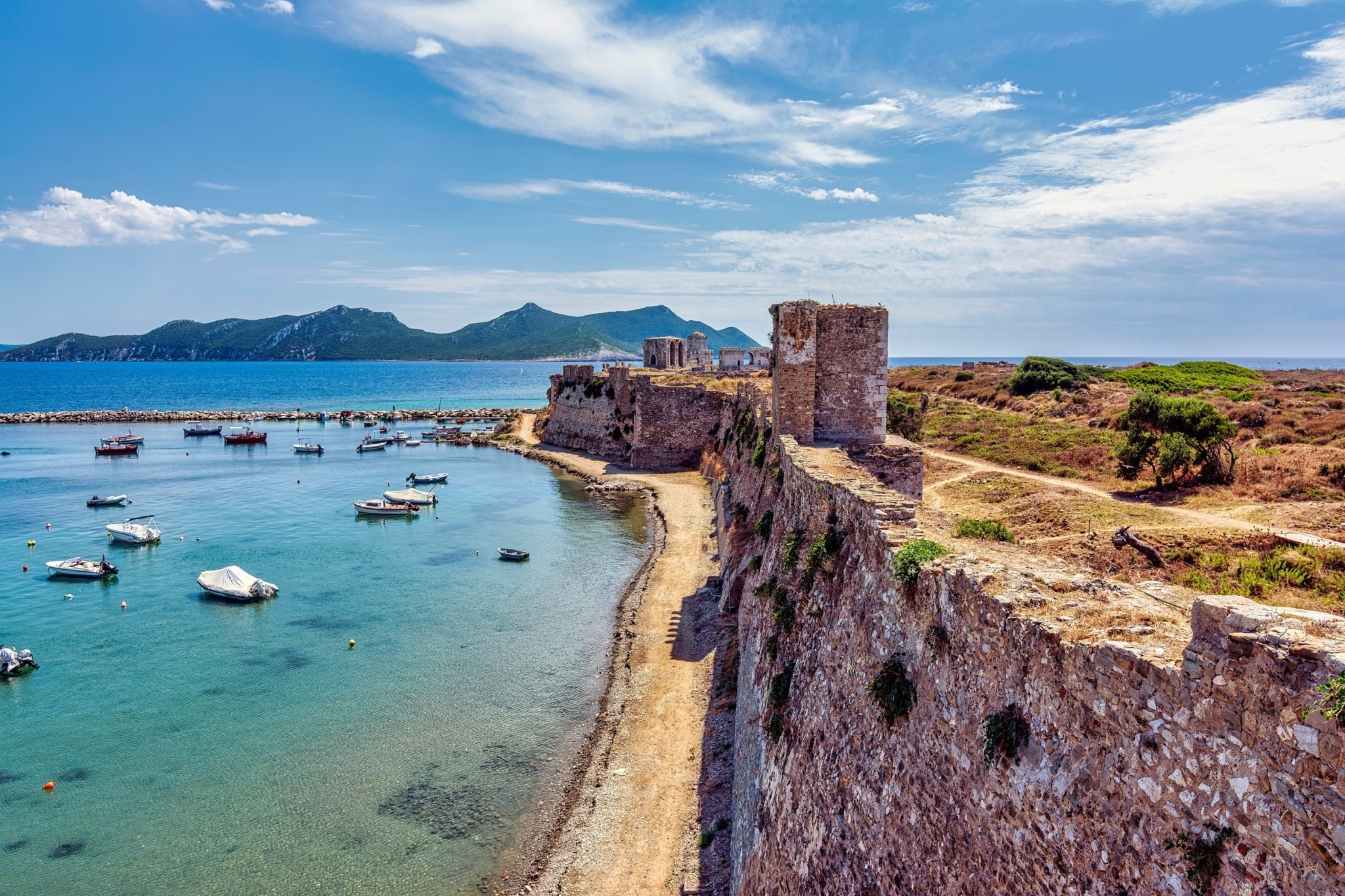
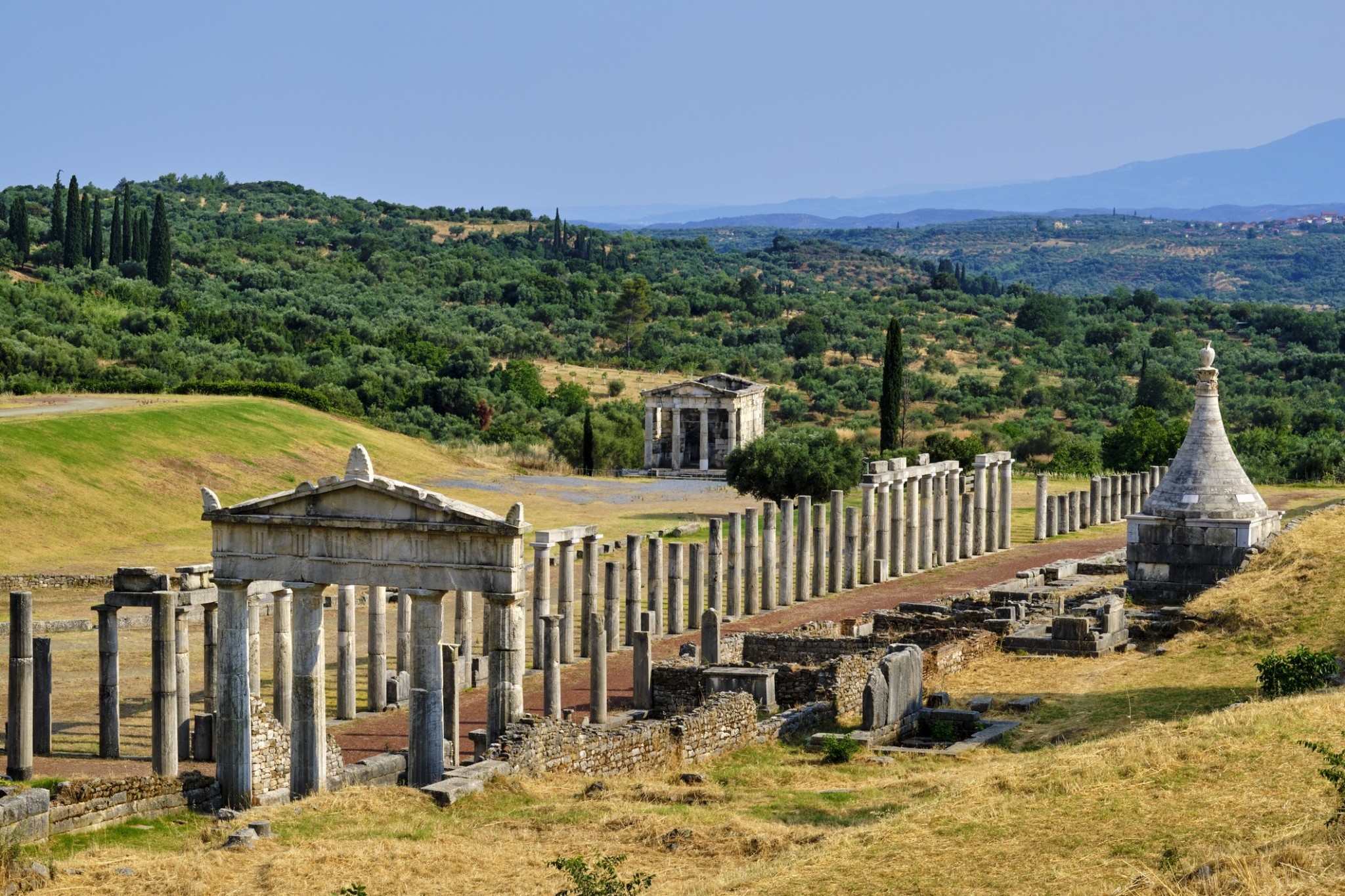
The New York Times speaks of a return to the roots of Western civilization, not as a museum visit, but as a lived experience. In Messinia, history is not displayed behind glass cases. It flows through the olive groves, is reflected in the waters of Voidokilia, and rises in the walls of Methoni. It is present, almost tangible. And at times, unexpectedly silent.
When Myth Becomes Cinema
The choice of the Peloponnese as the natural backdrop for The Odyssey was far from merely aesthetic. Nolan sought landscapes that do not “perform” antiquity, but embody it. Voidokilia Beach, with its almost perfect omega-shaped curve, functions like a natural storyboard. Methoni Castle, with its tower touching the sea, provides the scale demanded by new cinematic technology that focuses on detail and elevates it: IMAX. And the Palace of Nestor is not simply an archaeological site, but the narrative heart of a world being brought back to life.
The power of set-jetting lies in more than just imagery. That is the easy part. Its true force lies in the fantasy of participation. Today’s traveler does not merely want to see where a scene was filmed, but to stand there, to walk, to taste, to listen. To feel, if only briefly, like part of the myth.
The Quiet Infrastructure Behind the Phenomenon
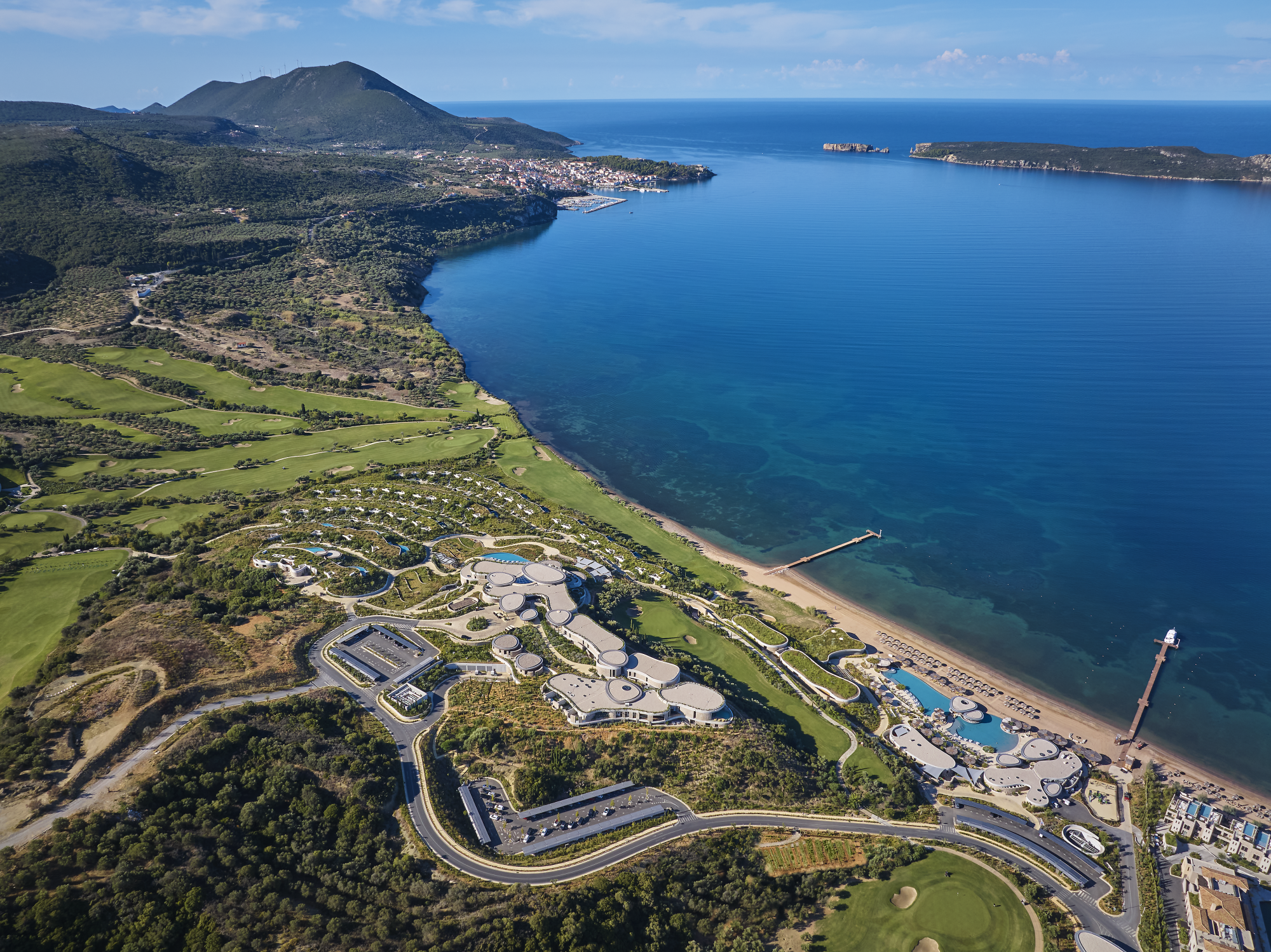
Yet myths, to function in the present, require structure. And here, Messinia held a crucial advantage: a development catalyst that for years has invested not only in hospitality, but in the place’s overall identity. Without fanfare, a comprehensive model of sustainable luxury, Costa Navarino’s hotels and facilities created the conditions for international interest to go beyond the surface.
In southwestern Messinia, the concept of the resort was redefined. Not as an isolated enclave, but as a gateway to the destination: to its museums, villages, products, and people. This philosophy, now internationally recognized as a best practice, allows 2026 to be not just a good year, but a point of departure.
Rooted Gastronomy, Not Filtered
At the same time, Messinia is coming into its own gastronomically. Local cuisine is moving away from folklore and finding a contemporary voice without losing its core. Olive oil is not a side dish, but a terroir-driven narrative. Seafood speaks of the Ionian Sea, while Peloponnese wines, from Agiorgitiko to Mavrodaphne and emerging white varieties, are once again connected to place rather than to labels. This level of honesty is not found everywhere. The global trend of regenerative gastronomy finds fertile ground here, signaling a return to self-sufficiency and respect. And for the traveler of 2026, that carries more weight than any award.
A Place That Tells a Story
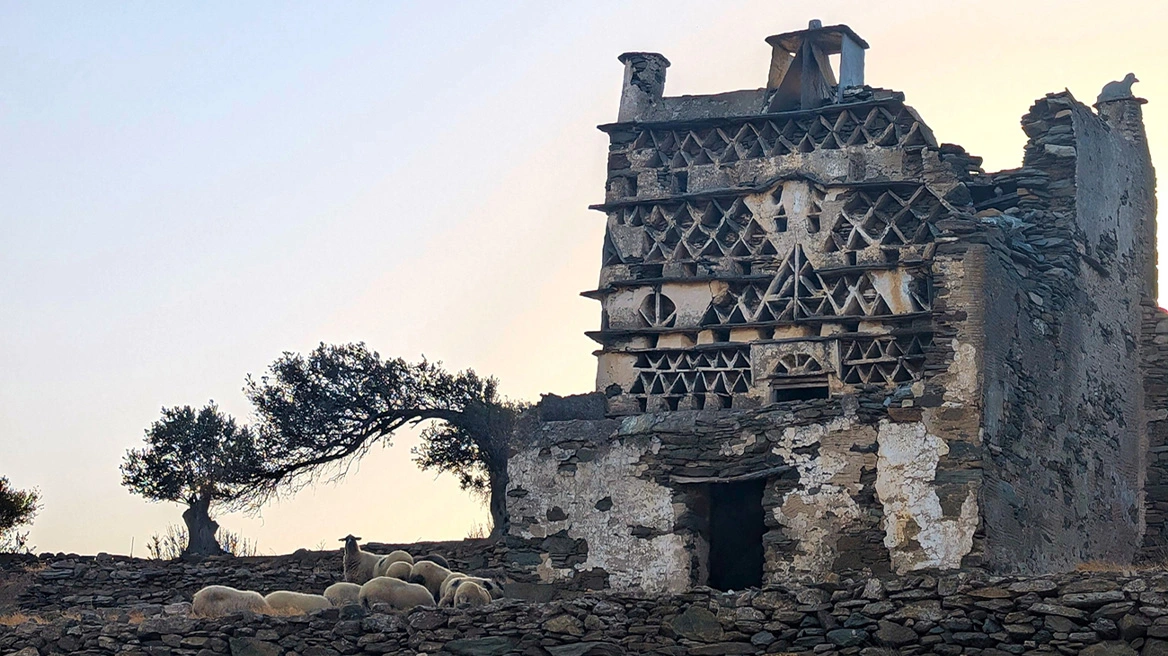
What truly sets Messinia apart is that it cannot be reduced to a view. The hinterland offers a second, more introspective journey: trails that connect myths and villages, stone towers standing like frames from a black-and-white film, a landscape that does not try to be beautiful. It simply is. Perhaps because it has nothing to prove.
In 2026, Messinia invites participation. It offers visitors something rare: the chance to experience a place as a narrative, not as a product. To understand how myth becomes contemporary experience, how cinema returns to its natural setting, and how hospitality can function as a cultural tool. In a world saturated with destinations, Messinia stands out because it reminds us of something essential: that travel, like The Odyssey, derives its value not only from the destination, but from the journey. And that journey is not always linear. In 2026, that journey inevitably passes through Messinia.
Ask me anything
Explore related questions