




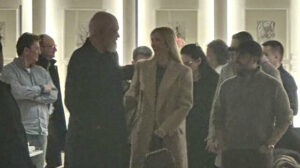
On Wednesday evening, the Prime Minister of Albania, Edi Rama, and the daughter of the U.S. President, Donald Trump, Ivanka Trump, had a working dinner in the city of Vlora, Albania.
According to Euronews Albania, the dinner was attended by members of Ivanka Trump’s working team and architects from around the world, as part of the investment she and her husband, Jared Kushner, are planning on Sazan Island in Albania.
Entertainment for the two officials was provided, according to the same source, by a polyphonic musical group. After the dinner, Edi Rama and Ivanka Trump were seen leaving in the same vehicle as part of a motorcade of about 50 cars.
Trump’s Son-in-Law Project
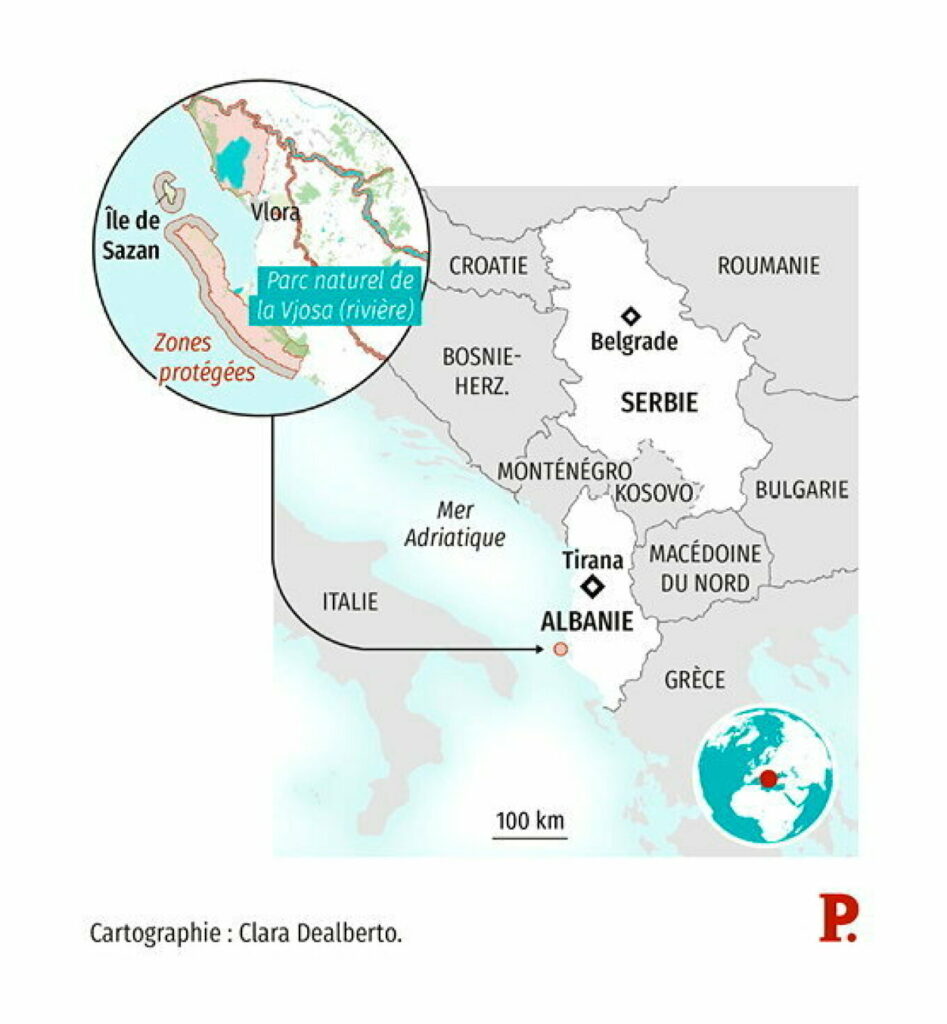
Sazan, a small rocky island in the middle of the Adriatic, has recently become known as “Trump Island”: a piece of land that the Albanian government is preparing to lease to Jared Kushner for tourism development. At the same time, the U.S. President’s son-in-law is also planning a “Trump Tower” in the center of Belgrade, sparking strong reactions in both Serbia and Albania.
As noted in a detailed feature by the French magazine LePoint, Sazan (once a Greek island called Sason, later ceded to Albania) resembles a paradise. A “small rocky outcrop” in the Adriatic, home to snakes, crickets, birds, and reportedly even a few bears, which find refuge in its natural vegetation with wild lavender and 300-year-old pine trees.
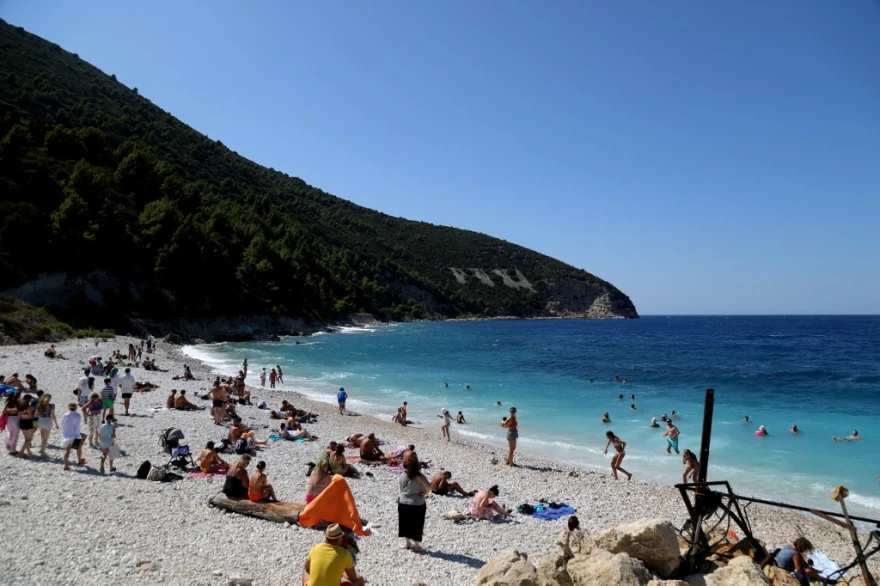
In the summer, a few inflatable boats transport tourists from nearby Vlora for two hours of swimming on a large beach before heading to the cave of Hadji Ali, a 17th-century pirate who, according to legend, hid chests of gold coins there. The island has also become a sanctuary for sea turtles.
For sixty years, Sazan served as a secret military base, from which today only destroyed bunkers and thousands of landmines remain.
Enver Hoxha was deeply suspicious. The communist dictator who ruled Albania for nearly four decades feared invasions from Italians, Yugoslavs, Americans, and Russians. After the regime collapsed in the early 1990s, Sazan became a no man’s land, the last uninhabited island in the Adriatic.
Ivanka’s Love for Sazan, the Seafood Meal, and Rama
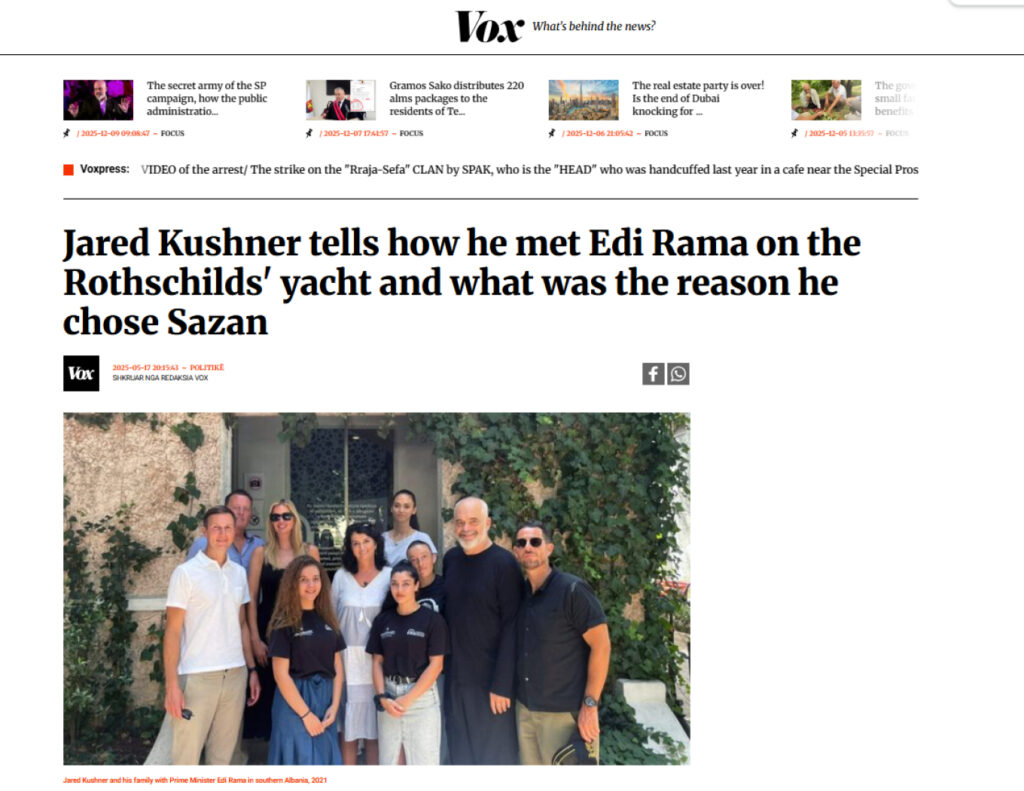
Ivanka Trump and Jared Kushner’s “love” for Sazan has already become part of local lore. It began four years ago when the couple vacationed with their children in Greece. In Tirana, where the government and business community dream of building luxury hotels and where tourist numbers have tripled over a decade, their visit was seen as an opportunity.
Aurorn Tare, a former archaeologist who had just been appointed Director General of the Albanian Coastline Agency, organized a visit tailored to the Trump-Kushner couple and a few other potential investors, including Nasser Al-Khelaifi, head of Paris Saint-Germain, and a businessman from the UAE. A helicopter and luxury yacht were provided.
Tare knows the region’s most beautiful spots. He showed the group the spectacular villa built by George Tenet, the son of Albanian immigrants and former CIA director under Bill Clinton and George W. Bush. He organized a seafood meal at the area’s best restaurant, hosted by his former basketball teammate, Prime Minister Edi Rama himself. In power since 2013, Rama appears warm, Mediterranean, informal—and personally knows Donald Trump, whom he has met at international summits.
The operation was considered a success by all parties. Ivanka Trump and Jared Kushner began openly discussing what they could do on the island Albania was ready to lease.
They mobilized architects and lawyers. The following year, Kushner returned to the country. Along with his partners, he declared he was ready to invest just over $1 billion, not only in Sazan but also in the bay, in a vast strip of land north of Vlora that remains undeveloped. Last December, a month after Donald Trump’s reelection, Kushner signed a preliminary 99-year lease agreement.
Ivanka’s instant enthusiasm for Sazan has the allure of an exotic vacation story. But above all, it is a story involving vast sums of money. Jared Kushner is far from a naïve investor. His Miami-based firm manages assets worth several billion dollars worldwide, primarily in the Middle East, where Saudi investors are major partners and shareholders.
Business in Serbia and the Reactions
Kushner didn’t discover the Balkans on his trip to Sazan. One of his main “guides” in the region is Richard Grenell, former U.S. ambassador to Germany, whom Trump appointed as a special envoy to Serbia and Kosovo during his first term. Grenell also negotiated, on Kushner’s behalf, another major deal: acquiring an entire city block in central Belgrade.
The site, today, resembles a pile of rubble. It was the old headquarters of the Serbian army, bombed by NATO in 1999 during the Kosovo War and left to decay after Slobodan Milosevic’s fall. For Yugoslavia nostalgics, it is a sacred symbol, while for younger generations dreaming of EU membership, it is a cursed relic.
The future “Trump Tower,” as it will be called, is planned to house a luxury hotel, a massive shopping mall, and luxury residences. For many, it has already become a symbol of extreme entrepreneurship and opaque government practices. A special law had to be passed to transfer the plot to Kushner: the building had to be removed from the National Register of Cultural Heritage.
A Ministry of Culture employee resigned rather than sign the plan. Lawyer Katarina Kostic expresses outrage: “Whether we liked the style of the building before the bombing is one thing. But the ‘Trump Tower’ plan is a denial of our history. There should have been a serious dialogue about urban planning in our city.”
In his office near the Serbian presidency and parliament, Radovan Kupres, founder of the CRTA organization fighting for political transparency, is also furious, but for different reasons. “The problem isn’t really the Trump family,” he says. “The problem is our political class. We are one of the most corrupt countries in the world, and everything happened behind closed doors.”
He is particularly concerned about Kushner’s partner, an investor from the Emirates, who twelve years ago oversaw the redevelopment of the Sava River banks in Belgrade. “It is aesthetically very ugly,” he notes. “Thousands of people who lived there for decades were displaced, and portions of land were handed to senior officials through dubious procedures.”
Even harsher is Green Party MP Robert Kozma. For him, “the end of Aleksandar Vučić’s presidential dominance is pitiful. He is a showpiece nationalist. He started on the far right, relying on hatred for the West, which bombed us in 1999, and now he plays poker with national assets.”
According to Kozma, everyone takes a share except the Serbians themselves. “Even Emmanuel Macron,” he says, “to support our EU accession, Vučić offered the metro contract to a French company. Last week, he rolled out the red carpet for Xi Jinping with the words, ‘Take whatever you want!’ He is cozy with the Russians, from whom we buy oil. But the pinnacle is Donald Trump.”
The MP recounts his disappointment with the visit of one of the U.S. President’s sons to Belgrade in April 2025, part of a paid lecture series titled “Trump Business Vision 2025.” “Offering a prime plot to Trump’s son-in-law didn’t help,” he says. He cites as evidence the U.S.’s recent decision to raise tariffs on Serbian products to 35% and sanctions due to Russian involvement in the state oil company.
Real estate development with Jared Kushner is obviously not a neutral choice, neither for Serbia nor Albania. It gives them access to both Middle Eastern capital and Washington. Unlike his father-in-law’s first term, when he held an official role in the White House as senior advisor and negotiated the 2020 Abraham Accords, Kushner currently holds no official office.
In practice, however, he remains extremely influential. On the Ukraine issue, American negotiators Steve Witkoff and Marco Rubio report to him. Kushner directly guides the “reconstruction” part of the peace plan, expected to benefit American businesses significantly. During the Gaza war, he was also on the front lines, leveraging his Middle East and Israeli network—his father has been a close friend of Benjamin Netanyahu for years. In this context, he made statements that sparked controversy, such as suggesting that “coastal properties in Gaza could be hugely valuable if the world focused on building a future instead of spending money digging tunnels.”
Concerns About Altering the Natural Beauty of the Area
Back in Albania, ornithologist Johnny Vorpsi has a completely different perspective. He is not concerned with geopolitical balances but with birds. He completed a PhD on their migratory routes in the Mediterranean. As part of the local environmental organization PPNEA, he watches developments with concern. Spreading out a large map, he explains: “It’s simple. Here you can see the main bird routes in the Mediterranean. See this path? The Vlora lagoon is a crucial stopover. It’s nice that investment and residential plans are increasing, but this is just destruction.”
Olsi Nika, an activist with EcoAlbania, is worried about the construction of the giant airport in Vlora, promoted as a tool to attract global investors and tourists. “For a handful of dollars, we are going against the tide of history,” he warns. “We had one of the Mediterranean’s last untouched corners. That could have been our wealth in twenty years.”
For him, there is another scandal: the new airport project was awarded to companies with limited transparency, including the Swedish firm Mabetex, previously convicted of corruption in Russian renovation projects. “Politicians sell us dreams: ‘We will become the Saint-Tropez of the future,’ they say. But in reality, we will be buried under tons of concrete and become Europe’s money-laundering hub.”
On the 9th floor of Tirana’s Silver Tower, Elira Kokona heads the state agency tasked with granting investors the country’s most valuable assets for exploitation. “The country is poor, and we have a long way to go,” she says, pointing to a collection of architectural models lining her office shelves. A few months ago, the government launched an international competition to convert Enver Hoxha’s old summer palace into a hotel. Some candidates emphasized integrating nature, others focused on creativity. “And you, which plan would you choose?” she asks with a bright gaze.
To date, she has only worked with “Brian,” Kushner’s representative in Albania. She has met Kushner himself only once, at a restaurant. “A mutual friend introduced us. The meeting was just polite,” she says. “The time hasn’t come to go to the beach together yet.”
Affinity Partners, Jared Kushner’s investment fund, was created in 2021 and raised $2 billion from the Saudi Public Investment Fund, directly controlled by Crown Prince Mohammed bin Salman. Investors also include the UAE and Qatar, contributing around $1.5 billion. Together with his Saudi partners, Kushner recently acquired the video game company Electronic Arts for $55 billion, confirming the scale of the capital behind the plans for Sazan and Belgrade.
Ask me anything
Explore related questions