




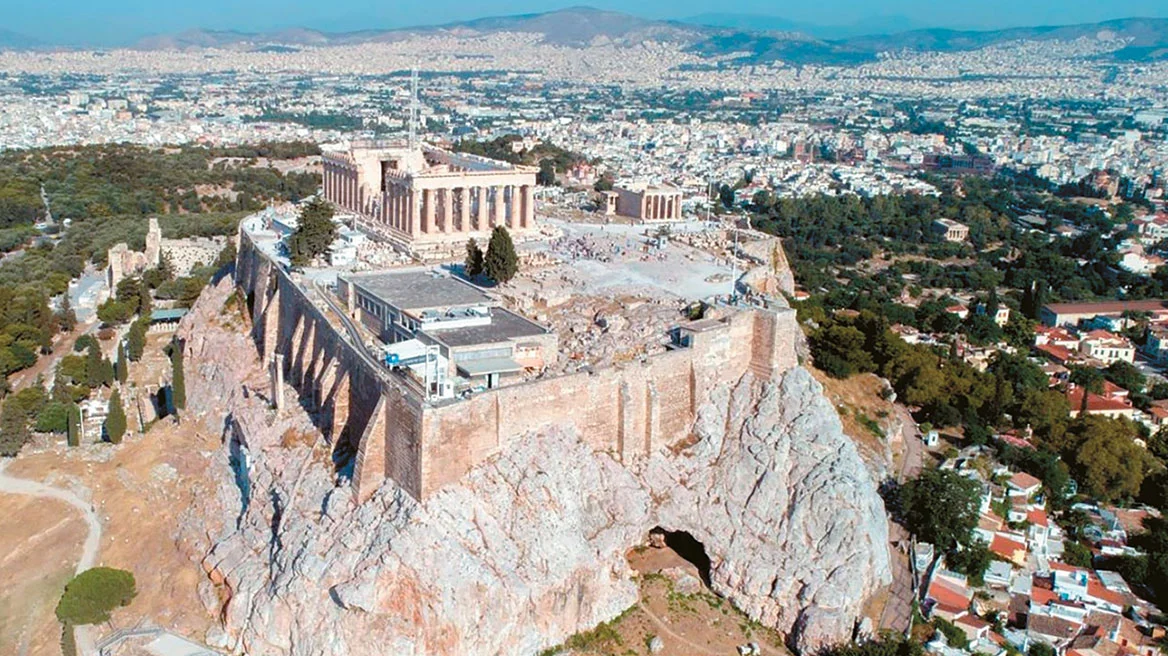
Just a breath away from the Parthenon, at the very edge of the Sacred Rock, stands a building that for decades remained quietly present—almost invisible. The Old Acropolis Museum, a place heavy with memory and symbolism, is preparing to reopen its doors to the public in late spring 2026, at the very season when, in antiquity, Athens celebrated the Minor Panathenaea with ritual and festivity.
Its reopening marks more than the return of a museum. It signals a new chapter in how the Acropolis itself is experienced: as a living palimpsest where ancient history, contemporary art, and cutting-edge technology converge. Once again, the Old Museum becomes a threshold between what was hidden and what is about to be revealed.
A Museum Reimagined
The renewed Old Acropolis Museum will host temporary archaeological exhibitions of international scope, beginning with Athens, the Immortal City, the inaugural exhibition curated by the Ephorate of Antiquities of the City of Athens. Alongside this, advanced digital programs and immersive technologies will transform the way visitors encounter antiquity, focusing not on the familiar icons alone, but on the Acropolis’ lesser-known faces.
Contemporary art will also play a central role. For the museum’s reopening, collector and NEON founder Dimitris Daskalopoulos is preparing a site-specific installation—conceived as the final chapter of a bold artistic trilogy inspired by Greece’s cultural heritage. These interventions are not decorative additions; they are conversations across time, placing modern creativity in dialogue with historical memory.
The museum’s revival extends beyond its walls. Visitors will now access newly opened paths, routes, and monuments on the Acropolis itself, creating a unified and deeply immersive experience. One can move seamlessly from museum galleries to shaded walks across the Sacred Rock, pausing beneath olive trees, contemplating the Mycenaean wall, and discovering stories long concealed.
Technology at the Service of Memory
At the heart of the project lies a radical act of revelation. More than 1,185 archaeological objects, unearthed through decades of excavations across Athens, will be displayed publicly for the first time. Their range spans millennia: Neolithic vessels, grave offerings from the Proto-Geometric period, exquisite Mycenaean pottery, inscriptions once left exposed to the elements.
Visitors will not only view these artifacts—they will witness their care. Conservation laboratories will be partially visible, allowing the public to observe the meticulous restoration processes that sustain these fragile remnants of the past. In the western wing, inscriptions and archaeological material previously hidden in storage will now tell the untold story of Athens beyond its golden age.
Reclaiming the Sacred Landscape
Equally transformative is the reshaping of the land surrounding the museum—areas that were never accessible until now. Significant portions of the Mycenaean fortification wall, the Sebasteion, and newly stabilized zones of the rock will be opened to visitors, offering spaces for rest, contemplation, and discovery.
Thanks to a donation from the Onassis Foundation, the northern slope of the Acropolis—long inaccessible—can now be traversed. Along this path, visitors encounter the Clepsydra spring, sacred caves, the Sanctuary of Aphrodite and Eros, and traces of the Panathenaic Way, whose breadth and trajectory reveal the ceremonial heart of ancient Athens leading inexorably to the Parthenon itself.
As Minister of Culture Lina Mendoni recently noted, this marks “a new era in the visitor experience of the Sacred Rock, with expanded access to areas closed for decades and new opportunities for exploration.”
The Mycenaean Wall: A Silent Guardian
A cornerstone of the project is the restoration of the Mycenaean wall near the Old Museum—one of the best-preserved segments of prehistoric fortification on the Acropolis. Once completed, this area too will be accessible, offering a rare encounter with the Acropolis not as a classical monument alone, but as a site of continuous habitation, defense, and transformation.
“The Acropolis,” Mendoni emphasizes, “is not only the supreme monument of classical antiquity. It is a place where traces of multiple historical periods coexist. By restoring and revealing the Mycenaean wall, we illuminate the city’s history in its full temporal depth.”
A Discreet Presence
Unlike the New Acropolis Museum, which confidently asserts itself along Dionysiou Areopagitou Street, the Old Museum was designed to remain discreet—almost invisible. Low-lying, austere, and restrained, it was never meant to compete with the Parthenon. It existed to serve, quietly housing masterpieces such as the Korai, the Moschophoros, and the Parthenon pediment sculptures, offering generations of visitors their first tactile encounter with ancient Athens.
Yet its modest scale eventually proved insufficient. As archaeological discoveries multiplied and conservation needs intensified, the vision for a new museum emerged—culminating decades later in the world-renowned New Acropolis Museum.
Origins and Vision
The idea of protecting the Acropolis’s treasures through a dedicated museum was born in the early years of the modern Greek state, amid widespread destruction, looting, and the trauma of Lord Elgin’s removals. Central to this vision was Kyriakos Pittakis, a self-taught archaeologist, founding member of the Archaeological Society, and fierce defender of Greek historical continuity.
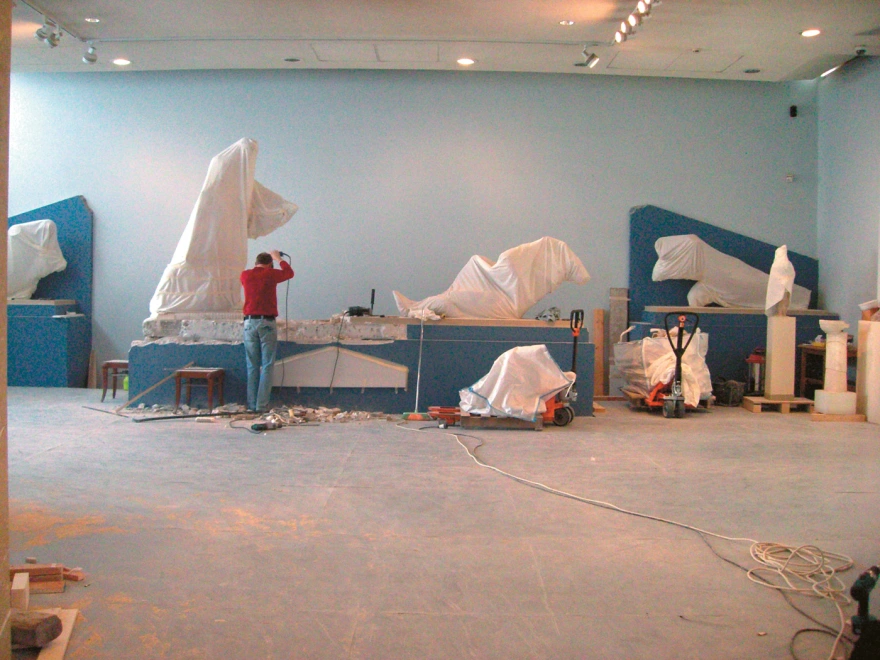
The first small museum was built in 1865, soon replaced in 1874 by the Old Acropolis Museum we know today. Subsequent expansions, delayed by wars and political upheaval, eventually gave the building its modernist form under architect Patroklos Karantinos—a structure that remains unchanged, precisely because it harmonizes so seamlessly with the Sacred Rock.
A Global Point of Reference
For decades, the Old Acropolis Museum served as both public museum and international research hub. Scholars from around the world studied its collections, contributing decisively to our understanding of Archaic and Classical sculpture. Yet its limitations ultimately necessitated the creation of a new institution—an idea championed by Konstantinos Karamanlis and later realized under Melina Mercouri’s visionary leadership.
With the New Museum now firmly established, the Old Museum returns not as a relic, but as a complementary voice—offering depth, nuance, and continuity.
Unity of Space, Unity of Story
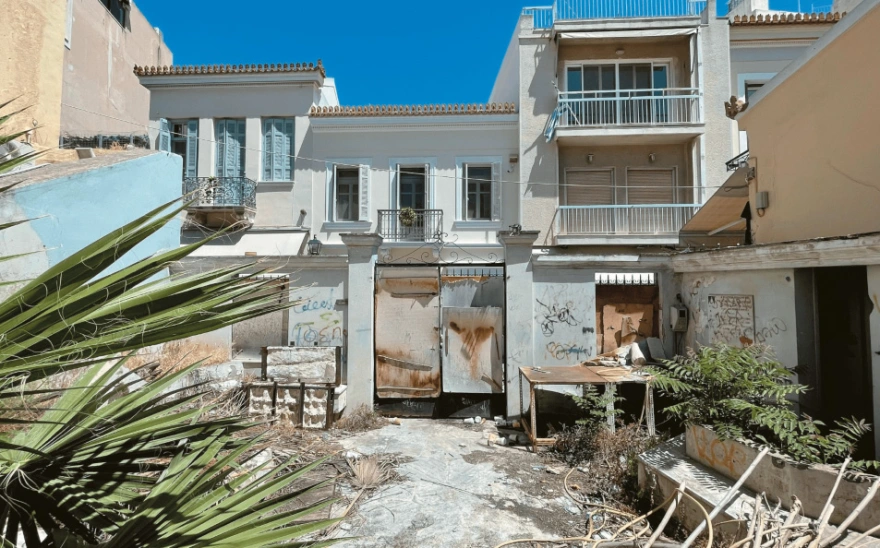
Two adjacent buildings along Dionysiou Areopagitou and Vyronos Streets are also being repurposed, transformed into spaces for education, cultural programs, and visitor engagement. Once underused, they now complete the narrative arc between old and new, past and present.
Children will learn here. Visitors will pause, reflect, and play. And the Acropolis—no longer a singular monument but an unfolding experience—will speak in many voices.
A Future Rooted in Time
The reopening of the Old Acropolis Museum is not an act of nostalgia. It is an affirmation that history is not static, and that memory, when carefully revealed, can shape the future.
In the quiet return of this discreet building, the Acropolis reminds us that its greatest stories were never only those we already knew—but also those waiting patiently, in shadow, to be seen.
Ask me anything
Explore related questions