




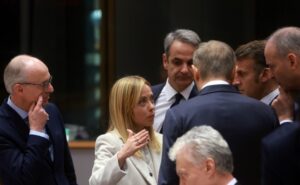
Italian Prime Minister Giorgia Meloni is reported to have intervened behind closed doors in favor of de-escalation with Donald Trump on the sidelines of the EU summit in Brussels, amid intense friction within NATO over Greenland and U.S. tariffs.
According to reports, Italy’s prime minister defended the line of the U.S. president before her European counterparts in private discussions during the summit, which took place on Thursday in Brussels. Citing four people with knowledge of the talks, Politico reports that Meloni argued an open confrontation with Trump would be a “bad idea,” as Europe has more to lose from a clash with the United States.
Meloni urged leaders to remain calm and not to treat Trump as “irrational” or “unpredictable”—labels that, according to the same sources, had been used privately by European officials during the first weeks of 2026, a period marked by forceful initiatives from Washington on the international stage.
“Let’s continue without escalation toward Trump,” von der Leyen said
After the summit concluded, European Commission President Ursula von der Leyen suggested that European leaders had reached the conclusion that a “firm” but “non-escalatory” stance toward Trump could be effective and should be maintained.
The extraordinary EU summit was convened following Trump’s threat to impose tariffs on eight European countries in response to their objections to his demand that Greenland be placed under U.S. control, detached from Denmark. The crisis in transatlantic relations dominated discussions both in Brussels and in other European capitals, while leaders also held a dinner on Thursday aimed at shaping a common strategy for the future.
After the EU warned it would respond with trade and other countermeasures if the tariffs were implemented—and markets reacted negatively—the U.S. president backed down, stating that he sought a “friendly agreement” on Greenland’s status.
Rome’s cautious approach and the belief that the crisis is not over
Reports of Meloni’s intervention indicate that Rome favors a more cautious approach than some other leaders at the negotiating table. On Friday, the Italian prime minister welcomed German Chancellor Friedrich Merz to Rome to discuss strengthening defense and industrial cooperation between the two countries.
European leaders agreed to meet again next month for a session of “strategic reflection” to examine how the Union should adapt to a new global order dominated by great-power rivalry and a diminished role for international law.
“Our impression was that the vast majority of leaders viewed the past few weeks as a turning point and that Europe needs to move quickly on multiple fronts to protect its core interests,” said a fifth person with knowledge of the discussions, stressing that “there are no illusions that the crisis is over.”
Ask me anything
Explore related questions