A historic opportunity for agri-food products of the European Union—and by extension of Greece—is being created by the free trade agreement signed between the EU and India, paving the way for broader access for European exports to one of the largest and fastest-growing markets in the world.
Under the agreement, India will abolish or significantly reduce tariffs on 96.6% of EU goods exports. On its part, the EU will liberalize 99.5% of its tariff lines for products imported from India over a seven-year period.
The European Commission estimates that savings for European exporters from tariff reductions could amount to up to €4 billion annually.
Among the sectors expected to benefit significantly is the agri-food sector, as high value-added products such as olive oil and wine gain access to a market with a steadily growing middle class.
Currently, Indian tariffs on agri-food products originating from the EU average 36%, while in some categories they reach as high as 150%. In 2024, EU agri-food exports to India amounted to €1.3 billion, representing about 0.6% of the Union’s total agri-food trade—a figure largely attributed to the high tariffs.
With the new agreement, wine exports, which are currently subject to tariffs of 150%, are expected to see duties drastically reduced to a range of 20%–30%. Spirits, also facing tariffs of up to 150%, are expected to benefit from a reduction to a fixed level of 40%, while beer tariffs are projected to fall from 110% to 50%.
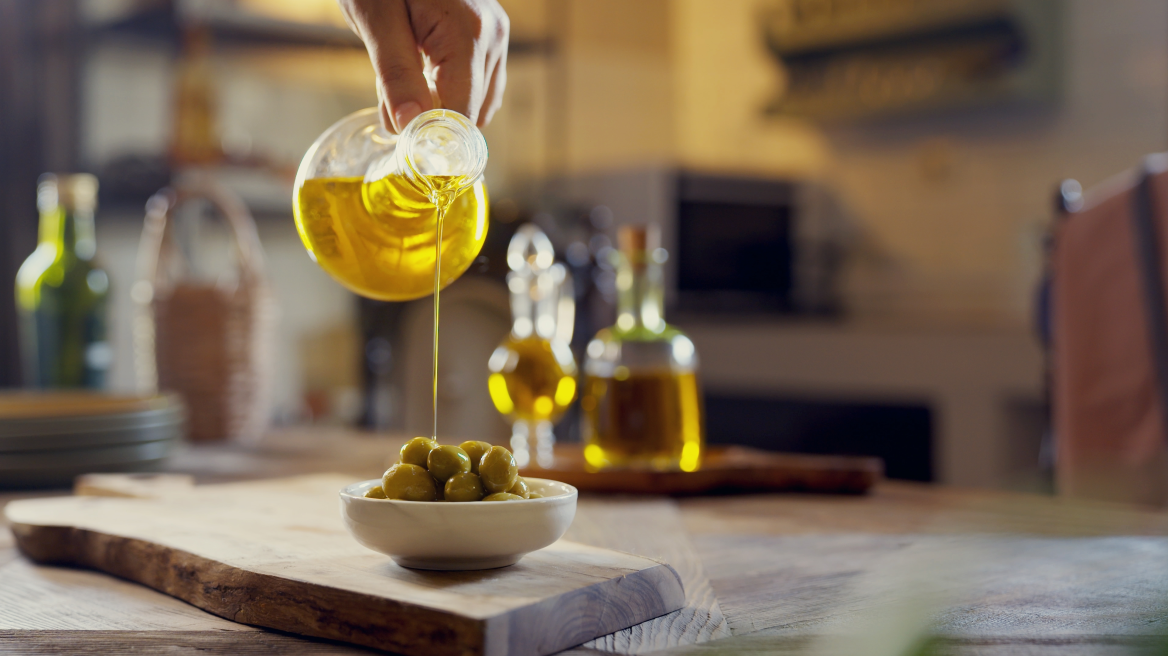
Of particular importance is the change concerning olive oil. From the current tariff level of 45%, the agreement is expected to lead to their complete elimination, a development that opens the way for strengthening European exports.
“With this agreement, European wines, spirits, beer, olive oil, confectionery, and other products will enjoy preferential access to the rapidly growing Indian market,” said EU Commissioner for Agriculture and Food Christophe Hansen. He added that sensitive agricultural sectors such as beef, poultry, rice, and sugar are excluded from liberalization, ensuring the protection of European farmers. “The EU’s high food safety standards are fully maintained and are not subject to negotiation,” he stressed.
On the Greek side, the president of the Interprofessional Organization for Olive Oil, Manolis Giannoulis, speaking to the Athens–Macedonian News Agency, emphasized that “any reduction in tariffs or costs operates positively for European—and by extension Greek—olive oil, facilitating consumer access in third-country markets.”
He noted that although India does not have a well-developed culture of olive oil consumption, the agreement could attract a new, limited audience primarily driven by price, adding that Greek olive oil exports amount to approximately 45,000 tons worldwide.
The prospects opened by the agreement for the wine sector were also addressed by the president of the Association of Greek Wine, Stelios Boutaris.
Speaking to the Athens–Macedonian News Agency, he stated that until now, sales of Greek wine in India have been virtually non-existent; however, the agreement and the rise of the middle-income class in the country are changing the landscape. He also attributed an important role to the agreement on direct air connections, estimating that in the coming years a stable and positive Greece–India relationship will take shape, as visitors from the Asian country come into contact with Greece’s high-quality agri-food products.
He estimated that the reduction of wine tariffs from 150% to 75%, with prospects for further de-escalation to as low as 20% over time, will be decisive.
Finally, in the context of exploring the market, Mr. Boutaris mentioned that participation of the company “Kir-Yianni” in the ProWine India exhibition, expected to take place in Mumbai, is being considered. As he noted in closing, “until recently there was no substantial interest in the Indian market due to the high tariffs; however, the conditions have now changed.”
Ask me anything
Explore related questions