




China’s automakers are under intense pressure to expand rapidly beyond their domestic market. Overproduction and a fierce price war at home have made access to international markets increasingly urgent.
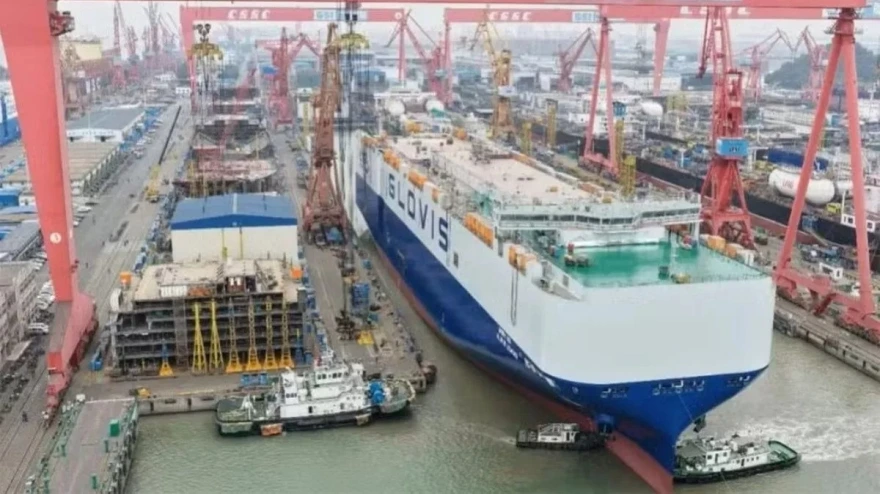
A key role in this strategy is played by the logistics chain, and in particular by car carrier vessels, which enable the mass export of vehicles. A notable example is BYD, which has established its own fleet of such ships, achieving an annual transport capacity of approximately 1 million vehicles.
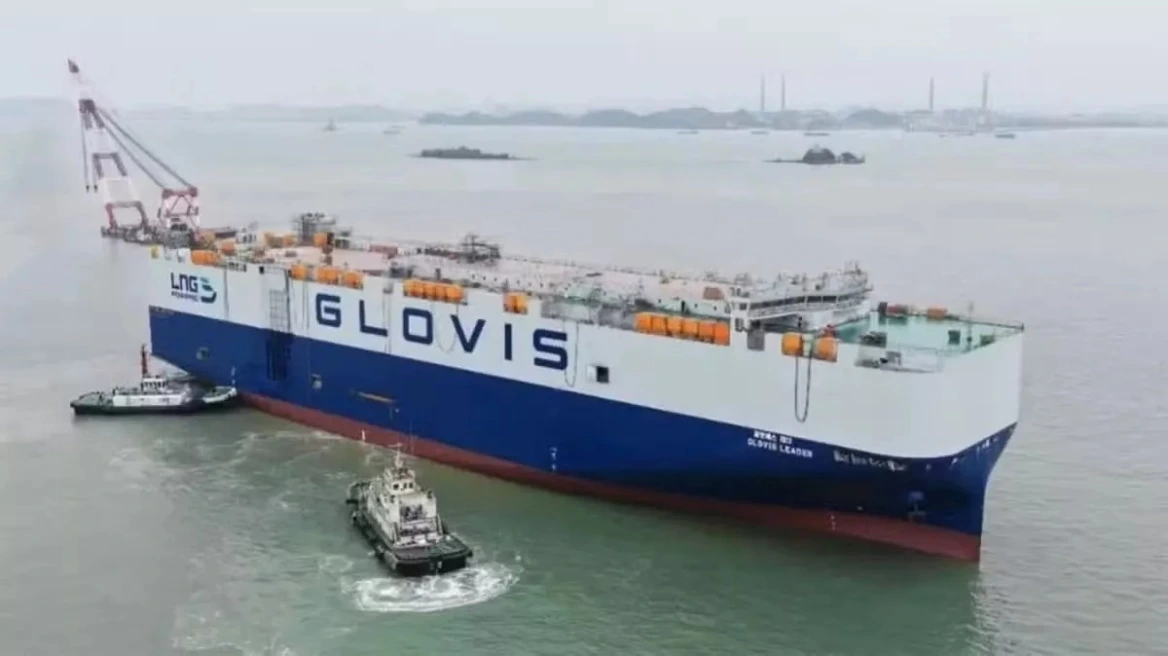
Within this context, the “Glovis Leader” further strengthens the sector’s maritime infrastructure. The new dual-fuel vessel, capable of operating on liquefied natural gas (LNG) and, if required, conventional liquid fuel, was built at GSI’s shipyard in Guangzhou on behalf of South Korea’s HMM (Hyundai Merchant Marine). It meets the IMO Tier III emissions standards and has already departed the dry dock.
It is the largest vessel of its kind ever constructed in China, with a carrying capacity of 10,800 vehicles. Until now, the record had been held by “Anji Soundness” and “Anji Ansheng” of Anji Logistics, a subsidiary of SAIC, each with a capacity of 9,500 vehicles.
The Glovis Leader measures 230 meters in length, 40 meters in width, and has a draft of 10.5 meters. The design of its 14 decks allows for flexible loading and transport of electric vehicles, hydrogen fuel-cell vehicles, and heavy trucks. It remains unclear whether the ship will transport exclusively China-made vehicles or also automobiles manufactured in South Korea, but its size and capabilities are undeniably impressive.
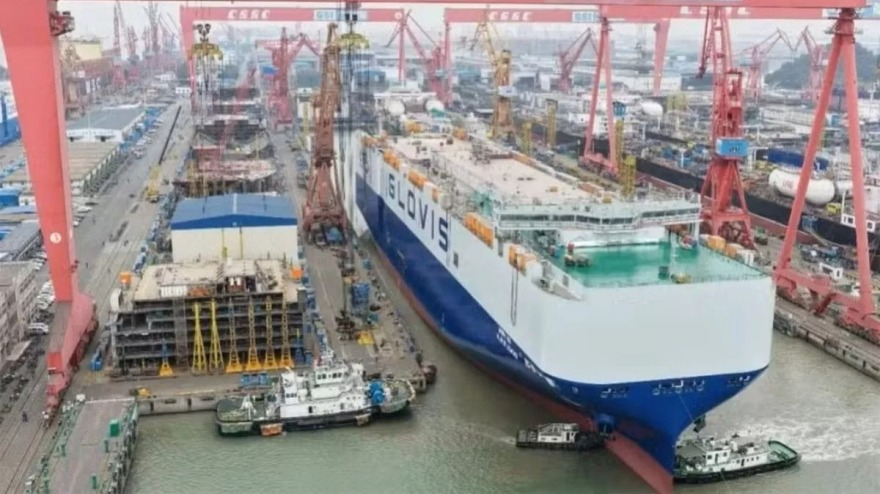
Today, SAIC operates the largest car carrier fleet in China, with its subsidiary Anji Logistics managing a total of 41 vessels. Alongside BYD, Leapmotor has also chartered a car carrier as part of its international expansion strategy, securing dedicated maritime transport for its exports.
Ask me anything
Explore related questions