




The issue of freezing water continues to be one of the biggest challenges facing the state, with Attica taking centre stage due to the increased water supply needs of the capital.
EYDAP has already prepared a major investment programme worth €2.5 billion, which includes infrastructure projects and interventions in the water supply system, with the aim of strengthening the resilience of Attica and ensuring an uninterrupted water supply in the coming years.
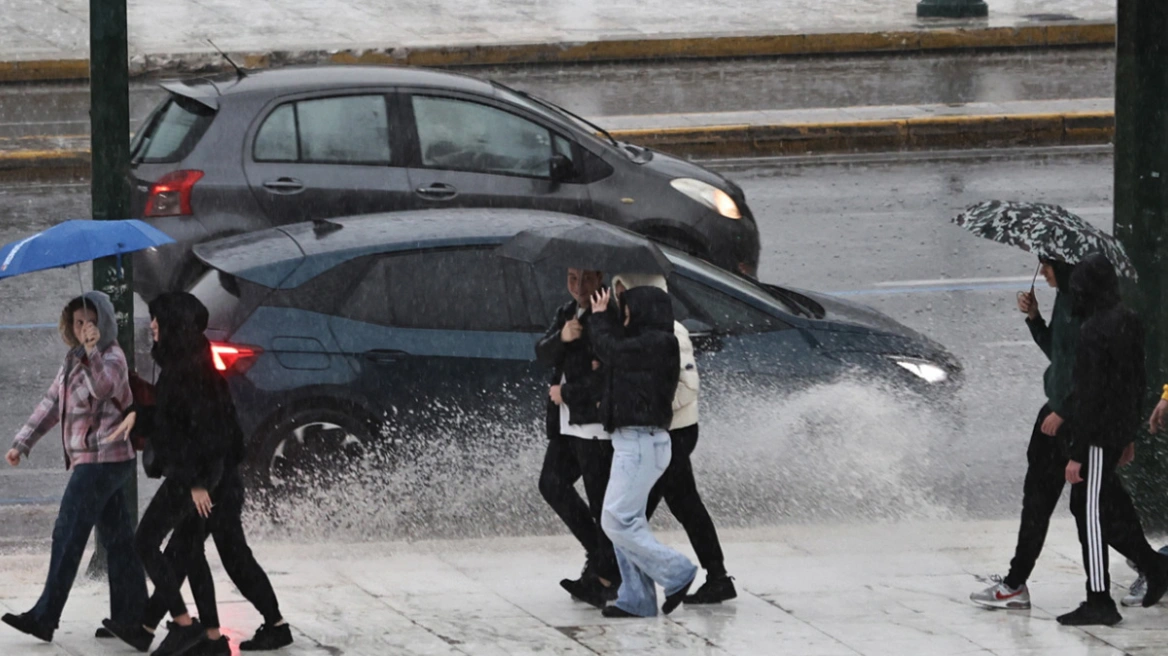
In this environment of planning and close monitoring of water reserves, the country – and Attica in particular – recorded a particularly rainy January. According to experts, this development allows for a more optimistic assessment of the situation, but it does not eliminate concerns.
According to experts, available water supplies are still below previous years, and the gap from the levels that existed before Attica was declared a state of emergency remains significant.
Typical is in the data of the EADAP, which is updated almost daily on its website. On 3 February 2025, the reserves in the four reservoirs of Attica (Mornos, Yliki, Evinos, Marathon) amounted to 665 million cubic meters, while on 3 February 2026 they reached 550,993,000 cubic meters. So, based on these figures, we are talking about a deficit of about 110 million cubic meters.
“Significant rainfall in October-January”
As protothema.gr hydrology professor Elisabeth Feloni points out, recent rainfall has already begun to be reflected in Attica’s water reserves. “Already as of 29 January, the reserves in the four main reservoirs exceeded 500 million cubic metres,” she notes, adding that a gradual exit from the streak of relatively arid hydrological years is becoming apparent.
According to her, rainfall heights in the October-December period were significant, while “January rainfall in many areas was more than triple that of January 2025”. The above is confirmed and the official Meteo.gr data was released yesterday.
However, the picture for the coming months is still being formed.
As Mrs. Feloni emphasizes, the following months will play a decisive role, as well as the development of snowfall. “In March and April we will be able to make a more secure assessment of the adequacy of the reserves and, based on this, we will be able to determine the management strategy for the summer and the following months,”
she stresses.
Canterelles: What February holds in store
Asked what is expected in the near future in terms of rainfall and weather conditions, Nikos Kanteres, former director of forecasts at the National Meteorological Service, attempted to answer the question.
Speaking to protothema.gr, he said February at its start appeared to follow in the footsteps of previous months, which provided rainfall and significant snowfall that helped significantly in the rise of water supplies.
“For the next period until the 17th-18th of the month, three successive atmospheric disturbances from central Europe are expected to affect the country, with the most intense phenomena located in western Greece and the eastern Aegean islands, while in the rest of the country the phenomena will be more limited,” Kanteres estimated. At the same time, he says, “no strong cold invasion is currently on the horizon, although a change in the last week of February cannot be ruled out.”
As Mr Kanteres notes, last February was one of the coldest in recent years, with two strong cold invasions. “On such days in Athens, the maximum temperatures did not exceed 8 degrees Celsius. On the contrary, in the next few days we expect temperatures to reach 17-18 degrees, which shows that this February will hardly follow last year’s pattern,” although – as he stresses – it is still too early to draw definitive conclusions.
In conclusion, referring to the issue of water scarcity, he pointed out the need to immediately address the existing leaks in the water supply network, in order to maximize the benefit of increased reserves, a role that, as he noted, belongs primarily to EYDAP.
Ask me anything
Explore related questions