
×
GreekEnglish

×
  • Politics
  • Diaspora
  • World
  • Lifestyle
  • Travel
  • Culture
  • Sports
  • Cooking
Thursday
05
Feb 2026
weather symbol
Athens 13°C
  • Home
  • Politics
  • Economy
  • World
  • Diaspora
  • Lifestyle
  • Travel
  • Culture
  • Sports
  • Mediterranean Cooking
  • Weather
Contact follow Protothema:
Powered by Cloudevo
> Culture

Researchers reconstruct the scents of ancient civilizations

A study describes how museums can use “molecular evidence” to bring the public into contact with the smells of the past

Newsroom February 5 07:30

Recent advances in biomolecular archaeology reveal that ancient objects can preserve molecular “fingerprints” of past aromatic practices. These molecules provide unprecedented insight into ancient perfumery, medicine, rituals, and everyday life.

An interdisciplinary research team led by chemist and antiquity specialist Barbara Huber, from the Max Planck Institute of Geoanthropology and the University of Tübingen, describes in a study published in Frontiers in Environmental Archaeology how museums can use this molecular evidence to help the public experience the scents of the past.

>Related articles

“Clelia, you have breast cancer. Come back to Athens” – A moving personal testimony

Lagarde: International uncertainty is a key risk factor for the Eurozone

Giannis Panagopoulos: Who is the “eternal” GSSE president under investigation for embezzling €2.1 million

Drawing on the research data, perfumer Karol Kalvez developed a series of formulations that translated ancient chemical traces into a fragrance suitable for museum spaces. “The real challenge lies in imagining the scent as a whole. Biomolecular data provide essential clues, but the perfumer must translate chemical information into a complete and coherent olfactory experience that conveys the complexity of the original material, rather than merely its individual components,” she explains.

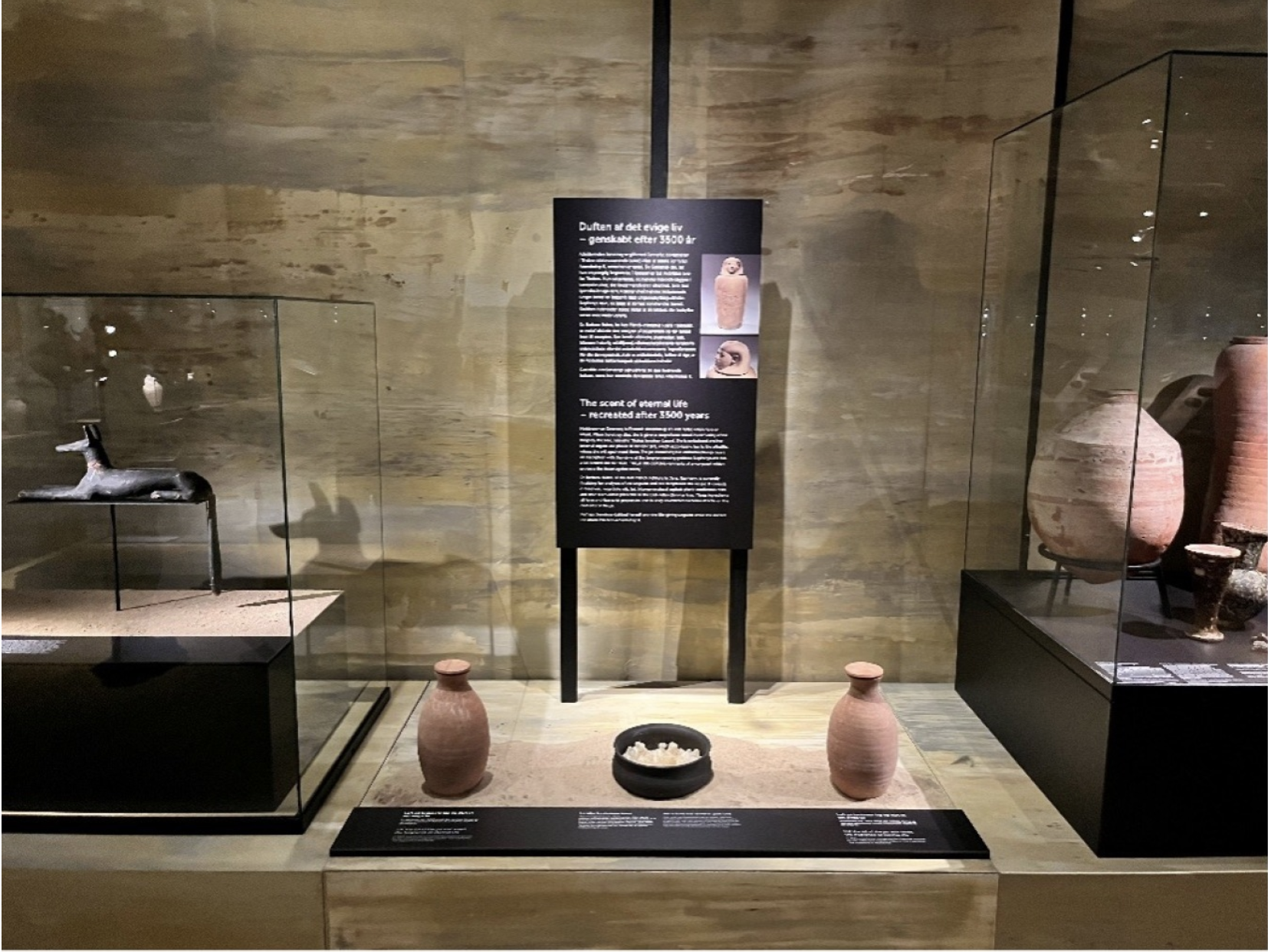
The researchers then developed two ways of presenting ancient scents in public spaces. Starting with the “Scent of the Afterlife,” a reconstruction of the aromas associated with embalming in ancient Egypt, they created a portable scented card and a fixed scent-diffusion station.

At the August Kestner Museum in Hanover, where the objects that inspired the project are displayed, the scented card was incorporated as a core element of guided tours. The fixed station was installed in the exhibition “Ancient Egypt – Obsession with Life” at the Moesgaard Museum in Aarhus, Denmark. As Moesgaard curator Steffen Terp Laursen notes, “the scent station transformed the way visitors perceived embalming. Smell added an emotional and sensory depth that explanatory panels alone could never provide.”

Ask me anything

Explore related questions

#culture#Geoanthropology#greece
> More Culture

Follow en.protothema.gr on Google News and be the first to know all the news

See all the latest News from Greece and the World, the moment they happen, at en.protothema.gr

> Latest Stories

13.5% of prisoners in Japan are over 65, turning prisons into nursing homes

February 5, 2026

“Clelia, you have breast cancer. Come back to Athens” – A moving personal testimony

February 5, 2026

Lagarde: International uncertainty is a key risk factor for the Eurozone

February 5, 2026

Giannis Panagopoulos: Who is the “eternal” GSSE president under investigation for embezzling €2.1 million

February 5, 2026

Greece – Italy 15-8: Greece “sinks” Italy and wins bronze at the European Water Polo Championship – Video

February 5, 2026

Researchers reconstruct the scents of ancient civilizations

February 5, 2026

Cuba to the US: Yes to dialogue, but we will not discuss regime change

February 5, 2026

Hellenic Heritage: The new digital hub connecting visitors with 350 archaeological sites and museums

February 5, 2026
All News

> World

13.5% of prisoners in Japan are over 65, turning prisons into nursing homes

In one of the countries with the highest life expectancy in the world, many elderly people end up in prison for minor offenses to secure shelter and food

February 5, 2026

Cuba to the US: Yes to dialogue, but we will not discuss regime change

February 5, 2026

EU, Japan, and the US to sign memorandum on critical minerals next month, aiming to reduce dependence on China

February 5, 2026

Agreement signed between Ankara and Chevron: Joint oil and gas exploration to begin

February 5, 2026

Rama government suspends the TikTok ban in Albania after one year

February 5, 2026
Homepage
PERSONAL DATA PROTECTION POLICY COOKIES POLICY TERM OF USE
Powered by Cloudevo
Copyright © 2026 Πρώτο Θέμα