

Hello, I like that Adonis Georgiadis had said a few days ago that he would not deal with Zoe Konstantopoulou… Look, to be honest, it is very difficult for any person, whether a politician or an ordinary working citizen, to tolerate serious insults and slander when they are hurled publicly. And in a sense, the abolition or at least substantial modification of Article 86 concerning the immunity of ministers and MPs could apply to many cases – including yesterday’s case involving Konstantopoulou. That is, to publicly call any citizen a despicable creature and accuse them of something unrelated (Adonis in connection with the tragic accident of Violanta) is simply not acceptable. Remove the individuals—Georgiadis and Konstantopoulou—and put yourself in the former’s place with some “opponent” of yours facing you. You may say this is neither the first nor the last time, but I think at some point there must be an overall reaction to all this.
OPEKEPE No. 2
Let’s move to current affairs. Since yesterday, word on the street is that the now… legendary OPEKEPE file No. 2 is about to arrive, concerning transcripts of conversations from the period 2021–2022, in which about a dozen MPs can be heard—mainly from New Democracy, though not only them—asking for favors regarding agricultural subsidies. Now, when it will come out, they tell me in a month, but I’ve been hearing that since August. They mention names to me, but these “change” constantly, and they say that the European Public Prosecutor’s Office will determine whether the favors were innocent or guilty! That is, whether the MPs were asking OPEKEPE officials for something illegal or improper, or for some favor for a party client. And how can it be proven that the MP knew what they were asking for? My source, who does know certain things, told me that “what is certain is that there is no political figure who asked for or received money.” So let’s wait and see what happens and, above all, whether any lifting of immunity is requested.
Preparation of the agreements
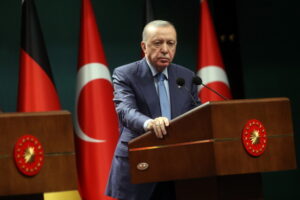
I move to the Mitsotakis–Erdoğan meeting in Ankara, as the fact that Greeks and Turks signed agreements, even on low-politics issues, obviously required considerable work and intensive preparation. The Greek side of the effort was carried by Deputy Foreign Minister Haris Theoharis, who handles the positive agenda. When he met in January with his Turkish counterpart Kemal Bozay, they set priorities and tasked their teams with drafting the relevant texts, in coordination with the competent ministries and, of course, under the supervision of Giorgos Gerapetritis on our side.
The Thessaloniki–Izmir ferry
Let me conclude the section on the agreements signed between Athens and Ankara with a reference to the ferry connection between Thessaloniki and Izmir that was mentioned. The project had been attempted again in 2022, but at that time the route did not perform well commercially. Since then, however, there is the fast-track port visa regime for Turks, so they can travel more freely, and the aim is for the route to resume operations in the summer. It remains to be seen whether the ship will also be able to call at intermediate islands, while yesterday Gerapetritis also raised the issue of a direct air connection between Athens and Ankara. The truth is that even today, to travel from the capital of Greece to that of Turkey, one must make a mandatory stop in Istanbul.
A memorizer… of the Qur’an
Let me also say a word about Turkey’s new Interior Minister, who until recently was governor of Erzurum. On his first day at work, with a mobile phone constantly ringing with congratulations, he met with Thanos Plevris and Michalis Chrisochoidis. I am told, however, that his profile is hardline Islamist, as years ago he had been distinguished as the… best memorizer of the Qur’an in a competition among 10,000 candidates.
Pierrakakis’ reference to Greek-Turkish relations
Although the event by Grand Thornton focused on the next decade and Kyriakos Pierrakakis said many interesting things on the subject, the point that made an impression in the (packed) Heraklion conference center was his reference to the country’s international presence and, especially, Greek-Turkish relations. “Greece has chosen and serves the role of a reliable partner and a pillar of stability,” said the Minister of Finance, adding that “a strong Greece in the economy and diplomacy, a strong Greece in defense and at sea, is the Greece that better than ever can support its national rights, which clearly stem from International Law.” Referring to his participation in the recent Supreme Cooperation Council, Pierrakakis stressed that “we do not fear dialogue because we possess the self-confidence and determination of clear positions. We seek convergences without allowing the slightest questioning of our national rights,” drawing warm applause from the approximately 1,200 attendees. Concluding his remarks, he posed the political dilemma: “This is the struggle of today’s Greece—to capitalize on its momentum, strengthen its economy, and fortify its position in the region. Will we continue like this? Or will we gamble away what we have achieved through effort and sacrifice all these years?”
Djokovic’s residence permit
Yesterday morning, some employees of the Ministry of Migration were surprised to see the grand slam master Novak Djokovic looking for a place to… park next to the Ministry on Thivon Street and then entering, asking for his appointment. The well-known tennis player, together with his wife and children, went to the ministry as they had scheduled biometric appointments to obtain a residence permit in the country, since until now they had been in Greece on a tourist visa that was expiring. And evidently, the man wants to stay for a while. I am told that his simplicity and politeness made a strong impression, as did the warmth with which he speaks about Greece. To give you an idea, he stayed quite a while in Minister Plevris’ office, and earlier he took photos with several employees’ children who knew he would be coming, without the slightest complaint. This is for certain domestic divas who think they have conquered the… mud castle and speak condescendingly at every opportunity.
Panagopoulos’ son…
From the most reliable source in the investigation of the Panagopoulos case, we were clarified that Panagopoulos’ son has not been found to be involved anywhere. We convey this so that no false impressions are created.
SYRIZA divided in two over Tycheropoulou
Strange things are happening inside SYRIZA, as I am informed that Sokratis Famellos demanded that the authors of the report on the OPEKEPE case not include in their final text the findings from the period 2022–2023. This concerns the period during which—as was publicly denounced before the investigative committee—specific tax identification numbers that had been definitively “blocked” were paid hundreds of thousands of euros without justification. According to the complainants, these allegedly irregular payments were made by the then administration of Evangelos Simandrakos and the competent director Paraskevi Tycheropoulou. However, I learn that President Famellos’ demand was not accepted by the party’s rapporteur Vasilis Kokkalis, who threatened that if the specific chapter is removed from the final text to be submitted, he will withdraw his signature. Now, as for why Famellos is in such a hurry, what can I tell you? I will accept the most good-faith answer, which says that Koumoundourou, when the OPEKEPE case first broke, rushed to “embrace” Tycheropoulou and does not now want to show that it made yet another mistake, as with the Tempi case and Karystianou…
A good climate for expatriates’ postal voting
Political consensus for promoting necessary changes to the Constitution, such as revising Article 86 to remove Parliament’s involvement in the criminal prosecution of ministers, currently seems like an unattainable dream, since PASOK, like the other opposition parties, appears inclined to say “no” to every government proposal. However, the same does not seem to apply to Livanios’ bill, which is already under public consultation and proposes further facilitation for expatriate voters through the introduction of postal voting and the creation of a new three-seat overseas electoral district. It should be noted that postal voting requires an absolute 200 positive votes, and as I am informed, the climate formed in the informal cross-party meetings taking place at the Ministry of the Interior shows that the target is achievable. PASOK appears ready to vote in favor, which means that with the “yes” votes of New Democracy the bar rises to 189. I also learn that SYRIZA, with its 25 MPs, is close to a “yes.”
What Tasoulas and Tsipras really said about the revision
“An old habit dies hard”… That proverb came to mind when I learned of the reactions in Tsipras’ camp after they saw the leaks from the presidential palace about their meeting. According to those leaks, in their one-on-one discussion lasting over 1.5 hours, Konstantinos Tasoulas and Alexis Tsipras also spoke about political developments. They agreed that the level of toxicity remains high and that everyone should contribute to reducing it. The discussion moved to the Constitutional Revision, with particular reference to the need to seek common ground on issues where everyone appears to agree, such as the need to revise Article 86 of the Constitution concerning ministerial responsibility. Tasoulas reminded Tsipras that as early as 2006 he had co-signed a relevant parliamentary proposal by Kyriakos Mitsotakis for revising Article 86. On the substance of the matter, the President argued that the initiative for prosecuting political figures should be assigned to the judiciary, without this new arrangement facilitating excessive “complaint-mania.” Tsipras did not appear to have any objection to the substance of the issue. “And who disagrees that it should change?” was Tsipras’ reaction, though he reportedly told the President: “I will not enter into the revision discussion, since I am not an MP and I have not moved forward within the party.” That was the discussion. Logical and expected, I would add.
Panic on Amalias Avenue
However, on Amalias Avenue there was something of a minor panic, and they rushed to clean things up with a new leak clarifying that the former prime minister is not positive about constitutional revision. You see, Alexis had said last week in Ioannina that “the wolf cannot guard the sheep” and that there can be no consensus with a government majority that does not respect and implement the Constitution. Of course, on the one hand the conversation with Tasoulas concerned only Article 86; on the other, Tsipras is not even an MP, so he plays no role in the revision, only in theoretical discussion. But as I said at the beginning, an old habit dies hard… The lamentations from Tsipras’ camp continued. The leak from the presidential palace stated that Tsipras gave the impression that he is in no hurry to found a party. “He is carefully monitoring developments and seems certain that he will find the optimal timing,” they said. However, this too disrupted the narrative of his team, which in their own leak stated that “the discussion took place in a very good climate and did not extend to the issue of the reconstitution and refoundation of the progressive and democratic faction.” Now, I don’t need to tell you which of the two I believe… Otherwise, the meeting went very well and with humor.
The tsipouro
“When I used to come to Papoulias, he would treat us to tsipouro,” Tsipras recalled, referring to Karolos Papoulias. “I have tsipouro too, would you like some?” Tasoulas immediately said. “No, it’s still early,” Tsipras replied laughing. In the end, he ordered tea. The President and the former prime minister spoke at length about Ithaca—not only the book, but also the abstract, metaphorical meaning of Ithaca. “You are not Homeric, you are Cavafian,” Tasoulas told him. He meant that in Homer, Odysseus reaches Ithaca and stays in Ithaca. But in Cavafy, Ithaca symbolizes the eternal journey. In the Alexandrian poet’s poem, the traveler never stops traveling. In fact, Tasoulas gave Tsipras a typewritten short story, only eight pages long in total, written by Evangelos Averoff in September 1980, titled “The Return to Ithaca.” He handed the text to Tsipras and told him: “In this short story by Averoff, after Odysseus reached Ithaca, after a while he set off again for new adventures, because he could not grow accustomed to staying put. So too you, after writing ‘Ithaca,’ are now setting off on new adventures…”
The President’s mother’s gift
In addition to Averoff’s short story, Tasoulas also gave Tsipras a text written by his mother, Voula Tasoula, which in 2024 was published in a book titled “A Short Journey.” In this book, the President’s mother describes the devastating German attack on her native village, the mountainous village of Raftanaioi in Ioannina, and how the residents fled to caves in the mountains to save themselves. Mrs. Tasoula has told her son, the President, that she likes Tsipras, and therefore instructed him to gift him her text.
Hellenic Saltworks attract investors
Significant investment interest is expected in the tender for the entry of a strategic investor through the sale of a majority stake (at least 51%) and the long-term concession of Hellenic Saltworks in Messolonghi. According to information, investors from abroad are also expected, barring unforeseen circumstances. In a few weeks, on March 3, it will become clear which of the many who requested information about the tender will proceed to submit the relevant expression-of-interest file. Hellenic Saltworks, which operates seven active saltworks across the country (Messolonghi, Kitros, Angelochori, Nea Kessani, Mesi, Kalloni and Polichnito), was transferred to the Superfund in 2018 and, following restructuring and operational transformation moves, has improved its financial results, with turnover reaching €5 million in 2024 and EBITDA €1.5 million. However, it continues to show significant short-term liabilities. Today, the Superfund holds 80% of Hellenic Saltworks’ share capital, while the remaining 20% belongs to municipalities in the areas where the saltworks operate. The goal is for the transaction to be completed by the end of 2026 within the framework of the tender and for the concession to commence.
Green light for new residential project in Elliniko
LAMDA Development continues licensing procedures for residential projects within the Elliniko development project, which are currently progressing on different fronts. The latest development is the group’s completion of the process for standard environmental commitments for the new complex of seven buildings, also known as “Sunset Groves” in the “Little Athens” neighborhood, with 233 parking spaces. The complex, designed by the architectural firm A&M Architects, consists of four buildings exclusively for residential use, two mixed-use buildings with residences and shops, one standalone commercial building (most likely a bank), swimming pools, and so on. Six of the seven five-story buildings will be functionally connected only at basement level through the construction of a single auxiliary-use level for parking spaces, storage rooms, and mechanical installations.
The €200 million milestone and the… snake
Achieving a market capitalization of €200 million places listed companies on the radar of specific foreign investment funds. Lavipharm, as soon as it reached a market capitalization of €200 million, quickly surged to €240 million. Alumil has already risen to €214 million, Fourlis to €221 million. Profile Software, led by B. Stasinopoulos, has already exceeded €190 million and is targeting €200 million, obviously to enter the list of fund managers who deal with listed companies of this size. €200 million is the minimum market capitalization threshold that many European and American funds set in their investment strategies for small- and mid-cap listed companies. A fund managing between €500 million and €1 billion finds it difficult to build an investment position in listed companies with a €100 million capitalization. If it wants to allocate 3% to 5% of its portfolio to a selected stock, it would need to purchase between €15 and €50 million worth of shares. In a company with a total market value of €100 million, this means acquiring 15% to 50% of the free float. If it attempts this, the stock will skyrocket without any substantive change in its fundamentals. But if the listed company “climbs” to the €200 million threshold, then things change—and with the appropriate stock market “snake,” prosperity follows.
The ups and downs of Y/KNOT
I wonder what is happening with the Y/KNOT share, formerly Kiriacoulis Mediterranean Cruises Shipping. Six sessions ago it had reached €1.97. Since then, in five sessions, it has recorded cumulative losses of 15%. In yesterday’s upward session, Y/KNOT fell to €1.68 at the day’s low, with a drop of 8.17% and trading value of €115,855. With a market capitalization of just €12.7 million, the share’s sharp swings make it look as though something sudden has made it dizzy.
The Port of Igoumenitsa “goes green”
The first implementation of the Cold Ironing system in Greece is starting at the Port of Igoumenitsa, allowing docked ships to shut down their engines and be supplied with electricity from shore. The project is now entering the implementation phase following the signing of the relevant contract between HEDNO (DEDDIE) and the company PARALOS, coordinated by the Igoumenitsa Port Authority (OLI). The initiative falls within the European framework for reducing emissions in ports. According to the relevant legislation, Greece must ensure by 2030 the provision of electricity to docked ships in ports belonging to the Trans-European Transport Network (TEN-T). Supplying power from shore, especially when it comes from renewable sources, is one of the most effective solutions for reducing air pollution in port and urban areas. By connecting to the electricity grid and shutting down auxiliary engines, emissions of carbon dioxide, nitrogen oxides and particulate matter are significantly reduced. The Igoumenitsa project, with total capacity of 6.5 MW, is considered pilot for Greek standards. As the first comprehensive implementation, it must address technical and organizational challenges, combining specialized port expertise, cutting-edge energy technology and solutions that ensure operational adequacy in a demanding maritime environment. At the same time, it requires properly trained personnel capable of managing technical and operational requirements safely and reliably. If the venture is successfully completed, it is expected to serve as a model for the development of similar infrastructure in other major Greek ports.
Libya and Greek shipowners
Behind the investment announcements concerning Libya and the billions of dollars flowing into its energy sector, a backdrop with clear geopolitical and shipping implications is taking shape. The reactivation of Western oil giants is a business choice but also a political signal. The West is showing that it wants a more stable Libya, capable of functioning as an alternative energy supplier for Europe at a time when reducing dependence on Russia remains a strategic priority. This development has a dual reading for Greek-owned shipping. On a purely commercial level, strengthening Libyan exports means more cargoes in the Mediterranean, a “traditional backyard” for the Greek tanker fleet. Greek shipowners have a strong presence in Aframax and Suezmax vessels, the main sizes serving Libyan cargoes. If production increases toward the target of 2 million barrels per day, Greek-owned shipping will be among the first to benefit from the increased activity. However, there is also a less obvious dimension. If Europe replaces Russian barrels that came from more distant routes with short-haul Libyan oil, this could reduce overall “ton-miles,” meaning the distance a ship must cover to transport cargoes. In simple terms, more cargoes but over shorter distances do not automatically mean higher revenues. The equation becomes more complex. Greek-owned shipping, as a global energy carrier, often acts as the quiet but crucial link in such transitions. It does not shape policy, but adapts rapidly to it and often benefits when geopolitical realignments increase the complexity of flows. On a geopolitical level, Libya’s stabilization directly affects the Eastern Mediterranean, a region of strategic interest to Greece. An energy-upgraded Libya, with increased international backing, may function either as a balancing factor or as a field for new rivalries, especially in relation to Turkey, which maintains a strong presence in the country. For the Greek side, Libya’s energy “return” is not a neutral development. It affects maritime zones, balances of power and future energy planning. In conclusion, if Libya manages to maintain political stability, Greek-owned shipping will find itself in an advantageous position, both commercially and strategically. If, however, the country returns to a cycle of tensions, instability may temporarily push freight rates higher but will reintroduce the risk factor in a region that Greek shipping knows well and has learned to manage with composure.
Russian oil, the EU and the objections of Greece and Malta
Developments on the energy and maritime transport front are rapid. The discussion in Brussels on the 20th package of sanctions against Russia found Greece and Malta cautiously raising objections. The subject of their concern is the European Commission’s proposal to replace the existing price cap on Russian oil with a complete ban on the provision of European insurance and transport services for its movement. In simple terms, ships and companies linked to the EU would be excluded from a market in which they had maintained significant presence until recently. In January, 35% of Russian oil was transported by EU tankers. Behind the official rhetoric about “technical clarifications” lie deeper concerns of an economic and geopolitical nature. The real motivations of Greece and Malta relate to the structure of their economies. Greece, as Europe’s largest shipping power, controlling 61% of the EU fleet, sees that a blanket services ban would hurt not only Moscow but also the European fleet itself. When EU-interest vessels still transport a significant share of Russian crude, an abrupt exclusion means loss of freight income, reduced commercial flexibility and a shift of activity toward the so-called “shadow fleet.” At the same time, valuations are affected, especially for older tankers that in recent years found profitable high-risk routes. The role of P&I clubs and the European insurance market is also decisive. If insurance and financing are withdrawn, the gap will be filled by less transparent mechanisms, increasing systemic risk. Thus, behind the rhetoric of “clarifications,” Athens and Valletta are seeking to safeguard not only national interests but also Europe’s position on the global shipping map at a time when geopolitical balances and market rules are changing rapidly.
PPC at the big table
Since yesterday, Public Power Corporation (PPC) has been the first corporate member from Greece in DigitalEurope. Not only that, but Deputy CEO and Head of Digital Services Alexandros Paterakis was elected Vice-Chair of the Energy Executive Council. DigitalEurope is not just another club of fine ideas in Brussels. It is a lobbying mechanism of the European technology industry, where tech giants and energy companies shape the regulatory framework before it reaches the Commission. Companies such as Schneider Electric, Siemens and now PPC participate, jointly shaping the framework for financing smart grids. They formulate proposals on how energy storage will be regulated and which technologies will be considered priorities in the major European Clean Industry Deal. Paterakis’ election reflects PPC’s transformation from a traditional public utility into a PowerTech company. The convergence of energy and technology is now a reality in Europe. Data centers consume as much energy as entire small countries. Artificial Intelligence optimizes real-time grids as well as energy transactions via blockchain. PPC is now the only electricity generation and distribution company on the Executive Council. It is not an equipment manufacturer but an end user of technology on an industrial scale. All this comes as €800 billion in investments have been planned for “grid modernization.”
Warnings about high electricity prices in the EU
The discussion about high electricity prices and their serious impact on industry is open in Greece as we await relevant government initiatives. At the same time, alarm bells are ringing across Europe. Specifically, the European Energy-Intensive Industries (EIIs) association stated in a recent announcement that industries are rapidly losing competitiveness due to the excessive costs imposed by energy and carbon charges. Since 2008, they report, 1.5 million jobs have been lost, while by 2025 production was up to 40% lower, with investments frozen and imports from countries with lower standards increasing. The EIIs warn that high electricity prices, combined with weak demand and repeated industrial shutdowns, threaten electrification and international competitiveness. Despite European initiatives, wholesale prices, insufficient PPAs and rising system charges keep energy costs at unsustainable levels. They call for the Electrification Action Plan (EAP) to focus primarily on reducing total electricity costs to the benchmark threshold of €50/MWh. They also propose ensuring that part of subsidized generation is provided to industries at competitive prices and strengthening compensation for indirect ETS costs. They request substantial changes to CISAF, European funding for grid infrastructure, support mechanisms for PPAs, transparency in energy costs and faster completion of the Energy Single Market.
Piraeus Securities turned on the taps for EYDAP
The impressive 9% rise of EYDAP, accompanied by the highest trading volume of the past seven months, was the highlight of yesterday’s session. The share, which had long remained in a narrow trading range, found a strong catalyst in a report by Piraeus Securities, which set a price target of €10.2, identifying significant upside potential of 42% compared to the previous day’s close. The analysis estimates that the implementation of new tariffs will boost annual revenues by €78 million during 2026–2029. This is expected to lead to a spectacular recovery in EBITDA, from the €38 million forecast for 2025 to an estimated €105 million in 2026 and €123 million in 2027. Analysts argue that the ambitious €2.5 billion ten-year investment program does not threaten dividend policy. On the contrary, the strong net cash position and flows from grants allow management to aim for a more efficient capital structure. Piraeus Securities forecasts total capital returns and dividends of €360 million by 2034, with this year’s dividend yield estimated at 5.2%. Investors now appear to be “buying” the company’s re-rating, as the stock trades at a 30% discount compared to similar European utilities. Yesterday’s surge, which also lifted EYATH, suggests that institutional investors are repositioning in the sector, betting on secured revenue bases and improved operating metrics. More generally, the logic behind the analysis is that listed companies with regulated tariffs and clear cash-flow visibility in a growing economic environment are suitable choices for investors in “mature” markets with a long-term horizon. Piraeus Securities recently also announced coverage of Athens International Airport with a neutral recommendation, while it has already raised its forecast for PPC to €23.8.
Healthcare spending is suffocating American households
Healthcare costs have soared to unprecedented levels not only in Greece and Europe but also in United States. They now represent 11.6% of U.S. GDP. Consumer spending on healthcare services, in just one quarter of 2025, amounted to $3.6 trillion, a historic record. Bloomberg compiled all official historical data and revealed that since the 1960s the trajectory has been steadily upward, with healthcare spending doubling since 2012. The acceleration of medical expenses after the COVID-19 pandemic is particularly striking. Healthcare now accounts for 17% of American consumer spending, compared to 13.5% in 2000—an increase of 26% over 25 years. This means that nearly 1 in 6 dollars spent by households goes to medical services, insurance premiums and pharmaceuticals. There are many causes: population aging, the rise in chronic conditions such as diabetes and heart disease, the high cost of innovative therapies and drugs, and the structural inefficiency of the U.S. healthcare system, which is based on private insurance. When Americans spend 40% of their income on housing and 17% on healthcare, disposable income for other expenses is drastically reduced.
Ask me anything
Explore related questions