





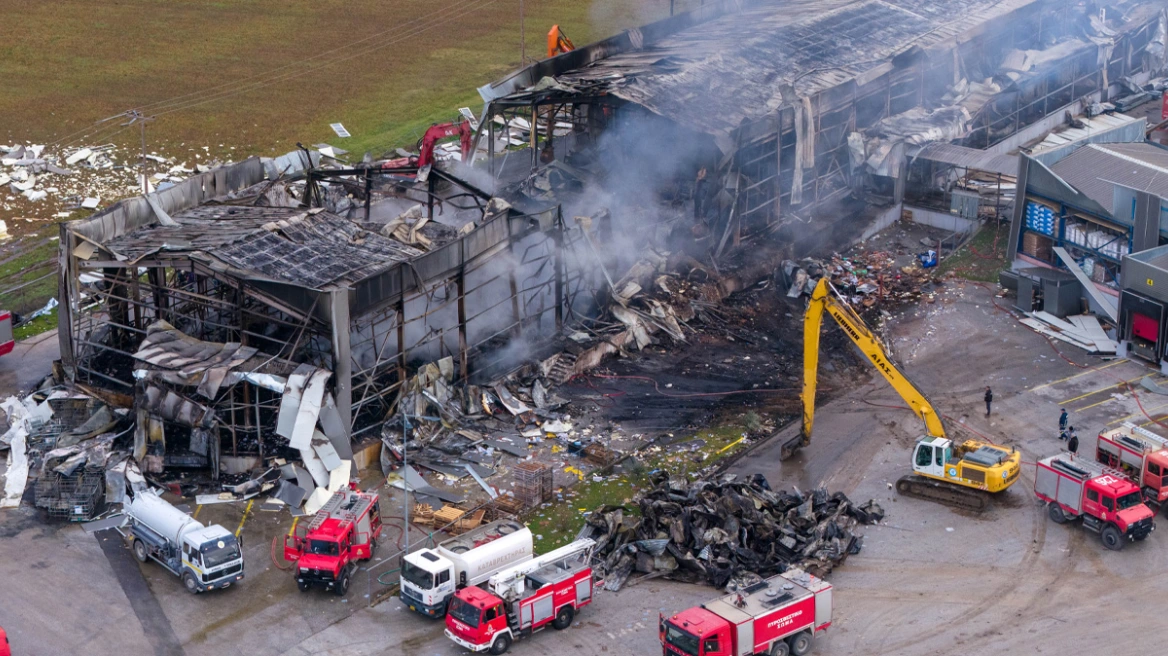
The propane leak—the cause of the explosion—had been detected at Violanta months before the January 26, 2026 tragedy.
Management and ownership of the factory were aware, yet no one treated the deadly threat seriously. It appears that safety issues in general were not taken seriously either: evacuation plans in case of emergency, employee training, and drills on safety protocols were neglected.
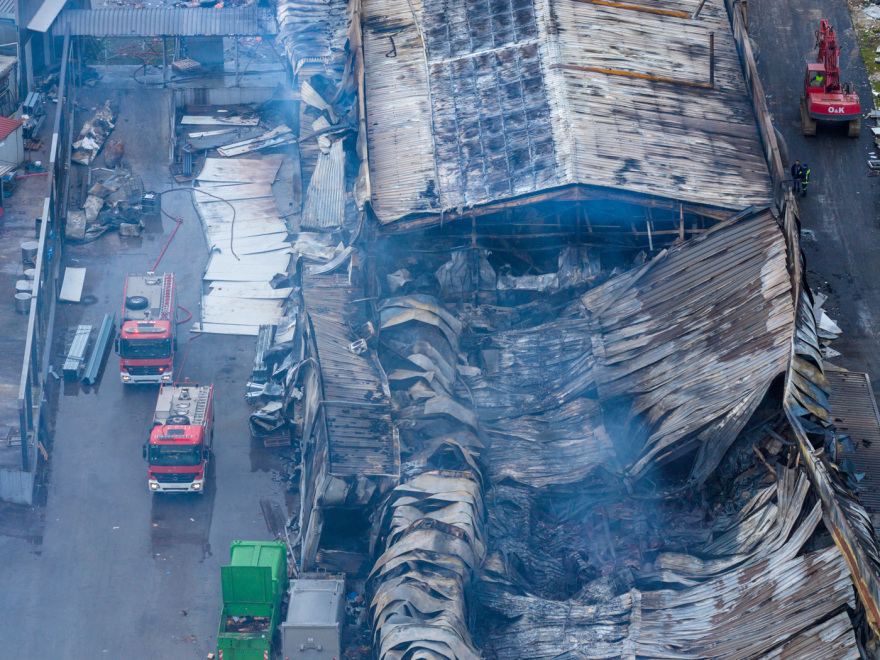
The result was tragedy: five unsuspecting female workers lost their lives. The least tribute to their memory is to make public the truth about what went wrong. And no one can describe it more clearly or bluntly than the workers themselves.
The shocking story of Violanta unfolds through excerpts from signed statements given to authorities. Below are indicative passages.
Worker 1 – Two Months at Violanta, 31 Years Old
“About five days after I started working, around December 8–10, 2025, there was gradually a smell. Sometimes it intensified, other times it subsided. I can’t describe exactly what kind of odor it was or its origin. The only comparison I can make is the smell cars emit at gas stations when they are being filled with LPG. I reported it to X, who in turn informed the bosses, though I don’t know what was said afterward. I also discussed it with colleague Y; he had the same impression and had also reported it.”
Q: During the two months you were there, did any machinery malfunction?
A: Yes. In December 2025, there was a malfunction in a power strip connected to a heater, but we caught it in time.
Q: Were you told what to do if there was a problem with the oven?
A: I was shown some things, but not what to do if the oven caught fire.
Q: Was there a camera monitoring system?
A: Yes, but I don’t know who managed it. There were interior cameras, including one outside the kneading area, covering the entire production space, including the area where the explosion occurred.
Q: Were there evacuation plans or safety training?
A: There were plans, but no one ever showed them to me. We never had any training.
Q: Was there an audible warning before the explosion?
A: I heard nothing before the explosion. Afterward, I heard a small alarm.
Worker 2 – 28 Years at Violanta
“Nothing ever changed; the same situation remained until the end. I worked there for 28 years, as did my daughter, who lost her life.
Regarding the smell, I informed Production Director Ω1 and the other Production Director Ω2. They assured us they would inform the plumber who would come to fix it. The plumber came, but he also assured us there was no smell.
Besides the LPG odor on the production line, electrical cables lying on the floor had caused electric shocks to workers. I myself was shocked once; my hand just went numb.
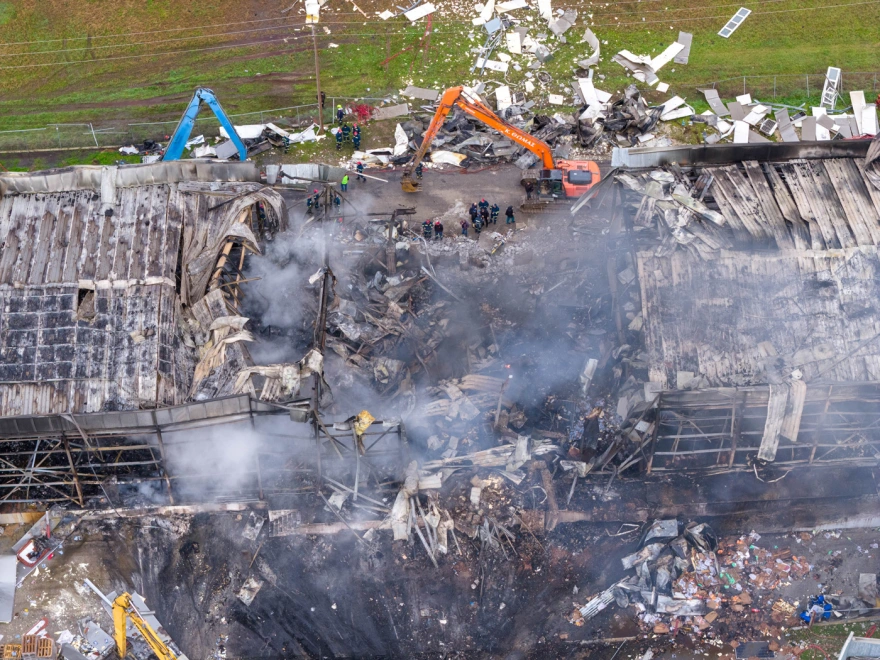
When inspections from the Food Authority (EFET) came, we were told they visited the facilities—but they never came to Wing B. We were simply told they had left.
In 28 years, we had two small fires in Wing B, specifically in the ovens, but they were handled by workers—though the Trikala Fire Department also came. The ovens run on LPG, and at the back of Wing B there were two large outdoor tanks. The odor was mainly noticeable near the dishwashing area and bathrooms.
I should add that no maintenance was ever carried out in Wing B. I have photos on my phone from November 6, 2024 showing the construction flaws I mentioned.”
Worker 3 – 14 Months at Violanta, 27 Years Old
“I had been working at the factory for about 14 months. On January 25, 2026, I went to work at 10:30 p.m. for my shift.
I skipped my break to prepare for the morning shift. While in the kneading area, I briefly spoke with a colleague about dough. We were about 10 meters apart with no obstacle between us. As soon as we finished speaking, the lights went out and I heard a loud noise, like a grenade blast. I saw panels, metal sheets, oven parts flying.
I saw an open door ahead and ran out the back, where the propane tanks are. I called the police at 4:01 a.m. At the same time, I heard voices inside calling for help, and the night shift production supervisor shouting for everyone to get out.
I went back inside with the colleague I had been speaking to, but we couldn’t do anything—the metal sheets and roof were collapsing and the fire had spread. We went out again.
Later, I went through the raw materials warehouse to re-enter the burning building to help the women on my shift, who are my friends. Inside the warehouse, I encountered three colleagues, embraced and covered in blood.
We tried to exit through a stairwell, but it was blocked by debris. We moved to the truck loading gates; the first wouldn’t open, the second did, and we all reached the parking area. The building was almost completely engulfed in flames.”
The Uncertified “Plumber”
Worker H.P. acted as the factory’s plumber, despite having no certification or technical degree.
He testified that he had noticed the odor—described by all witnesses—since at least November 2025. “It seemed like LPG. It was stronger in the toilets and dishwashing area in Building 2.
Workers had noticed it too and pointed it out to me. I verbally informed the owner of Violanta, Konstantinos Tziortziotis. Together with the production director, we went to the toilets but found nothing. Later, a gas installation specialist came and conducted measurements in mid-December. He found nothing that day.”
When asked what he told staff as the smell persisted, he said: “The production director told me to say that ‘the smell comes from the sewers until we figure out what’s going on.’ There was also a noticeable drop in gas pressure in the ovens over the last month and a half, but it wasn’t my responsibility to check or fix that.
Eight years ago, I was assigned by Konstantinos Tziortziotis to install a new propane gas line for the cereal production line. He gave me the plans, and I carried out the installation, even though he knew I had no propane gas installer certification.”
Worker 4 – 24 Years at Violanta
“The smell was so strong that whatever caused it—probably some gas—made my eyes sting. I’ve worked at the factory since 2002, in the building where the fire occurred.
For the last 15 days before the fire, I noticed a strange odor in the toilets of Building 2. Along with it, my eyes burned. It didn’t smell like sewage, nor exactly like pure LPG.
I informed my shift supervisor. She said she had informed management and that it was something in the septic tanks and they would pour something into them.”
Worker 5
“I worked in Wing B on the biscuit production line. I had noticed a smell about four months earlier, in the toilet area. It smelled like LPG, not sewage.
Colleagues had informed Ms. N., but no work was done. The smell remained. Technicians knew about the problem and didn’t do their job properly, which allowed it to escalate into an explosion.”
The Expert and the Foretold Explosion
A mechanical engineer was called to perform a leak-tightness test on the underground steel propane network.
“I pressurized the network with nitrogen at 5 bar and detected a strong leak, indicating a pre-existing leak in the underground line carrying propane from the tanks to the oven burners.
In the presence of the Fire Service, police, the owner Mr. Tziortziotis, and the plumber, excavation began. At 60 cm depth, before fully exposing the pipe, the detector showed 2,500 ppm of propane—when it should have been zero. Later, in the basement, measurements reached 6,000 ppm.
I believe a long-term leak from the underground steel pipe allowed propane to accumulate in loose soil and then enter the basement. Being heavier than air, it settled at the bottom. When it reached explosive concentration and likely encountered a spark from an electric motor, it caused the explosion with a powerful shockwave.”
Ask me anything
Explore related questions